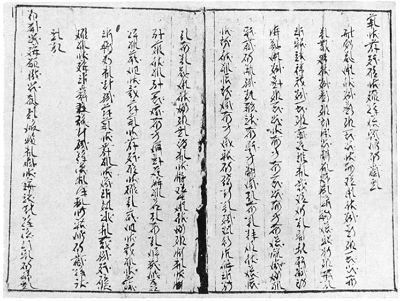
Tangut culture, which seemed almost completely lost a little bit more than a century ago, is now well available for study thanks to unbelievable finds of Pёtr Kozlov in so called “dead city” of Khara-Khoto, in the plain Alashan Gobi Desert. One of the important questions about Tangut is a level of impressions, which was made on them by neighbor cultures – especially Chinese. We would try to say something about that subject, studying the case of the place in Tangut state which took on of Confucian canons – but rather a particular one – Xiao jing 孝經 (Canon of [Descendants] Piety).
This article seeks to redefine the Kim Pusik’s 金富軾 (1075-1151) Samguk sagi 三國史記 (Histories of the Three Kingdoms) as a more imaginative and literary text by foregrounding its “supernatural” elements (collectively referred to as “wonder tales”), rather than emphasizing the ‘Confucian’ orientation that has conventionally been prescribed to it. It reviews the extend of incorporation of “wonder tales” into the historiographical content of Samguk sagi and outlines the connections between their literary essence and structural functions. The references to extraordinary are typified and distributed by six groups whose attributes are both contextual and functional: the subject matter itself (what is told, in which circumstances the matter is referred to) and assumed level of its compliance with the norms of Confucian historiographical accountability (trustworthiness). These references are analyzed contextually with illustrative references to the Chinese ‘normative histories’ principles. Then the political and structural functions of mystical motifs in the Histories of the Three Kingdoms are deducted and explained. Finally tentative conclusions are offered on the principles of choice of “wonder stories” for the historical narration in the Samguk sagi and their functions as ‘special historiographical elements’ are discussed.
In the first half of the 8th century, a Korean monk named Hyech’o (704?-787 CE) went on a pilgrimage to India. It was not the first time a monk originating from the Korean Peninsula travelled to India; before Hyech’o, several Korean monks went to the border of the oecumene. The only survived travelogue of a Korean monk visited India is the one by Hyech’o, Memoirs of a Pilgrimage to the Five Indian Kingdoms (往五天竺國傳). The preserved manuscript was found in Mogao caves by Paul Pelliot (1878-1945) and is held in the French National Library. There are two translations of the travelogue into English; however, none of them study stylistic features of the text, nor are travelogue’s lexicon features researched, whereas Hyech’o’s travelogue has distinctive style and does not follow standard Buddhist travelogue structure.
This paper shows preliminary results of a research which aims to study composition, lexical and stylistic features of the travelogue compared to notes of Xuanzang (Records of the Western Regions, 大唐西域記). The study is qualitative research. Comparative method was applied to check the structure and toponym differences in Hyech’o’s text and Records of the Western Regions. Literary analysis is used to identify lexical features of the travelogue, to understand if Hyech’o uses specific phrases for introducing a new place he visits. Hyech’o, compared to other renowned Chinese pilgrims, is quite frank with the reader, especially in his poems, each of which shares Hyech’o’s emotions. Hyech’o, being of Korean origin, might have left unique lexical and stylistic characteristics in the travelogue.
In this article, for the first time in Russian Oriental studies, a comprehensive reconstruction of biographies of Mongol military commanders who led campaigns against the state of Koryŏ in 1218–1260 is undertaken. Noting that the general chronology of the military campaigns of this period has been covered in considerable detail in world historiography, the author aims to fill the gap concerning the identities of these commanders, their origins, and their place within the military hierarchy. The source base of the study comprises Korean and Chiŏnese chronicles and historical works: Koryŏsa, Koryŏsa chŏryo, Tongguk pyŏnggam, Yuán shǐ, Yuán shǐ shìzú biǎo, Wén Tíngshì’s Yuán Gāolíjìshì, Kē Shàomín’s Xīn Yuán shǐ, and Huáng yuánshèng wǔ qīnzhēng lù, as well as The Secret History of the Mongols and works of Rashīd al-Dīn and Juvaynī. As a result of a comparative analysis of the source texts and their collation with existing historiographical literature in Russian, English, Korean, and Chinese, the biographies of ten military commanders, who successively or simultaneously led incursions onto the Korean Peninsula, have been reconstructed with varying degrees of reliability: Qachi’un, Saritai, Púlǐ Dàiwán, Tege-Qorči (Díjù), Tangut, Amuqan, Yěgū, Čelodai, Fuboda, and Yesuder. All of them held high command positions, ranging from leaders of embassies and major military campaigns to commanders of thousand-strong units who participated in negotiations. Among other findings, their heterogeneous ethnic composition was revealed: among them were representatives of the Genghisid lineage, the Jürchen nobility, and individuals from various Mongol tribes. The collected information can fill the lacuna regarding the individuals who determined the course of Koryŏ history in the 13th century and make a new contribution to the study of the early stage of Mongol-Koryŏ relations.
The second half of the nineteenth century became a time of many dramatic events on the Korean peninsula. With opening the country to trade and diplomacy with Westernized (Japan) or Western (USA, France, Great Britain) countries led to a division within Korean society, since the 1880s Chosŏn (Korea) has entered the age of political and social turmoil. Several fractions, supporting different diplomatic approaches, guided by influential political figures, were formed at the Korean court. It is their constant clashes that can be partly blamed for the inconsistency of Chosŏn’s diplomatic and political course at that time.
In light of the above, it is noticeable that, rather than stressing Kojong’s authority or hinting at the political influence of Hŭngsŏn Taewŏn’gun, the Russian-language part of Korean studies academy is generally paying attention to the Queen, labeling her as the main figure who guided the state policy from the shadow of her husband’s back. In the Russian analytical literature, Queen Min, also being the head of the influential Min-clan, is responsible for seizing power by removing Taewŏn’gun from office; requesting China’s military support to solve the Imo incident of 1882; being involved in appealing to China in 1894 for suppressing the peasant uprising that had brought up the Sino-Japanese War (1894-1895); and generally guiding Chosŏn’s diplomacy throughout 1880s and 1890s, ensuring the country’s rapport with China, the United States, and, later, with Russia. Finally, by Russian-speaking scholars, it was Queen Min’s firm resistance to Japan’s involvement in Korean state affairs in the mid-1890s that ultimately brought her assassination in October 1895.
This paints a vivid picture of Queen Min as one of the most influential politicians of her time, which stays unchallenged and largely unexplained in the Russian-language part of Korean studies academia. This paper is an attempt to shed some light on the roots of this analytical concept. The authors will attempt to outline Queen Min’s assessments present in Russian academia and trace their original source. A critical analysis of these evaluations will also be performed with the aim of revealing the true historical role that Queen Min played in Chosŏn politics and diplomacy in the late nineteenth century.
To achieve these goals, the authors will carry out an analysis of narratives regarding Queen Min and her political role, present in publications of Russian-language scholars (such Tatiana Simbirtseva, Oleg Kurbanov, Vladimir Tikhonov), comparing them to available primary sources (for instance, Kojong Sillok, Queen Min’s diary of 1882, Yun Chi Ho’s diary, memoirs of Lilias Horton Underwood and other) and narratives, present in relevant publications of scholars from English-speaking part of an academia.
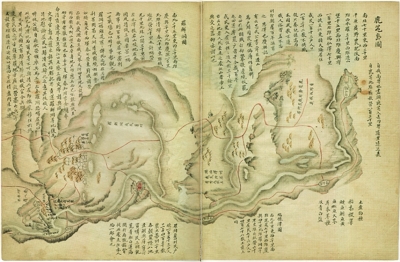
Aguk Yeojido 俄國輿地圖 (“Map of Russia”) is a rare late-nineteenth-century Korean manuscript of considerable significance for understanding border interactions among Russia, Korea, and China, as well as the early history of Korean settlement in the Russian Far East. Produced at a time when the Joseon court sought alternatives to Chinese suzerainty, Japanese expansion, and Western pressure, the map reveals Korea’s strategic engagement with shifting imperial frontiers. This study interprets the manuscript through the lens of critical cartography, treating it not as a neutral geographic record but as an ideological instrument of statecraft and intelligence. By combining close reading of its cartographic and textual elements with a historical-philological methodology – cross-referencing annotations against newly identified archival materials from Japan and Taiwan – the analysis demonstrates that the map was compiled between 1883 and 1886, most plausibly by Kim Gwanghun and Sin Seonuk. Functioning as a hybrid cartographic–textual genre, the Aguk Yeojido recorded military installations, border conditions, and Korean settlements in the Primorskii Region, while simultaneously conceptualizing Russia as a strategic counterweight in Korea’s evolving foreign policy. Ultimately, the manuscript exemplifies how late Joseon cartography operated as a dynamic tool of geopolitical negotiation and intelligence gathering.
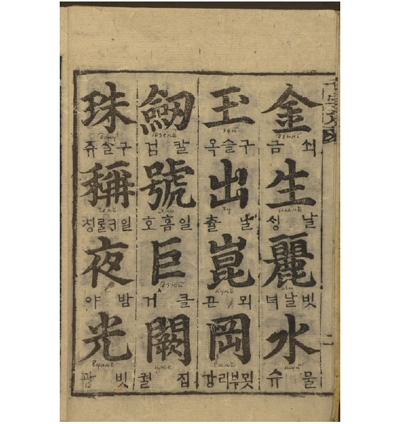
The aim of this study was to establish the origin of Korean books from the so-called “Brosset Collection” kept at the Institute of Oriental Manuscripts of the Russian Academy of Sciences (Asiatic Museum). The “Brosset Collection” is a conventional name for the books which are mentioned in the handwritten catalogue of the Asiatic Museum’s Far Eastern collection compiled by Academician Marie-Félicité Brosset (1802–1880). This catalogue lists nine identifiable Korean texts, eight of which are written entirely or partially in Hanmun.1 Judging by the date of their cataloguing (1840 and 1842), they are most likely the first Korean books to appear in Russia and are among the earliest surviving Korean-printed books held in European scholarly institutions. The study includes analysis of the various archival documents and marginalia in the books themselves. As a result, it was proven that most of these books form a single collection that originally came from the library of Baron Paul Schilling (1786–1837), who probably received them from the sinologist Nikita Iakovlevich Bichurin (Archimandrite Hyacinth; 1777–1853), head of the Ninth Russian Spiritual Mission in Beijing, and one book originated from the collection of Manchu studies scholar Stepan Vasil’evich Lipovtsov (1770–1841)
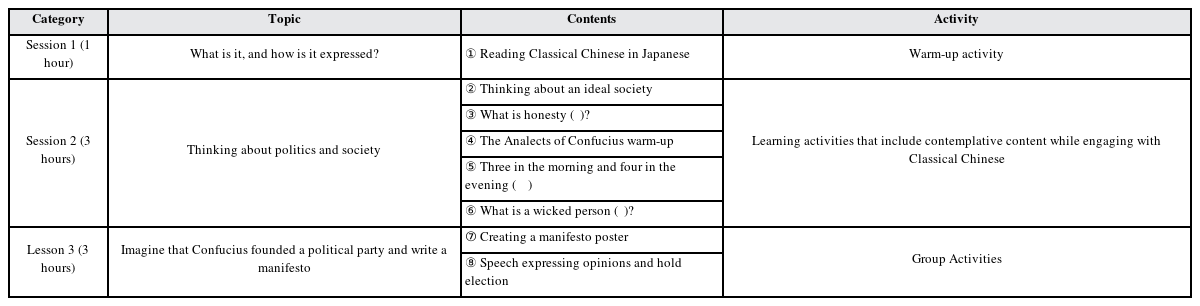
This study examines how the social status of Hanja 漢字 “Sino-Korean characters” and Hanmun 漢文 “Literary Sinitic” has changed within the history of knowledge formation in Korea, focusing on three interrelated layers: shifts in episteme, the reconfiguration of knowledge baselines, and transformations in curriculum discourse. Hanja and Hanmun were marginalized in the context of modern nation-state language policy and the establishment of disciplinary academic systems, but this did not immediately entail the disappearance of their educational value. Rather, Hanja education came to be assigned new goals, such as deepening vocabulary and literacy, facilitating access to historical texts, and cultivating an understanding of the shared written culture of East Asia. At the same time, the ways in which each country and region evaluated and authorized “valuable” knowledge became a key factor in reshaping the respective status of Hanja and Hanmun. The current state of Japanese Chinese Character 漢字 (kanji) and Classical Chinese 漢文 (kanbun) culture and the surrounding school education, serves as a valuable filter and reference to reflect on Korean linguistic practices and to explore the future direction of Korean Classical Chinese漢文 (hanmun) education. In 2010, for the first time in 29 years, Japan established the “Shin Jōyō Kanji” 新常用漢字 (new regular-use kanji) and revised large-scale educational reforms alongside the Course of Study reforms, bringing significant changes to linguistic practices and written life, as well as Classical Chinese education. This paper follows the author’s work from 2011 that examined the achievements and trends of Classical Chinese education research in Japan from 1945 to 2010. This paper examines the direction of Classical Chinese education and the current state of Chinese Character education research over roughly ten years since 2010.
The framework of this research conducted in this paper is as follows. ① The social, cultural, and educational background of the implementation of the “Shin Jōyō Kanji” which has not been covered or sufficiently addressed in previous research, and the content of the 2017-2018 revised Course of Study are analyzed. ② Focusing on high school Classical Chinese, the direction, purpose, and characteristics of Classical Chinese education under the new curriculum are examined, and the trends, content, and questions of recent university admission Classical Chinse examinations are also examined. ③ The achievements related to Classical Chinese education published in the leading specialized journal on Classical Chinese education Atarashii Kanji Kanbun Kyōiku 新しい漢字漢文教育 (Journal of New Kanji and Kanbun Education) are organized by area and topic, and the current status and characteristics of recent research and teaching examples in Japanese Classical Chinese education are reviewed.
The world of Classical Chinese in East Asia is not homogeneous. It is important to keep this in mind and apply this point in Classical Chinese education and its research. The differences from Korea allow for a clearer understanding of the diversity of the East Asian world of Classical Chinese, as well as Korea's unique characteristics and position. Meanwhile the similarities or shared aspects with Korea can serve as direct reference for reflecting on and improving Korean policies and practices. The author intends to continue reporting the status of Japanese Classical Chinese education and its research to the academic community roughly every ten years, while further examining the specific topics section described in this paper as necessary.
This article examines the transregional dissemination and localization of the post-May Fourth linguistic reforms—specifically Vernacular Chinese (baihua) and the National Language (Guoyu)—within the Chinese diaspora of Malaya and Singapore (Nanyang). Moving beyond the traditional "impact-response" paradigm, this study argues that the adoption of the vernacular was not merely a passive cultural importation from mainland China, but an "active fabrication of identity" necessitated by the complex realities of British colonial rule and severe internal dialectal fragmentation. By analyzing early Chinese press materials, such as the Sin Kuo Min Jit Poh, and local educational records, the research traces the tangible trajectory of this linguistic transformation. It first highlights the role of newspapers as media vanguards that transitioned from reprinting mainland literature to cultivating local vernacular expression to discipline oral traditions. Subsequently, it investigates the institutionalization of Guoyu in formal schools and grassroots night schools, which served to educate the laboring classes and dismantle provincial boundaries. Ultimately, the "remolding of the tongue" in Nanyang facilitated the construction of a transregional Zhonghua identity, demonstrating how language standardization functioned as a profound tool for social reorganization and diasporic integration.
The traditional liushu (Six Principles) theory, while effective in explaining the historical formation of Chinese characters, is not readily applicable to the analysis of modern character forms. This study proposes a structure-based interpretation grounded in the present forms of Chinese characters and reconstructs a classification system on this basis.
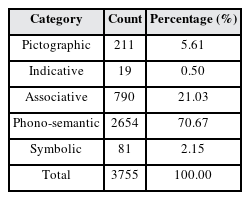
At the classificatory level, the notion of structural motivation is redefined, and a revised fivefold system is proposed, consisting of pictographic, indicative, associative, phono-semantic, and symbolic characters. At the level of structural mechanisms, a tripartite functional model of components—semantic, phonetic, and symbolic—is introduced.
The concept of “component languaging” is further proposed to account for the transformation of components from graphic units into functional linguistic units capable of participating in subsequent character formation. On this basis, a type–function model is established, integrating classification, structural mechanisms, and structure-based interpretation.
This model provides a unified synchronic framework for the analysis of modern Chinese characters and offers a theoretically grounded and operational approach to their structure-based interpretation.
This paper aims to examine various methods of Chinese character education practiced in China and to identify their characteristics and implications. As a country that has used Chinese characters as the writing system of its native language, China has accumulated extensive research and practical experience in Chinese character education over a long period of time. Based on this background, China has established the scope and hierarchy of characters to be learned at the level of the national curriculum and has developed and applied diverse instructional methods according to learners’ developmental stages and educational objectives. An analysis of these methods can provide useful insights not only for Chinese character education in Korea but also for the development of instructional methods for learners outside Chinese-speaking contexts.
This paper first examines the Basic Character List for Literacy and Writing Instruction (識字寫字敎學基本字表) and the Commonly Used Character List for the Chinese Language Curriculum in Compulsory Education (義務敎育語文課程常用字表), both of which were presented by the Chinese Ministry of Education. These lists institutionalize, at the national level, the range and sequence of Chinese characters to be learned during compulsory education and serve as important standards for textbook compilation and the organization of teaching and learning content. In particular, the Commonly Used Character List presents 3,500 characters to be mastered during compulsory education, while the Basic Character List selects 300 characters that should be taught first at the initial stage of learning. This indicates that Chinese character education in China is not dependent solely on individual teachers’ experience or textbook compilers’ judgment, but is systematically organized according to national standards.
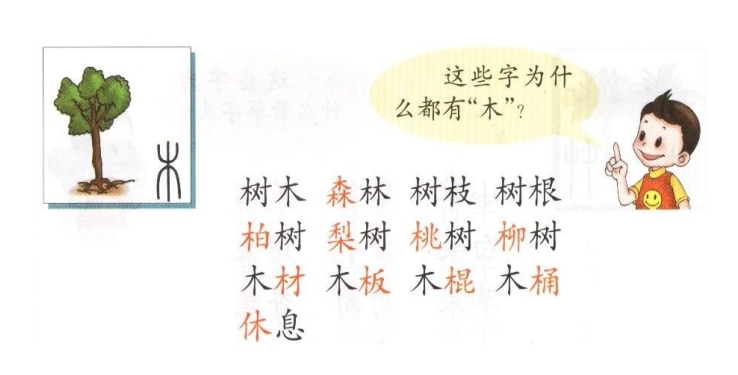
The paper then discusses the content and characteristics of representative methods of Chinese character education used in China, including the Concentrated Character Recognition Method (集中識字法), Distributed Character Recognition Method (分散識字法), Phonetic-Notation-Based Character Recognition Method (注音識字法), Component-Based Character Recognition Method (部件識字法), Character-Principle-Based Character Recognition Method (字理識字法), and Root-Character-Based Character Recognition Method (字根識字法). The Concentrated Character Recognition Method emphasizes intensive learning of characters before moving on to reading instruction, whereas the Distributed Character Recognition Method enables learners to acquire characters naturally through the process of reading textbook passages. The Phonetic-Notation-Based Method connects early reading ability with character recognition by using pronunciation guides. The Component-Based and Root-Character-Based Methods make use of the structural analysis of Chinese characters, while the Character-Principle-Based Method helps learners understand the relationship among character form, sound, and meaning on the basis of the principles of character formation. Although each method has its own strengths and limitations, together they demonstrate that Chinese character education can be designed in various ways by taking into account both the structural features of Chinese characters and the learners’ level.
This paper also examines cases in which digital technologies are applied to Chinese character education in China. Electronic dictionaries, digital textbooks, educational software, learning games, and video materials are widely used, contributing to greater accessibility and to the expansion of learning methods and environments. Such digital resources and platforms may also offer meaningful references for developing new teaching and learning methods in Korean Chinese character education.
However, Chinese character education in China differs from that in Korea in several respects, since it presupposes an environment in which Chinese characters are used as the native writing system, employs simplified characters, and aims primarily at developing reading and writing abilities. Therefore, when applying Chinese research findings and instructional methods to Korea, it is necessary to critically reconsider them in light of the aims and conditions of Korean Chinese character education, such as the understanding of Korean vocabulary, the learning of Sino-Korean words, and education in traditional culture. Nevertheless, China’s systematic use of character lists, development of diverse character recognition methods, and active adoption of digital technologies provide significant implications for improving and expanding Chinese character education in Korea and other regions outside China.
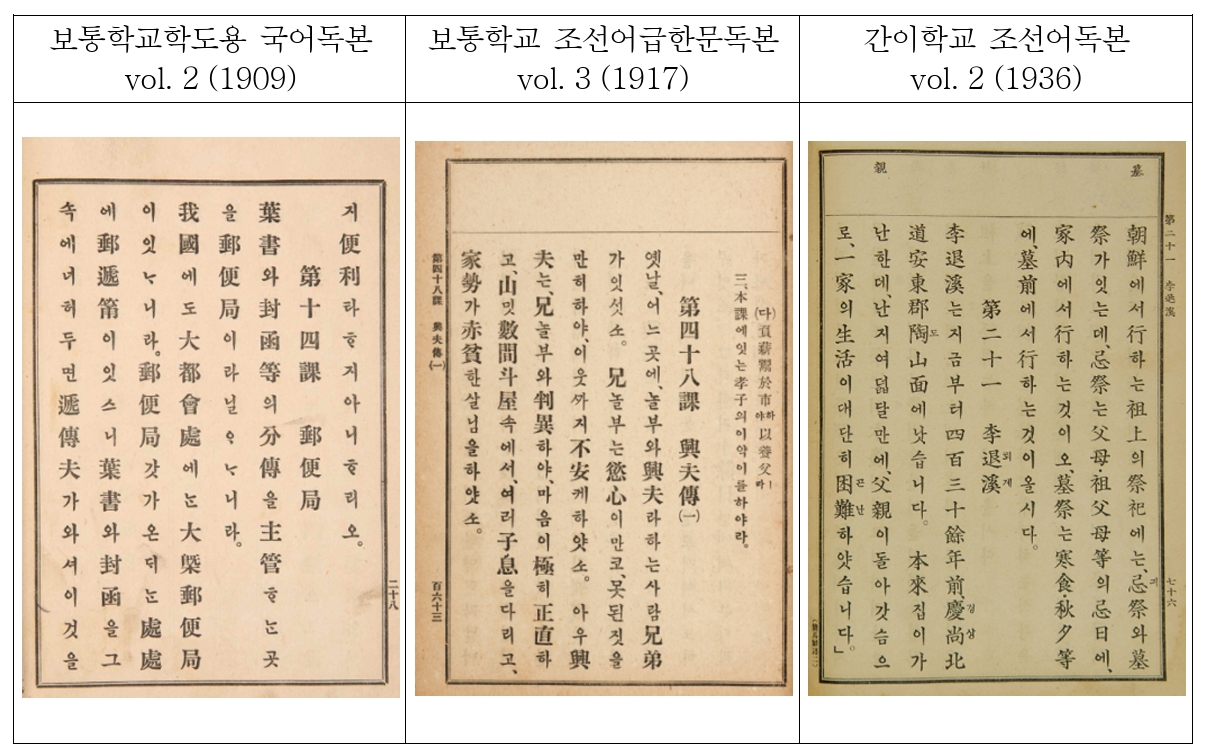
This article serves as a preliminary study for a larger project on developing Literary Sinitic textbooks for Anglophone learners. It examines major Literary Sinitic textbooks published for use in Korean universities since the twentieth century, focusing on three aspects: the definition and scope of Literary Sinitic, pedagogical approaches, and the selection of texts. The study shows that Korean university textbooks generally present Literary Sinitic as both an integral part of Korean literary tradition and a shared classical language of the Sinosphere. They also place considerable emphasis on systematic grammatical instruction while recognizing the limitations of grammar-centered pedagogy. In addition, some textbooks employ pedagogical strategies such as diagramming methods and practice exercises to promote active learner engagement. With regard to text selection, they seek to balance representative works with broader educational objectives, although further diversification remains desirable. Based on these findings, this article argues that future textbooks for Anglophone learners should provide a clear explanation of the concept and scope of Literary Sinitic, adopt a balanced approach to grammatical instruction, and diversify their selection of texts in light of recent scholarship and the needs of Korean Studies. It is hoped that these observations will contribute to the development of more effective Korean Literary Sinitic teaching materials for Anglophone learners.
This study examines how Hanja education policy in Korea has changed in relation to shifts in language and script policy since the twentieth century. It takes as its starting point the 1894 Royal Edict of King Kojong 高宗(r. 1863–1907), which marked the transition of Korea’s official writing system from Hanja-centered writing to Han’gŭl-centered writing. To this end, the study divides Korean language and script policy into the periods before and after 1945 and analyzes how the policies of each period affected Hanja education policy in Korea.
The findings are as follows. First, the major policies that influenced Hanja education policy in Korea since the twentieth century include the 1894 Royal Edict of King Kojong, the Act on the Exclusive Use of Han’gŭl of 1948, and the Framework Act on the National Language of 2005. Second, in the process of implementing these policies, various issues related to Hanja education were discussed or put into practice, including arguments for the abolition of Hanja, Hanja education in elementary and secondary schools, Hanja education within the Korean language curriculum, the parallel notation of Hanja, the establishment of commonly used Hanja, and the designation of basic Hanja for Literary Sinitic education. Third, future Hanja education policy should be based on an investigation of Hanja vocabulary actually needed in daily life and official documents. It should also organize educational content around practical use and develop learner-customized methods that make effective use of science and technology.
This study confirms that changes in language and script policy in Korea since the twentieth century have shaped the character and direction of Hanja education policy. It is expected to provide basic material for establishing Hanja education policies suited to the linguistic life ofKorean society in the future.
This study examines how the social status of Hanja 漢字 “Sino-Korean characters” and Hanmun 漢文 “Literary Sinitic” has changed within the history of knowledge formation in Korea, focusing on three interrelated layers: shifts in episteme, the reconfiguration of knowledge baselines, and transformations in curriculum discourse. Hanja and Hanmun were marginalized in the context of modern nationstate language policy and the establishment of disciplinary academic systems, but this did not immediately entail the disappearance of their educational value. Rather, Hanja education came to be assigned new goals, such as deepening vocabulary and literacy, facilitating access to historical texts, and cultivating an understanding of the shared written culture of East Asia. At the same time, the ways in which each country and region evaluated and authorized “valuable” knowledge became a key factor in reshaping the respective status of Hanja and Hanmun.
In the early 20th century, a number of Korean textbooks on Hanmun (Korean Literary Sinitic) were published. These textbooks introduced new ways of understanding and teaching Hanmun grammar. Some of these innovations are highly original and explore experimental ideas.
The hŏsa/silsa paradigm (usually translated as “empty” and “full words” in English) forms the basis of many pre-modern and early modern Literary Sinitic grammars, but these concepts are understood in different ways in each of them. The conventional understanding that hŏsa are ‘function words’ does not sufficiently explain their descriptive usage in early modern Korean grammars. This article investigates how the concept of hŏsa/silsa is understood in Korean Literary Sinitic grammars and textbooks from the Late Chosŏn and Colonial periods, and how it is applied in teaching.
Although these old grammars are clearly outdated in many ways, the grammatical concepts they present still hold some didactic value. Some of these concepts, particularly the hŏsa/silsa concept, are still useful for teaching basic Literary Sinitic courses.
Although Hanmun formed the backbone of Korean literary culture until the early twentieth century, its position within contemporary Korean Studies in Europe remains precarious. Limited curricular space, funding constraints, and a shortage of trained specialists have often relegated Hanmun to the status of a “luxury” rather than a core component of the field. While existing debates on Hanmun instruction have focused primarily on questions of textual selection, the underlying pedagogy has received comparatively little attention. This article addresses this gap by rethinking Hanmun training through learner-centered, interactive, and multilingual instructional strategies. Drawing on Bloom’s taxonomy as a heuristic framework, the article critiques the teacher-centered transmission model and the monolingual principle that continue to shape language instruction. It examines a corpus of eleven Hanmun textbooks and digital resources published in Korea, North America and Europe, focusing on the extent to which they enable interactivity and multilingual engagement. Building on these analyses, the article develops a set of experimental teaching practices presented in a concluding Hanmun Sandbox. These exercises emphasize chunking, translanguaging, and productive struggle, demonstrating how learners mobilize diverse linguistic and cognitive resources to construct meaning. The article argues that effective Hanmun instruction benefits from treating uncertainty not as an obstacle, but as a productive space for learning and meaning-making.
Developed in the context of university teaching in Korean studies for beginners in Classical Chinese hanmun, the puzzle method is used to approach unknown texts with a focus on efficiency, as in an exam where time is limited and the use of electronic devices is prohibited. It synthesizes common practices among readers of Classical Chinese, centered around the concept of a “puzzle.” The metaphor works on multiple levels: the text is the puzzle to be reconstructed, its main lines are the ‘big picture’ that the puzzle represents; the pieces are the words, presenting semantic (image) and syntactic (contours) aspects; the pieces are variously loaded with information to suggest the big picture of the puzzle, so that the search primarily targets the most suggestive Sino-Korean characters hancha in order to be effective. The playful aspect of the puzzle, using information provided by characters already known to learners as a starting point to build a search plan that prioritizes the hancha to be searched for, helps develop beginners’ self-confidence. It develops patience, concentration, and reflection in learners, and dispels the belief that the dictionary is a magic tool that immediately provides the correct solution. The method, developed without the use of AI, is environmentally friendly and does not create dependence on specific technological tools, other than knowledge of how to use indexes to search for hancha in paper dictionaries. It was described in detail in a hanmu teaching textbook published in France in 2025.
This paper takes as its point of departure the persistent difficulty in reading Hanmun (Korean Literary Sinitic) texts despite prior knowledge of grammatical rules, and reexamines this problem from cognitive and pedagogical perspectives. It argues that reading failure in Hanmun texts lacking punctuation should not be attributed to an insufficient understanding of individual grammatical items, but rather to a lack of syntactic unit recognition and reading stability. From this perspective, the article focuses on toksong 讀誦, a core practice in premodern Hanmun education, and interprets it not merely as recitation or memorization but as a mode of reading through which syntactic structures are embodied via rhythm and repetition.
Drawing on theories of embodied cognition and skill acquisition, the article demonstrates that toksong functioned as a cognitive mechanism that fostered syntactic familiarity and stabilized grammatical segmentation prior to semantic interpretation. It further examines the place of toksong in modern Hanmun pedagogy and repositions it not as a substitute for grammatical analysis, but as a preparatory reading practice that enables such analysis. By reconceptualizing the reading of Hanmun as a structural experience that precedes meaning-centered interpretation, this study offers pedagogical and theoretical implications for contemporary Hanmun education and research on classical literacy.
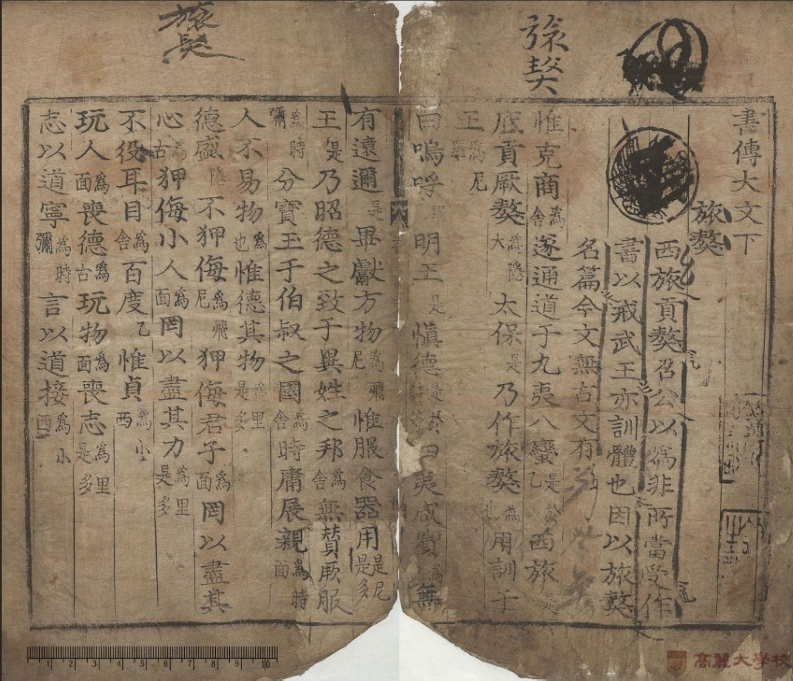
This study examines the development of royal-led publishing culture and the formation of reading practices in early Chosŏn. The Chosŏn court institutionally defined the content and method of canonical reading through the importation and reprinting of the Yongle emperor's imperially commissioned Sishu wujing daquan and Xingli daquan, the compilation of comprehensive annotated editions such as the Sajŏngjŏn hunŭi on the Zizhi tongjian, and the kugyŏl projects of the Sejo reign and the vernacular translation projects of the Sŏnjo reign. Through analysis of the Ŭrhaetype editions of the Nonŏ taemun kugyŏl and the Sŏjŏn taemun preserved in the Hwasan Collection at Korea University Library, this study identifies at least two distinct kugyŏl traditions existing between the Sejo-period kugyŏl project and the Sŏnjo-period vernacular translation project. It further demonstrates that Yi Hwang’s Kyŏngsŏ sŏgŭi reveals the persistence of a flexible scholarly environment in which multiple interpretations coexisted despite the state’s efforts to establish a single authoritative standard. Through analysis of Yi Sik's “Si ason tŭng,” this study additionally shows that the reading practices of Chosŏn literati unfolded within a dual structure shaped by the tension between state-sanctioned canonical reading and the pragmatic goal of examination success. This tension between what the state sought to teach and what literati actually sought to learn is understood as an enduring issue that resonates with contemporary Korean educational culture.
A Sino-Korean literature textbook for English-speaking college students, currently under development, should aim to highlight the unique characteristics of the history of Sino-Korean literature, offering distinct value compared to previous textbooks that primarily focus on Chinese classics. This paper outlines the design of a curriculum for teaching ‘Korean-style’ Sinographic literature in a single chapter of the new textbook, which was developed to address the mismatches between literary Chinese and vernacular Korean. The proposed curriculum is divided into two parts, each with three sections, and is designed to systematically convey the history, scope, and grammatical features of ‘Korean-style’ Sinographic literature. Part I addresses the historical context of Korean literature and examines how to define and delineate the boundaries of ‘Korean-style’ Sinographic literature. This part includes: Section 1, an explanation of the linguistic reasons behind the invention of ‘Korean-style’ Sinographic literature; Section 2, an overview of the historical development of ‘Korean-style’ Sinographic literature; Section 3, a justification for selecting Idu as a representative style among other Korean Sinographic writing systems. Part II focuses on approaches for teaching the grammatical elements of Idu and incorporating textual examples that demonstrate its practical usage. This part includes: Section 4, an introduction to the basic elements of Idu; Section 5, an analysis of the grammatical structure of Idu; Section 6, textual examples illustrating the use of Idu in historical contexts.
In the context of a special issue on education outside Korea, this paper surveys the current status of sinograph education in Korean Language Education (KLE) for foreigners, and finds that there is a dearth of both research on and teaching materials for hancha kyoyuk. Hence the “First Things First” in the title: we can hardly expect to make progress in hanmun education when so little exists in the way of resources for and courses in sinograph education—the single most basic prerequisite for teaching hanmun. After suggesting a number of reasons for the current lamentable neglect of hancha education, the paper draws some illustrative comparisons with sinograph education in Japanese Language Education and Chinese Language Education before rehearsing a number of compelling justifications for including a robust hancha education component in KLE (whether for Koreans or foreign learners of Korean). The remainder of the paper introduces the pedagogical ideology and methodology behind the Advanced Korean: Sino-Korean Companion textbook and its companion online resource, the UBC Interline Reader.
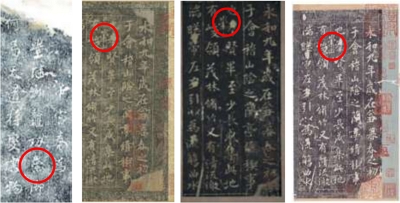
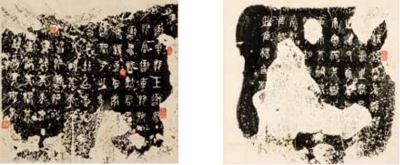
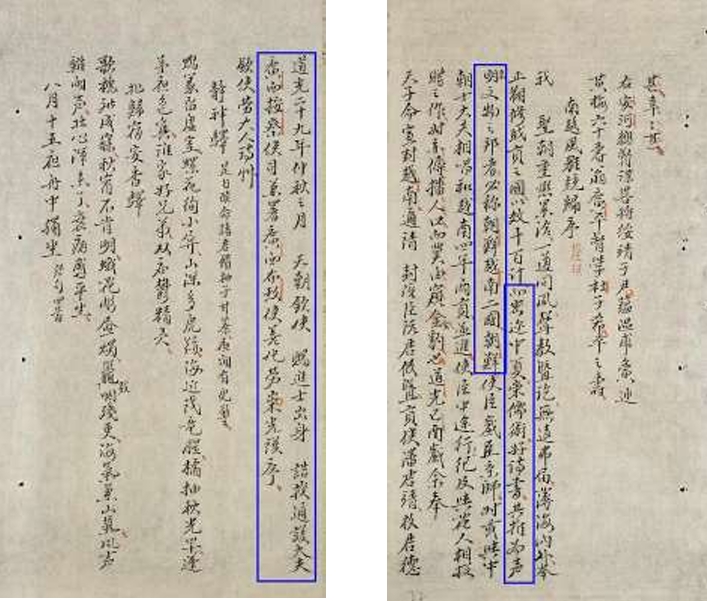
Wang Xizhi 王羲之 (ca. 303-ca. 361), the paragon calligrapher of the Eastern Jin dynasty, became a canonized figure in Chinese cultural history, particularly after Emperor Taizong of the Tang obsessively collected and reproduced his works. At that time, thus, one main criteria for ideal calligraphy was its resemblance to Wang’s style. In this context, stele inscriptions emerged that were composed by collecting, comparing, and imitating individual characters from Wang’s extant corpus—a practice known as “Collating Characters” 集字. One notable example in Korea is the Memorial Stele for Enshrining the Amitābha Buddha Statue at Mujangsa Temple 鍪藏寺阿彌陀佛造成記碑(801). Controversy has surrounded its calligraphic origins, however. In 1803, the prominent Qing scholar Weng Fanggang 翁方綱 (1733–1818) stated that the stele’s calligraphy was modeled on the Dingwu edition (1041) of the Preface to the Orchid Pavilion. In contrast, his son Weng Shukun 翁樹崑 (1786-1815) and the Korean antiquarian Kim Chŏnghŭi 金正喜 (1786–1856) maintained the traditional view, i.e., the brushwork to Kim Yukchin 金陸珍 (fl. tenth century), a Silla calligrapher. This case study of the Mujangsa Stele examines how the same inscription was interpreted differently by scholars in China and Korea, revealing divergent frameworks of copying, authenticity, and cultural authority. It then turns to ongoing debates among modern scholars, proposing that the two seemingly opposing theories—collation versus Korean inscriber—may in fact be complementary rather than contradictory.
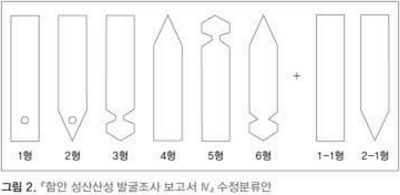
This article examines the non-textual communicative functions of mokkan 木簡 (wooden inscribed documents) in early Korean writing culture, framing them not merely as textual carriers but as objects which material and aesthetic properties played a central role in meaning-making. While existing scholarship often prioritizes deciphering textual content, this study emphasizes the visual, tactile, and contextual dimensions of mokkan—including their shape, size, texture, inscription method, and spatial orientation—as active agents in the adaptation of Sinographic writing. It argues that wood’s pliability enabled a culture of writing deeply intertwined with experimentation and sensory engagement. From notation tags and practice multi-surfaced rods to carved amulets, mokkan embodied social, religious, and administrative functions beyond the semantic meaning of the script. By situating mokkan within broader East Asian material traditions, the article lays out a preliminary groundwork that underscores the importance of medium-specific aesthetics and tactile interactions in the formation of early Korean literacy and textual culture, revealing how writing was experienced as both a visual and bodily practice.
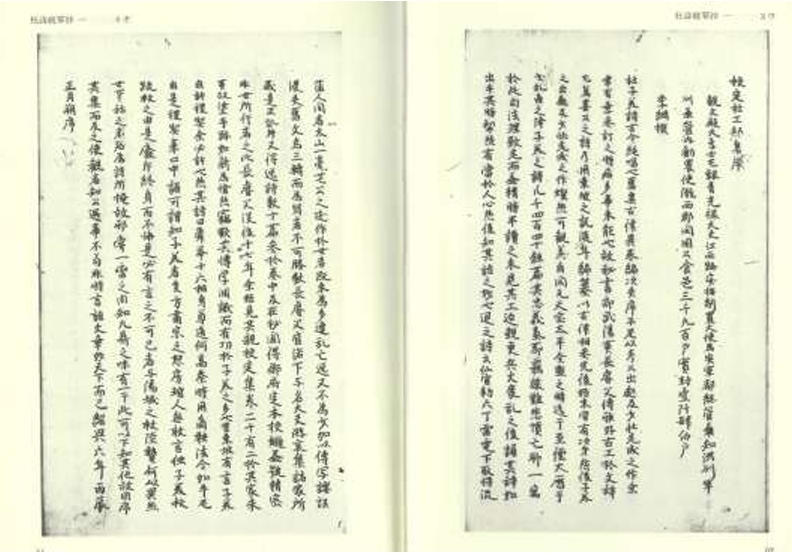
Ancient stone inscriptions composed in ancient script 古文字, known as epigraphic rubbings of ancient texts 古文碑帖, are confirmed to have been introduced into Chosŏn in large numbers beginning in the late sixteenth century. The interest in epigraphic rubbings of ancient texts 古文碑帖 during the late Chosŏn period stemmed from the fervent enthusiasm for epigraphy 金石 and epigraphic compilations 金石帖. Starting with the 17th-century envoy mission to Beijing 燕行 led by Rangsŏn’gun Yi U 朗善君 李俁, Chosŏn envoys who admired epigraphy and calligraphy acquired Shiguwen 石鼓文, Shenyubei 神禹碑, and Yishanbei 嶧山碑, thus giving rise to the epigraphy fever 金石熱 beginning in the 17th century, which extended to the domain of epigraphic rubbings of ancient texts 古文碑帖. What is especially noteworthy is that in the late Chosŏn period, epigraphic rubbings of ancient texts 古文碑帖 were not merely briefly described, but rather were subjected to in-depth analysis and decipherment of characters and texts from a philological standpoint.
Shiguwen 石鼓文, the first stone-carved poetic inscription in China, is confirmed to have been introduced already in the 15th century and was brought in repeatedly through 17th to 19th-century envoy missions to Beijing 燕行. Accordingly, Chosŏn literati revealed a general philological consciousness by citing works such as Rixia jiuwen kao 日下舊聞考, Daxing xianzhi 大 興 縣 志 , and Dijing jingwu lüe 帝 京 景 物 略 to investigate the textual transmission of the Stone Drums 石鼓. Shenyubei 神禹碑 is presumed to have been introduced during the 16th to 17th centuries, and it is confirmed that a rubbing 拓本 of Shenyubei had already been brought into Chosŏn by 1659, as evidenced through a classical Chinese poem by Yun Hŭk 尹鑴. Hŏ Mok 許穆 (1595–1682) identified the edition of Shenyubei purchased by Yi U, Nam Kŭk’gwan 南克寬 criticized the cultural value of Shenyubei with striking acuity, and Sŏng Haeŭng 成海應 synthesized and organized the theories concerning the transmission and excavation of Shenyubei. Moreover, Chosŏn literati appreciated the aesthetic quality of the calligraphy in the inscription of Yishanbei 嶧山碑 from the early stage of its introduction and actively embraced its calligraphic style 書法, exhibiting a philological attitude regarding issues such as the authenticity and authorship of the stele.
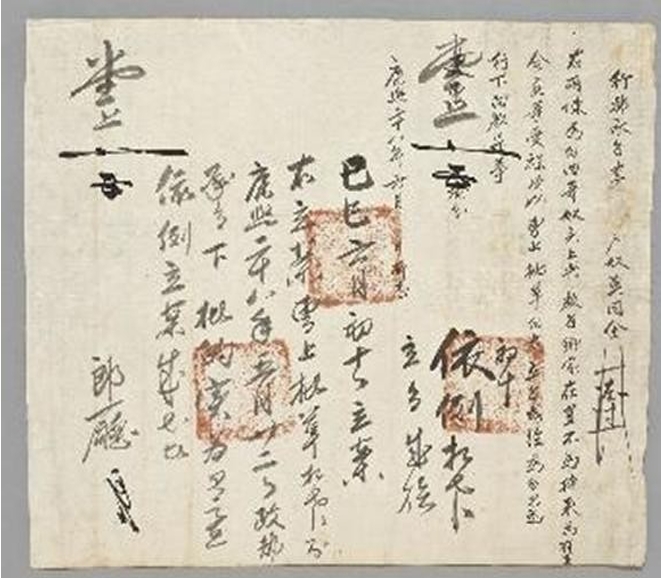
This paper puts forward the concepts of “king’s words” and “king’s documents” and takes as its primary goal the extraction of a corpus of such “documents” from extant sources. In identifying and classifying primary sources found within epigraphic inscriptions and compiled texts, this paper investigates clues within that suggest the original format of “king’s documents.” Among “king’s documents” from ancient Korea, those that were disseminated for a domestic audience include ryŏng 令 “mandate,” myŏng 命 “order,” sŏ 書 “document; letter,” kyo 敎 “decree,” chemun 祭文 “sacrificial address,” and yujo 遺詔 “final testament.” Ryŏng were used for amnesties or calls for recommendations of talented individuals, while myŏng was used for matters such as the construction or repair of ceremonial facilities. Kyo were used to promulgate important policies or implement measures related to maintaining basic public order.
Before the kyo document form was adopted in the peninsular kingdoms, there was a type of “king’s document” known simply as sŏ. Sŏ appear to have been diplomatic documents originally, but their function was expanded as they were increasingly used in internal administration. In the mid-second century, kyo and ryŏng became the basic forms of “king’s documents,” but sŏ continued as lower-level correspondence or as diplomatic documents exchanged between kingdoms of equal status. Sacrificial addresses and king’s final injunctions existed since the beginning of the all three kingdoms, but these appear to have been performed orally until a certain point when they were “document-ized” in middle and late period Silla.
This paper examines the Tonkin Free School (Đông Kinh Nghĩa Thục) as a key site for the transmission and adaptation of East Asian reformist thought in early 20th-century Vietnam. Through an analysis of Văn Minh Tân Học Sách (New Learning Strategies for the Advancement of Civilization), it highlights how Vietnamese intellectuals engaged with and reconfigured ideas from Kang Youwei 康有爲 (1858-1927), Liang Qichao 梁啓超 (1873-1929), Fukuzawa Yukichi 福澤諭吉(1835-1901), and Zheng Guanying 鄭觀應 (1842–1922) within a localized vision of modernization. The study underscores that texts composed in Classical Chinese within the East Asian Sinosphere must be read in their original written language to fully reveal their intertextual references. Translating such texts into a non-Chinese language requires direct engagement with the original rather than reliance on intermediary versions, ensuring the preservation of intertextual richness. Without this process, translations risk distorting a text’s intellectual and cultural dimensions. By reassessing the textual strategies of the Tonkin Free School and subsequent translations of Văn Minh Tân Học Sách, this paper highlights Vietnam’s modernization as an active intellectual negotiation rather than a passive reception of foreign ideas.
Citations
Citations to this article as recorded by
PRECEDENT PHENOMENA IN THE PARADIGM OF RELAYING CULTURAL INFORMATION IN MUSICAL TEXT Bogdan Siuta, Uliana Molchko, Olena Bondarenko, Liubov Gunder ShodhKosh: Journal of Visual and Performing Arts.2026; 7(6s): 20. CrossRef
Kaifūsō 懷風藻 from the Nara period is the oldest surviving collection of Japanese kanshi 漢詩. Its poems were in a formative stage, imitating the poetry of the Six Dynasties and early Tang periods. However, after the middle and later Heian period, distinctly Japanese forms of kanshi such as the seven-character regulated verse and kudaishi句題詩 began to emerge amidst the popularity of Bai Juyi’s poetry. During the Kamakura period, the practitioners of kanshi starkly shifted from aristocrats to Zen monks, marking the beginning of what is called gozan bungaku 五山文學, which continued into the Muromachi period. During this time, the literature of the Song and Yuan dynasties—especially Su Shi and Huang Tingjian’s poetry from the Northern Song—was held in high regard, as well as the poetry of Du Fu, who greatly influenced them. Influenced by these three figures, Zen monks of the Muromachi period not only composed kanshi, but also gave lectures on their poetry and preserved their teachings in shōmono. These shōmono hold unique significance in the history of Japanese kanshi studies as the first interpretive works. This paper outlines the reception of Du Fu’s poetry up until the early era of Gozan Bungaku and then introduces four shōmono on Du Fu’s poetry from the middle period and beyond.
This paper focuses on the theoretical and methodological issues in the study of East Asian Sinographic texts. Previous research has generally followed four basic models: the “Sinocentric perspective,” “influence studies,” the “challenge-response theory,” and the “internal development theory.” These models reflect nineteenth- and twentieth-century modes of thought, but their limitations have become increasingly evident today. In response, the author proposes the concept of the “Sinographic Cultural Sphere as Method,” which emphasizes viewing East Asian Sinographic texts as an integrated whole while recognizing both differences within similarities and similarities within differences. This approach seeks to move beyond the dichotomy of center and periphery, advocating for multidirectional book circulation and mutual interaction. In the era of globalization, research on East Asian Sinographic texts should focus on identifying commonalities through particularities, thereby contributing to cultural exchange, integration, and the development of East Asian scholarship in the 21st century.
The utilization and evolution of classical Chinese writing on the Korean Peninsula exhibit distinctive characteristics within the broader East Asian cultural sphere. In ancient Korea, despite the existence of multiple competing states, a shared cultural civilization emerged wherein Classical Chinese writing played a pivotal role. Subsequently, Korean intellectuals actively assimilated and reinterpreted Classical Chinese texts, significantly contributing to developments in literature, history, law, politics, economics, and various scholarly disciplines. Classical Chinese served not only as a medium for intellectual discourse but also facilitated the dissemination and exchange of shared knowledge. Even after the invention of Han’gŭl in the 15th century, Han’gŭl documents primarily remained restricted to personal correspondence, translations of royal protocols, women's writings, and fictional works.
This paper provides an overview of the historical development of classical Chinese literature on the Korean Peninsula, categorizing its progression into three distinct stages: the formative period of classical Chinese textual conventions, the period of expansion, the era of transformation and diversification. During each period, state authorities rigorously upheld established literary genres and hierarchical writing practices, while simultaneously non-political and popular literary traditions emerged and evolved in opposition to state influence. This complex interplay led to a multilayered literary culture in pre-modern Korea. The classical Chinese literary tradition, forged through the interactions and tensions among state power, non-political literary hierarchies, and popular literary movements, generated an extensive corpus that includes fictional literature reflecting national sentiments or reality, scholarly treatises, historical documentation, and rhetorical documents employed in diplomatic exchanges and both public and private contexts.
In the face of the failure of both traditional European Sinology/Japanology and North American Area Studies to overcome anachronistic nation-centered methodologies, this article calls for a new East Asian Studies in a globe-spanning and comparative key, as part of the emerging Global Humanities. It illustrates ways to push for a new regionalism in East Asian Studies, in the overall frame of our shared global condition, and aims to empower the concept of the “region” as a unit of human experience and state-building, transcultural encounters and knowledge exchanges, and a zone of proximity and close difference that provides an alternative to essentializing notions of “cultures” or “civilizations” that could be academically incommensurable and incomparable or militarily and socially “clashing.”As a case study the article explores the rise of modern, Western-style literary historiography in East Asia, a process that has so far only been analyzed separately in Japanese, Chinese, and Korean studies and thus not been understood in its historical significance and complexity. The article proposes new tools for understanding the rise of this genre in the context of the emergence of the modern Japanese empire in the region, typologizing literary histories into “idiographic,” “heterographic,” and “xenographic” ones, written, respectively, on the historiographer’s own, a culturally related, or completely foreign literary tradition. Ultimately it aims to illustrate the need for a regionally-focused, globally framed, understanding of East Asia and also to showcase how a new focus on comparative studies of premodern macro-regions can help developed more nuanced methodologies for our understanding of the diversity of human culture.



 News
News First
First Prev
Prev