Abstract
In the context of a special issue on hanmun education outside Korea, this paper surveys the current status of sinograph education in Korean Language Education (KLE) for foreigners, and finds that there is a dearth of both research on and teaching materials for hancha kyoyuk. Hence the “First Things First” in the title: we can hardly expect to make progress in hanmun education when so little exists in the way of resources for and courses in sinograph education—the single most basic prerequisite for teaching hanmun. After suggesting a number of reasons for the current lamentable neglect of hancha education, the paper draws some illustrative comparisons with sinograph education in Japanese Language Education and Chinese Language Education before rehearsing a number of compelling justifications for including a robust hancha education component in KLE (whether for Koreans or foreign learners of Korean). The remainder of the paper introduces the pedagogical ideology and methodology behind the Advanced Korean: Sino-Korean Companion textbook and its companion online resource, the UBC Interline Reader.
-
Keywords: hancha education, sinograph education, Literary Sinitic, Korean Language Education, hanmun
Introduction
Teaching
Hanmun 漢文 (Literary Sinitic) to students of Korean Studies is a rare luxury in North American universities. Few programs can even contemplate it, and the reasons for this are several, but one fundamental impediment is what I call “KLE’s Dirty Little Secret”: few KLE (Korean Language Education/
han’gugŏ kyoyuk 韓國語敎育) programs—whether at North American universities or at any of the now legion university-based
ŏhaktang (language institute)-type programs in South Korea catering to foreigners—provide systematic training in
hancha1 漢字 (sinographs
2) and
hanchaŏ 漢字語 (sinographic vocabulary). One of the goals of this paper is to advocate strongly for the inclusion of a robust sinographic component in all KLE, whether students anticipate eventually tackling
hanmun or not.
Unfortunately, sinograph education has more or less disappeared from the pedagogical horizons of KLE programs in North America in the past twenty years or so—more or less simultaneously with the rise in popularity of KLE thanks largely to the
hallyu 韓流 (Korean Wave). A sure sign of this neglect is the fact that the recent
Routledge Handbook of Korean as a Second Language edited by Andrew Byon and Danielle Pyun
3—otherwise quite comprehensive in its coverage—fails to include a chapter on sinograph education. The last textbook published in English in aid of sinograph education for university programs outside of Korea was Cho et al. (2002),
4 a work included in the large and more or less hegemonic KLEAR series published by the University of Hawai’i Press, but which—so far as I can tell—is rarely ever used in North American KLE programs. Even more unfortunately, a large and increasing number of our frontline Korean language pedagogues in KLE outright question the value of a sinographic component to KLE at all. Few Koreanists would dispute that education in sinographs is the
sine qua non prerequisite to learning
hanmun, but my point here is that there are numerous reasons why sinograph education is nonetheless essential to KLE in the context of Korean Studies in general—whether the ultimate goal is to embark on the study of
hanmun or not.
In this paper, I review some of the reasons for the current rather depressing state of affairs with sinograph education in North American KLE, detail some of the justifications for (re-)incorporating
hancha instruction into intermediate-level courses and above, and discuss my own experience over the past fifteen years designing a year-long intermediate/advanced course focusing on the basics of sinographs and sinographic vocabulary in Korean. Building on King et al.’s
Advanced Korean and
Advanced Korean: Sino-Korean Companion (2015),
5 our UBC team has completely revamped the latter and developed a robust web-based self-study tool to supplement it. Currently in its beta version and tested in the classroom during for the past four academic years (2022–2026), the UBC InterlineReader website focuses not on cramming as many different sinographs as possible, but on giving students the tools to continue with sinographic literacy on their own after the course, and on internalizing the vast lexical networks in which different sinographs participate.
The State of the Field
If the field of KLE as a whole is still rather young and lacking in a wide variety of teaching materials for a diverse range of Anglophone learners, the question of
hancha kyoyuk 漢字敎育 (sinograph education) within KLE is even more under-researched, under-theorized, and simply unprovided for.
6 Thus, if nothing else, the UBC
Sino-Korean Companion and accompanying Interline Reader website hope to add one more title to the woefully short list of textbooks designed to help Anglophone learners commence the study of sinographs as part of their journey toward acquiring a superior command of Korean.
But why the neglect of hancha kyoyuk for the past generation and more in KLE in North America? Some reasons I can think of are as follows: a) Koreans’ pervasive script nationalism (in a nutshell, “han’gŭl is native and good, hancha are alien and bad”), a language ideological posture that is especially pronounced in the fields of kugŏhak 國語學 (national language studies) and kugŏ kyoyuk 國語敎育 (national language education), which over the past two decades have arrogated to themselves primary responsibility for erecting the new field of han’gugŏ kyoyuk 韓國語敎育 (KLE for foreigners) in South Korea itself while also trying to influence it outside of Korea; b) the patronizing attitude of Koreans in KLE who do not really believe deep down in their hearts that non-East Asian foreigners can ever really learn Korean up to a high intellectual level (and therefore ‘do not need sinographs’); c) the fact that a great many of the frontline KLE lecturers and instructors in North America come from English Literature departments in Korea and have done their graduate training in North America in English Language Teaching, Applied Linguistics, or the like, and thus i) are unlikely to have had significant exposure to sinographs in their own educational background, and ii) lack basic grounding in Korean Studies and thus are challenged when it comes to articulating KLE with Korean Studies teaching; and d) the fact that many of the narrowly and unimaginatively trained teachers of Korean from Korea these days have no confidence in their hancha abilities themselves.
Because this particular subfield of KLE has been so neglected, and in particular because of the significant changes in the sociolinguistic status of sinographs in South Korea in the past generation or two, it is necessary to review here the main premises
6 For a rare example of a sensible and useful academic article on the question of sinograph education, and one that is broadly in agreement with the approach of our UBC project, see Min Jung and Young-mee Yu-Cho, “Chinese character education in teaching Korean as a foreign language: A new paradigm of cognitive expansion,”
The Korean Language in America 11 (2006). But the authors have not put their proverbial money where their mouth is and actually produced a textbook for Anglophone learners. Another important article from the same year is Yannick Bruneton, “Han’gukhak chŏn’gong P’ŭrangsŭ taehaksaeng ŭl wihan
hancha kyoyuk pangbŏmnon” [Educational methodology for sinograph education for French university students specializing in Korean Studies],
Kugŏ kyoyuk yŏn’gu 18 (2006); Professor Bruneton’s approach is also in broad agreement with the approach taken in our UBC materials, and he will soon be publishing a major new textbook for Francophone learners of sinographs specializing in Korean Studies. But apart from these two articles, few other colleagues have risen to the challenge in the intervening years. that underlie the design and structure of our UBC
Sino-Korean Companion and accompanying Interline Reader website.
7
First Things First: hanmun 漢文 vs. hancha 漢字
Common Korean laypersons’ parlance makes no clear distinction between the concepts hanmun 漢文 and hancha 漢字. Technically speaking, the former should be reserved for the meanings of ‘Classical/Literary Chinese’ or ‘Literary Sinitic’ as a separate linguistic code, i.e., as a separate language—the cosmopolitan written language that bound together the hanchakwŏn 漢字圈 (Sinographic Cosmopolis) in premodern times. Properly speaking, the term hancha should be reserved for the individual graphic units themselves—the sinographs divorced from any particular language. In spoken Korean, it is not unusual for a Korean to ask a Korean language learner huddled over a hancha manual, “아, 한문도 배우세요?” And it is not difficult to encounter even well-educated Koreans who are convinced that a good knowledge of hancha is equivalent to knowing hanmun. Nothing could be further from the truth!
This seemingly harmless conceptual muddle has very real (and pernicious) consequences for sinograph education, both for Koreans themselves and for learners of Korean as a foreign language (KFL). For Koreans themselves, this muddle has led to a situation where the boundaries between Literary Sinitic, Sino-Korean holophrase (whole strings plucked from hanmun with the occasional concession to Korean in the form of a grammatical particle or two), and sinographs become blurred, as school curricula and extracurricular cram school programs alike teach a mishmash of sinograph-based materials, including the Ch’ŏnjamun 千字文 (Thousand Character Classic), stock phrases and famous quotations (from, say, Mencius and Confucius), and hansi 漢詩 (Sinitic poetry). This is confusing enough for Korean schoolchildren, but creates even more confusion if carried over to the teaching of sinographs to learners of KFL.
So let us be clear about our purpose here: the UBC Advanced Korean Sino-Korean Companion textbook and website teach the basics of hancha, not hanmun. Although a number of common and useful hancha-based proverbs and saja sŏngŏ 四字成語 (four-character set phrases and idioms) are introduced starting in Lesson Six and then throughout the course, the focus throughout is on individual sinographs as they function in Korean word-building. In particular, the materials focus on how individual hancha participate in creating binoms composed of two sinographs, since these occupy such a huge preponderance of the Korean lexicon (as much as 70% according to some counts). This includes specific attention to the way Sino-Korean verbal nouns combine with 되다, 시키다, and 하다, and attention to productive formants like 的, 化, 性, etc.
Sinographs in Chinese and Japanese vs. Sinographs in Korean
Needless to say, the UBC Interline Reader materials concern sinographs as they are used in Korean. The study of sinographs for the learner of Korean is a quite different matter from either the study of sinographs for the learner of modern Mandarin Chinese or for modern Japanese, but this does not mean that the fields of Chinese Language Education (CLE) and Japanese Language Education (JLE) have nothing to offer those of us in KLE. For example, over the past decades, CLE colleagues in France have published some interesting research theorizing the place of sinography in CLE and criticizing the Euro-centrism and alphabeto-centrism of most mainstream foreign language pedagogy in Europe. Their critiques extend easily to North America. For example, Bellasen
8 finds that the Common European Framework of Reference (CEFR) fails to take into account the distance—whether graphical, cultural, or structural—between mother tongues and target languages, assuming a one-size-fits-all pedagogical approach. For Bellasen, graphical distance is the greatest distance of all, and remains unaccounted for in the case of target languages like Mandarin Chinese, Japanese, and Arabic. But Korean also belongs here, even if we include only han’gŭl; once sinographs are added into the bargain, Korean too is very “graphically distant” indeed from English.
For Bellasen,
9 orthoepic competence is the key, and the most important elements of this competence in the case of sinographs are:
a) Knowing how to vocalize a sinograph
b) Ability to memorize and write a sinograph (take down dictation or copy)
c) Ability to keyboard sinographs
d) Ability to consult a sinograph dictionary
e) Knowledge of sinography (analysis of graphic structure, stroke order, stroke orientation)
f) Ability to resolve polyphonic or semantic ambiguity in a character
Item (b) is arguably less important in the case of Sino-Korean than in either Mandarin or Japanese,
10 but otherwise these various items are just as valid for learning sinographs in their Korean guise. Bellasen
11 also proposes a number of ways to resolve the fundamental incompatibility between the CEFR and non-alphabetic languages, the most relevant of which for our purposes are these:
-1) accept that from a pedagogical point of view, Chinese [or Sino-Korean—RK] has two units: word and sinograph;
-2) accept that learning Mandarin Chinese [or Korean, in the case of Sino-Korean] includes a non-communicative component: sinography
It strikes me that yet another reason for the neglect of sinograph education in the world of KLE over the past two decades or so in North America is the dogmatic fixation on “communicative competence” and “communicative teaching” that has become orthodoxy in North America, as well as the one-size-fits-all approach to foreign language dictated by the overwhelming hegemony of the English Language Teaching (ELT) industry in the world of Applied Linguistics and the earlier (but now waning) dominance of Standard Average European languages in foreign language education.
12 The study of sinographs—whether in Chinese, Japanese, or Korean—just doesn’t fit this Euro- and alphabeto-centric model focused on spoken communicative competence.
Point (1) above—the key distinction between sinographs (characters) and words—is at the crux of another major problem with CLE, as pointed out by French colleague Allanic.
13 Allanic (citing earlier work by Bellasen) points out that most textbooks of Mandarin Chinese take a ‘dispersed’ or ‘unipolar’ approach to vocabulary. That is, the only vocabulary taught are the words that appear in the short set text or dialogue to be memorized. This means that the “immense combinatory potential” of characters is left untapped, and leads to absurd outcomes where “one learns, for example, that
jīdàn 鸡蛋 means “egg” without learning that 鸡 means “chicken.”” He goes on to calculate typical
combinatory ratios for different characters, finding that the most commonly used several hundred characters participate in anywhere from 10.5 to 43 different words—i.e., ratios ranging from 1-to-10.5 to 1-to-43. This contrasts with research by Wang Ruojiang,
14 who shows that in most CLE textbooks for foreigners published in China in the 1980s and 1990s, the ratio of #-of-characters to #-of-words approximates 1-to-1.
Our UBC Interline Reader course materials focus on exploiting the combinatory potential of sinographs in forming words. The vocabulary lists and accompanying example sentences on the website are divided into two types: “New Combos,” which comprise compounds for which the learner knows all the component sinographs, and the rest—words that include the target sinograph in question, but also include characters the student has not yet learned. This latter group, then, are the vocabulary items that learners can learn ‘for a discount’, as it were, because of their knowledge of one of the component characters. In terms of “New Combos” alone, by Lesson Six students have learned 363, by Lesson Thirteen 1,393, and by Lesson Twenty 3,450 new words, thus showing the cumulative and exponential word-formation power of sinographs when learning sinographic vocabulary.
Back to Sinographs in Korean: Why Bother?
If you travel to either North or South Korea today, you will see little evidence of extensive usage of sinographs around you in daily life. In North Korea, you will be hard put to find any sinographs at all in daily life, and such has been the case since the late 1940s. In South Korea today, the odd newspaper or current events magazine (typically those of a more conservative, right-wing persuasion) still uses (some) sinographs, as do many academic publications in the humanities, but the impression is that one can easily get by without knowing them. So the obvious question is: why bother? Why put our Korean language learners through this extra work? Here are some reasons.
The tradition
Korea and Koreans have been studying and using sinographs for more than two millennia. Educated Koreans have always been well grounded in sinographs, right up to the present day. Anybody wishing to access written materials from South Korea before the mid-1980s, and from anywhere in Korea before 1949, needs to know a lot of sinographs and Sino-Korean vocabulary. (Needless to say, anybody wishing to access the written culture of Korea before 1910 also needs to know hanmun.)
Korean schools (North and South) and our learners’ peers
Assuming that our target audience in Korean Studies is university-educated adults, their peers in both North and South Korea have finished obligatory middle and high school curricula that include the study of anywhere from 925 to 1,800 sinographs. Hat’ori
15 showed that while the banishing of sinographs from everyday publications in North Korea started as early as the end of 1946, sinograph education was revived there as early as 1953, starting with grade 5, and consistently trained North Korean schoolchildren in a total of some 1,800 characters, at least until 1991. More recent research on North Korean sinograph education shows that both the number of classroom hours and the number of characters have been reduced in North Korean sinograph education (in favor of more hours for English), but North Koreans today are still expected to learn 925 sinographs (down from 1,300 in the Kim Jong Il era). One focus of the North Korean sinograph textbooks (not surprisingly) is pro-regime propaganda, but the other—much like the UBC materials—is Sino-Korean vocabulary acquisition.
16 South Korean sinograph education has been far less consistent over the decades, with a few years here and there when they were dropped entirely from school curricula, but on the whole (and still today), South Korean high school graduates have—at least in theory—had to master some 1,800 characters
17. And South Korea also has at least two or three different
hancha nŭngnyŏk sihŏm 漢字能力試驗 (Sinograph Proficiency Tests) that in many cases are either required by employers, or else sought out by ambitious learners in extra-curricular settings in order to add oomph to their CV and enhance their hireability. Long story short: if our students’ Korean peers are spending time on sinographs to improve their command of Korean, shouldn’t they do so as well?
Ever since Liberation in 1945 from Japanese colonial rule, there has been a continuous and often acrimonious debate between different groups in South Korea advocating education in and/or public use of sinographs and those who would have only han’gŭl taught in schools and used in print. Our UBC materials do not seek to participate in this debate, but are predicated on a recognition of this one fundamental truth: whether sinographs are used in print or not, and whether the learner is a ‘native speaker’ of Korean or not, studying sinographs and the vocabulary in which they participate is not only beneficial to but essential to the cultivation of an educated, superior command of the language. This is precisely why—regardless of how one feels about using them in print—sinographs continue to be taught in Korean schools in both North and South Korea. The point is not to train students to pass the kwagŏ civil examinations of the Chosŏn dynasty, write Sinitic poetry, or even be adept at writing individual sinographs from memory in a beautiful hand (though of course the latter would be an added bonus). Rather, learners of Korean need to have more than a passing acquaintance with the basic building blocks of something like 70% of the modern Korean lexicon.
한글 orthography
Few Korean language textbooks for foreigners ever devote much space to the incredibly important issues of orthography (spelling) or orthoepic competence (defined as “the ability to produce a correct pronunciation from a written form”), and when they do, at most they might reveal that han’gŭl, as a true alphabet, could theoretically be written in karo p’urŏssŭgi 가로풀어쓰기 fashion, i.e., linearly. In other words, the possibility has always existed for, say, a word like 한글 to be written as ㅎㅏㄴㄱㅡㄹ. So why has Korean never adopted an orthography like this? Because of sinographs. The practice of moassŭgi 모아쓰기 or grouping individual 한글 letters into syllables is both an emulation of the graphic shape of sinographs and a provision for mixed script orthography: allowing sinographs and han’gŭl syllables to be mixed in the same text.
But Korean orthography is predicated on sinographs and their knowledge and potential inclusion in written texts in yet another fundamental way. Korean spelling is etymologically based, meaning it attempts, wherever possible, to render transparent graphically the etymology and/or grammatical analysis of the words being written. If Korean writing and spelling were truly ‘phonetic’—as naïve observers often claim—we would expect spellings like 구거, 궁문 and 국짜 for what are spelled 국어 (kugŏ 國語 national language), 국문 (kungmun 國文 national writing system) and 국자 (kukcha 國字 national written graphs/letters). Sinographs, and the assumption that Koreans are aware of them (even if they cannot write them from memory), always lurk just beneath the surface of Korean spelling.
With respect to orthoepic competence, there are many Sino-Korean words which, even when written ‘phonetically’ in han’gŭl, nevertheless fail to represent the correct or standard pronunciation of the word—an obvious example is the word 한자 or “sinograph” itself, the correct pronunciation of which is [한짜], but which many foreign learners (thanks to lousy romanization practices) pronounce “hanja.” These things need to be studied to be gotten right, and our UBC materials make note whenever han’gŭl spellings differ from actual pronunciations.
Sinographs in the East Asian twenty-first century
While it was always well known that sinographs and Sino-xenic (Sino-foreign) word-formation played formative roles in the historical development of the languages (especially their vocabularies) of the Sinographic Cosmopolis (Chinese, Japanese, Korean, and Vietnamese for our purposes here), for much of the twentieth century there existed a strain of wishful thinking that saw sinographs as a thing of the past, doomed eventually to fade away in the face of technological progress and modernization. This same wishful thinking has been behind attempts at script reform in China (the pinyin movement, simplified characters), Japan (the romaji and kana movements, reduction of the number of characters taught in schools), and the Koreas (successful banishment from public life in North Korea, mixed results in South Korea). Only Vietnam, it would seem, has weaned itself of sinographs even in its education system. But a huge percentage of the Vietnamese lexicon is Sino-Vietnamese in origin, and there are indications that sinographs and sinograph education are making a sort of modest comeback even in Vietnam.
Nonetheless, the closing decades of the twentieth century and the first decade of the twenty-first have witnessed developments that conspired to strengthen rather than weaken the importance of sinographs in Korea and Japan (and even Vietnam). One is technology itself. Whereas in the old days, one had to know how to write a sinograph in order to include it in one’s (handwritten) document, today sinograph-savvy word processing software allows users to insert characters at the push of a button (although one still needs to choose the correct one out of a list). The same pieces of software allow one to ascertain the vernacular readings or labels of characters one has forgotten (or never learned). Instead of hastening the demise of sinographs, computer technology has given them a new lease on life.
Another development has been a growing anxiety over the severed connection with tradition. For example, when in 1999 the South Korean Kim Dae-jung regime announced a new (and controversial) policy of
hancha pyŏngyong 漢字倂用 (parallel use of han’gŭl and
hancha in parentheses) in official government documents and public road signs, President Kim was quoted as saying that “if we ignore sinographs, we will have trouble understanding our classics and traditions.” This policy met with shrill opposition in certain quarters, and some cynical critics accused the septuagenarian president and his septuagenarian prime minister, Kim Jong-pil, of being out of touch with the new times and the younger ‘han’gŭl generations’. Vociferous opposition to anything
hancha-related in South Korea persists among a minority of scripto-nationalists inclined to see the world in black and white: han’gŭl = Korean/native = good,
hancha = Chinese (and Japanese)/foreign = bad. Indeed, at the time of writing of this paper anti-
hancha sentiment is being fanned by the fierce Sinophobia sweeping certain sectors of South Korean society—a phenomenon that continues and exacerbates the tendency to ethnicize and nationalize sinographs that first arose at the turn of the twentieth century in Korea; before then, sinography was simply ‘universal writing’ rather than something seen as ‘Chinese’.
18
Meanwhile, yet another series of developments has led increasing numbers of (South) Koreans to invest time and money in learning sinographs: both the ongoing discourses of segyehwa 世界化 (globalization) and kukchehwa 國際化 (internationalization) initiated by the Kim Young-sam regime in the early 1990s, and the very tangible effects of these two processes, however one wishes to understand them. For South Koreans, it is all about the rise of East Asia in the twenty-first century. Already in the 1990s, improved relations between South Korea and Japan, and especially the opening up of South Korea to Japanese cultural imports, led to a boom, for example, in Koreans studying Japanese—and therefore rediscovering no small amount of utility in going back to review hancha (after all, the bulk of modern Korean intellectual vocabulary was taken over from Sino-Japanese coinages in the decades before 1945). More than anything else, though, it has been the rise of China in the East Asian and world economies that has convinced South Koreans (the non-Sinophobes, at least) of the need to study sinographs (if not Mandarin Chinese), and this trend seems likely to continue unabated in the foreseeable future. Learning hancha in South Korea is surprisingly popular these days—if not in school, then privately.
The Korean lexicon
Finally, a simple statistic. Depending on which experts and which dictionaries one consults, Sino-Korean words—Korean words that traditionally have sinographs associated with them and which can, in principle, be written in hancha instead of in han’gŭl—comprise anywhere from a minimum of 60 percent to a maximum of 75 or even 80 percent of the Korean lexicon.
Which Characters to Learn, How Many, When, and How?
As simple as these questions may seem, they are in fact complex, and we would claim that there is no one correct answer to each of them. Instead, we can only offer responses based on our own experience learning and teaching sinographs for Korean in an Anglophone context.
Which hancha should be taught first?
It doesn’t really matter. To be certain, Lesson One should not contain a barrage of complex characters composed of umpteen strokes, nor should an introductory book like ours focus inordinately on low-frequency hancha that do not participate in extensive word-formation networks. Thus, the Interline Reader materials have tried to include, on the whole, hancha with relatively fewer strokes and of relatively high frequency that can be found as constituent components of numerous other Sino-Korean vocabulary items.
Some Korean language educators might maintain that a course like this should follow some standardized list like, for example, the first few hundred sinographs learned by South Korean schoolchildren in the official government-approved curriculum, or that it should adhere to some other ranked listing like, for example, those of the various hancha nŭngnyŏk sihŏm or sinograph proficiency exams popular these days in South Korea. We reject any such notion for the simple reason that the users of these materials are not South Koreans.
Instead, our approach is opportunistic and ad hoc, but also systematic in its own way, based on the notion that as long as the learners are starting with materials they have already seen (the ‘parallel universe’ with the Advanced Korean textbook materials), or at least with materials that are sufficiently easy to avoid creating a learning environment where absolutely everything encountered—vocabulary, sinographs, politico-historical and cultural context, and structural patterns—is new and overwhelming. The learners will quickly acquire a solid basis in sinographs as well as the confidence and tools to tackle more advanced Sino-Korean materials on their own.
How many hancha should an introductory course teach?
Because it is well known that Korean high school graduates have (traditionally, at least) been required to learn some 1,800 sinographs, and given the need for non-Korean learners to somehow ‘catch up’ or ‘make up for lost time’ in comparison to the educated native speaker models they are encouraged to emulate, one often encounters a rushed, ‘cramming’ approach to sinograph education: the more the better, and the quicker the better. Our materials, though, are in no rush. Our teaching experience suggests that 350–450 hancha over the course of two semesters is a reasonable number, especially if the focus of learning is more on the associated vocabulary and vocabulary-building strategies than it is on the sinographs themselves. Any learners who master the 400+ hancha in our materials will be well placed to go on and master another 1,400 on their own.
When is the best time for the Anglophone learner to start learning hancha?
Here again, one finds different approaches. For example, Rogers et al.’s
College Korean, the elementary Korean textbook used at UC-Berkeley for some years,
19 starts introducing about six to ten sinographs each lesson with Lesson Seven, for a total of 142 in this first-year course. But it is difficult to imagine a good pedagogical reason for introducing sinographs in the first year of a Korean language course, even if one makes this portion “optional,” as the Berkeley authors do. Our view is this: native speakers of Korean in the two Koreas do not start learning
hancha until elementary school (sometimes later), after they have already mastered all the basic patterns and vocabulary of their native tongue. Moreover, when they begin to learn sinographs, they are, for the most part, learning the
hancha for Korean words that they already know. We are by no means claiming that L2 (‘foreign’) learners of Korean should somehow follow a language acquisition trajectory identical to that of an L1 (‘native speaker’) learner, but it seems eminently reasonable to hold off until at least the ‘intermediate’ level—i.e., until after two years of non-intensive or one year of intensive instruction—before tackling
hancha. In this way, the learner is guaranteed a minimum comfort zone and at least a modicum of that ‘Hey, I know this word already, but didn’t know it was Sino-Korean’ feeling. In short, non-Korean learners of Korean have their hands full as it is; let’s hold off on sinographs until they know the basics, and embed the
hancha in texts simple enough to allow the learners to focus on the
hancha.
Simple: analytically and without mystification. Thus, students need to learn from the very beginning that the vast majority of sinographs are composed of two graphic elements: a semantic determinative and a phonetic determinative. The Korean pusu 部首 (semantic determinatives), also known as semantic classifiers, are usually referred to, somewhat inaccurately, as ‘radicals’, and though occasionally they provide a very general idea as to the semantics of the character concerned, their primarily utility is in the storage and retrieval of characters in dictionaries. The phonetic determinative (‘phonetic’ for short, usually called kibonŭm 基本音 ‘basic reading’ or sŏngbu 聲部 ‘phonetic element’, in Korean), by contrast, gives a hint as to the pronunciation of the character. Learners of Korean, in particular, are well served by attention to phonetic determinatives because of the conservative nature of Sino-Korean phonology. Thus, Korean language learners get more mileage out of paying attention to the phonetic determinatives than do learners of either Mandarin or Japanese, and our materials introduce some 250 of them over the twenty lessons.
For example, in Lesson One the student encounters this character: 공부 課 (과). This character is composed of the ‘speech radical’ 訁 (말씀언변) plus the phonetic element 果 (과), a component that shows up in other characters like 菓, 顆, 堁, etc. The beginning learner of hancha need not learn these other characters, but benefits from knowledge of the high probability that any character with the element 果 in it is likely pronounced [과]. To put it another way:
The failure [in Chinese writing] to develop a standardized set of syllabic signs, together with the elevation of the radicals to the position of key elements in the filing of characters in dictionaries, have combined to create a system whose complexity masks a partial regularity.
20
The partial regularity DeFrancis alludes to lies in the phonetic determinatives, and this partial regularity is at its most robust in Sino-Korean (compared to Mandarin or Japanese). Thus, one noteworthy feature of the UBC materials is that they point out phonetic elements whenever possible.
In addition to the two graphic elements, our materials also emphasize the importance of memorizing both the
hun 訓 (vernacular gloss) and
ŭm 音 (vocalization/pronunciation) for each sinograph. One problem with Korean-Korean and Korean-English dictionaries alike is that when a user looks up a sinographic word, even if the dictionary in question provides the sinographs, it never glosses the constituent characters with the
hun glosses relevant to the word in question. In other words, all that is provided is a definition, but the morphological motivation for the word—an explanation as to why the word means what it does—is never given. Virtually uniquely among available electronic resources, the
Sokttŭt sajŏn app (see below) provides the
hun-based motivation for all sinographic words in its database, and this is one feature we are incorporating into the UBC materials.
21
An Overview of Advanced Korean: Sino-Korean Companion and the UBC Interline Reader
As mentioned above, the materials currently being developed in the Department of Asian Studies at the University of British Columbia build on King et al.’s
Advanced Korean (2015) and include a separate web-based platform called the Interline Reader.
Advanced Korean was originally published with the
Sino-Korean Companion in PDF format on CD-ROM—even the first iteration of the
Sino-Korean Companion was hundreds of pages long, and given the extremely limited marketability of advanced Korean language textbooks in general, it made no sense to issue it in print form. When CD-ROMs went out of fashion, Tuttle Publishing placed the
Sino-Korean Companion PDF online, where in theory it can still be found, but when COVID hit in 2020 and forced universities to pivot to online teaching, I took the pandemic as an opportunity to convert the
Sino-Korean Companion to an online platform. The course now comprises a much improved and expanded set of PDFs for
Sino-Korean Companion, supplemented by the Interline Reader website. At this point, virtually everything in the
Sino-Korean Companion is reproduced on the website, but current copyright arrangements with Tuttle Publishing require students to purchase
Advanced Korean in order to use the web-based materials.
22
The lessons in the Sino-Korean Companion PDFs are structured as follows:
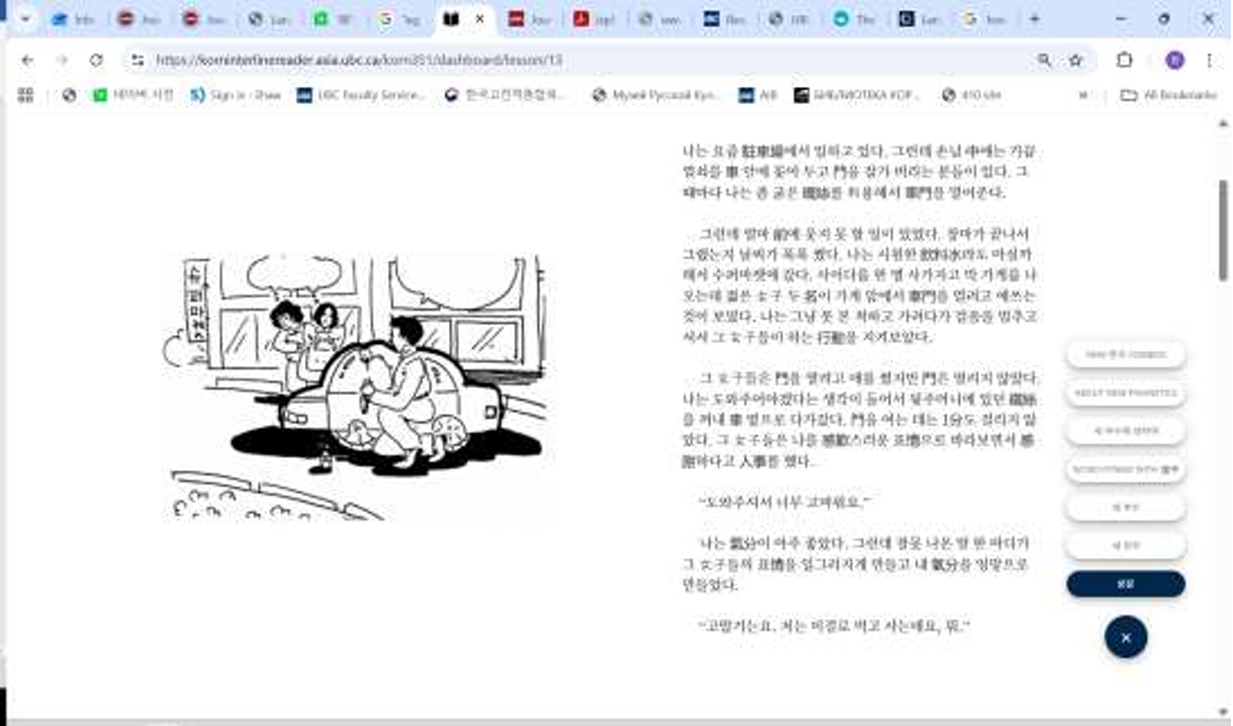
•본문: (Main Text) & Selected Example Sentences
23
The Main Text and selected example sentences repeat content from the corresponding lesson in Advanced Korean, but carry target sinographs and sinographic vocabulary for learning in the parallel Sino-Korean course.
•New Vocabulary (for the Main Text and Selected Example Sentences)
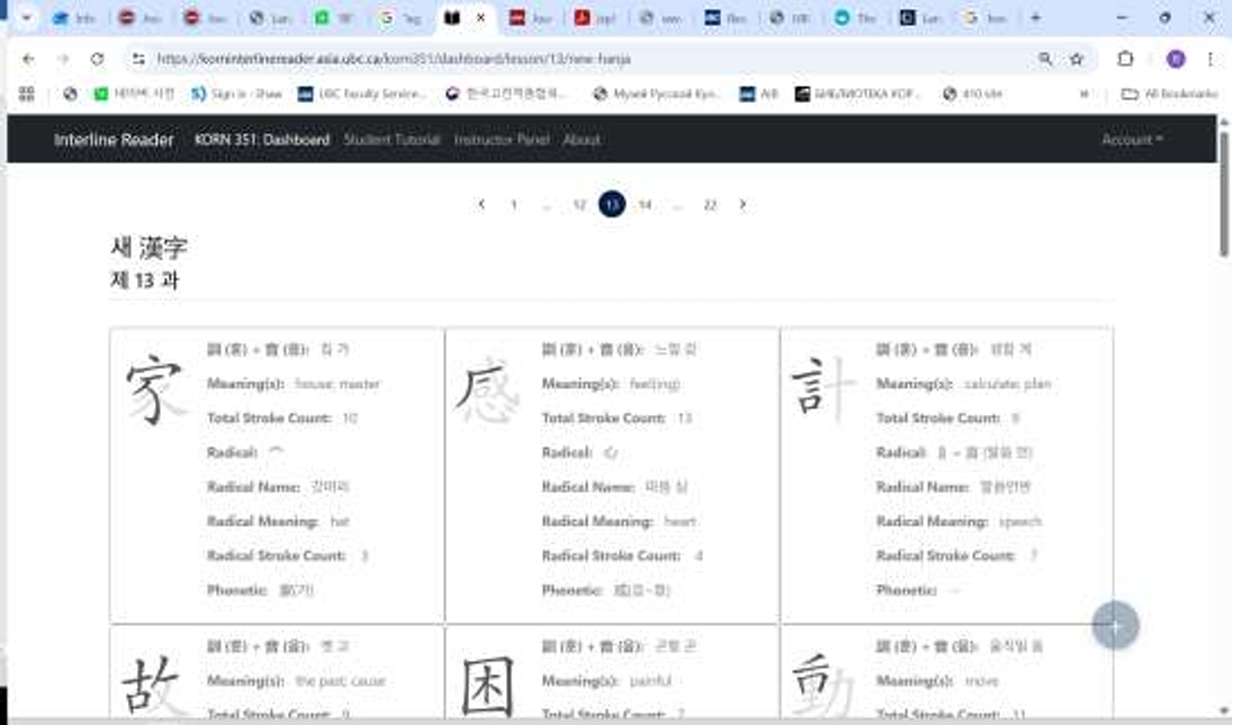
•새 한자: 25-30 new sinographs
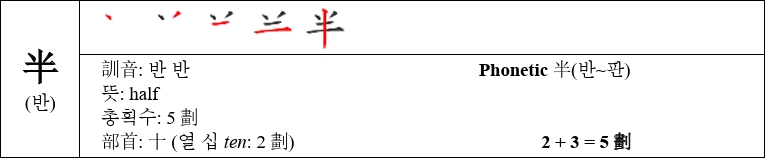
Each sinograph is introduced with stroke order; 훈음; 뜻; 총획수; 부수 (including radical name, if relevant); and Phonetic (when relevant). E.g. (from Lesson 13):
•새 부수: all new 부수, in same format as 새 한자
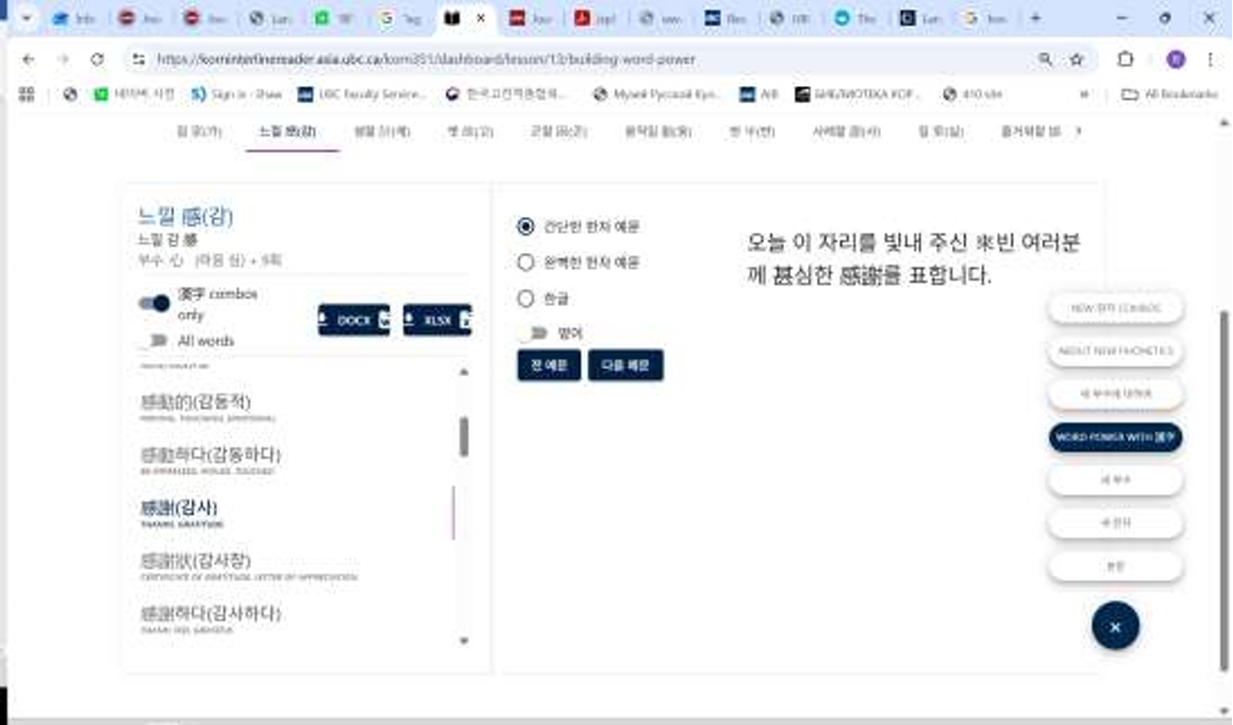
•Building Word Power with 漢字
All new sinographs presented in order, along with vocabulary that incorporates them. New vocabulary is presented as New Combos—漢字(한자); and Non-Combos—한자(漢字). For example, the first target character in Lesson Thirteen is 머무를 駐 (주):
머무를 駐 (주) stay; halt
[部首: 馬 (말 마 horse) + 5劃]
駐-(주-) stationed in …
駐美(주미) stationed in the US
駐日(주일) stationed in Japan
駐韓(주한) stationed in Korea
駐車(주차) parking
駐車券(주차권) [–꿘] parking voucher, parking stub
駐車場(주차장) parking lot
駐車(주차)하다 park a vehicle
지하주차장(地下駐車場) basement garage; underground parking lot
常駐(상주)하다 stay (permanently) at, be (permanently) stationed in
有料駐車場(유료주차장) paid parking lot
주둔(駐屯)하다 be stationed in/at
주재(主宰) resident (in, at)
주재원(駐在員) expat employee
•새 部首에 대하여
Information about the new radicals, and associated vocabulary, if the 부수 in question functions independently as a character.
•About the New Phonetics
For example, again from Lesson Thirteen and relevant to 머무를 駐:
Phonetic 主(주)
Observe the phonetic element 主(주) in the following sinographs, all pronounced 주:
主 住 注 柱 註 炷
•New 漢字 Combos: a list of all the New Combos in the lesson
•漢字 문장 연습 (Practice Sentences)
Practice sentences for translation to assign as homework.
•Supplementary Vocabulary: for the Practice Sentences
•漢字 연습 (Practice)
Practice sheets for writing out the characters as homework.
In effect, then, the only overlap between Advanced Korean and the Sino-Korean Companion is to be found in the Main Texts and some of the Selected Example Sentences which carry and exemplify the new target sinographs.
The Interline Reader includes all of the content from the
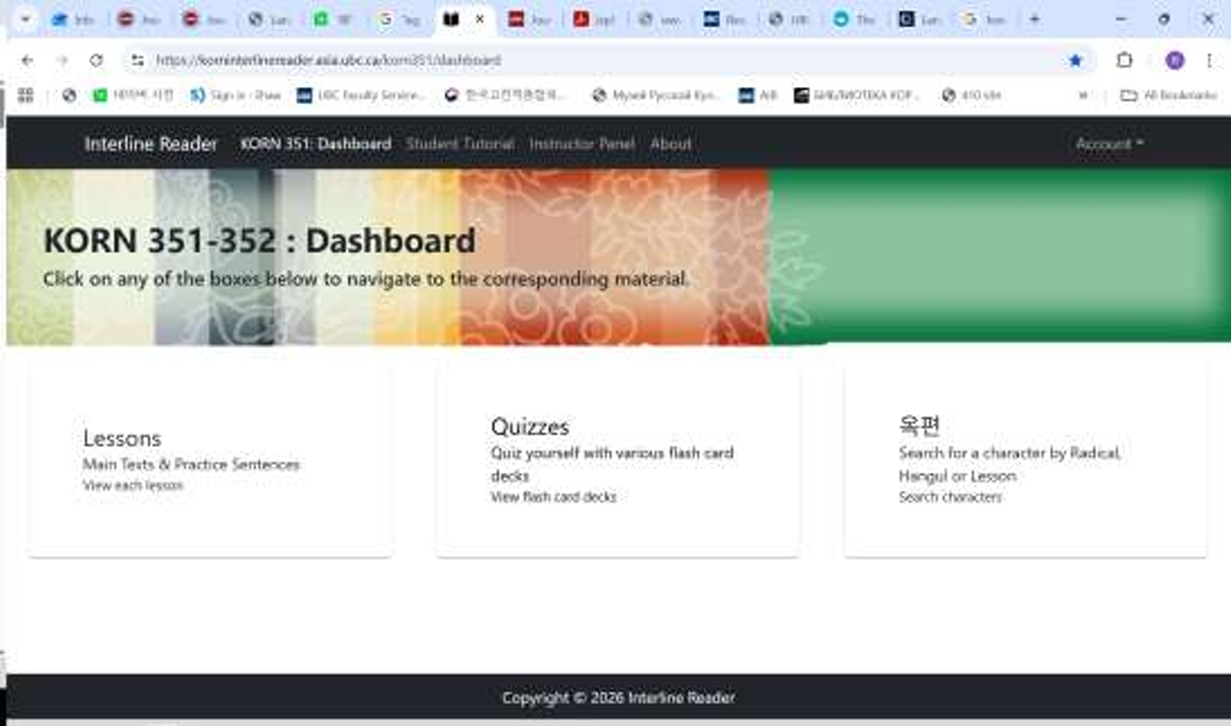
Sino-Korean Companion but adds much more, and is optimized for use on tablets and cell phones. It is divided into three sections:
Lessons, Quizzes, and 옥편.
The Lessons contain the same sections as the
Sino-Korean Companion: 본문, 새 한자, 새 부수, Word Power with 漢字, 새 부수에 대하여, About the New Phonetics, and New 한자 Combos.
The 새 한자 and 새 부수 sections include animations for the stroke order for each character,
but the main bonus feature is the “Word Power with 漢字” section, which includes example sentences for every word introduced in the lesson (at least two example sentences per word).
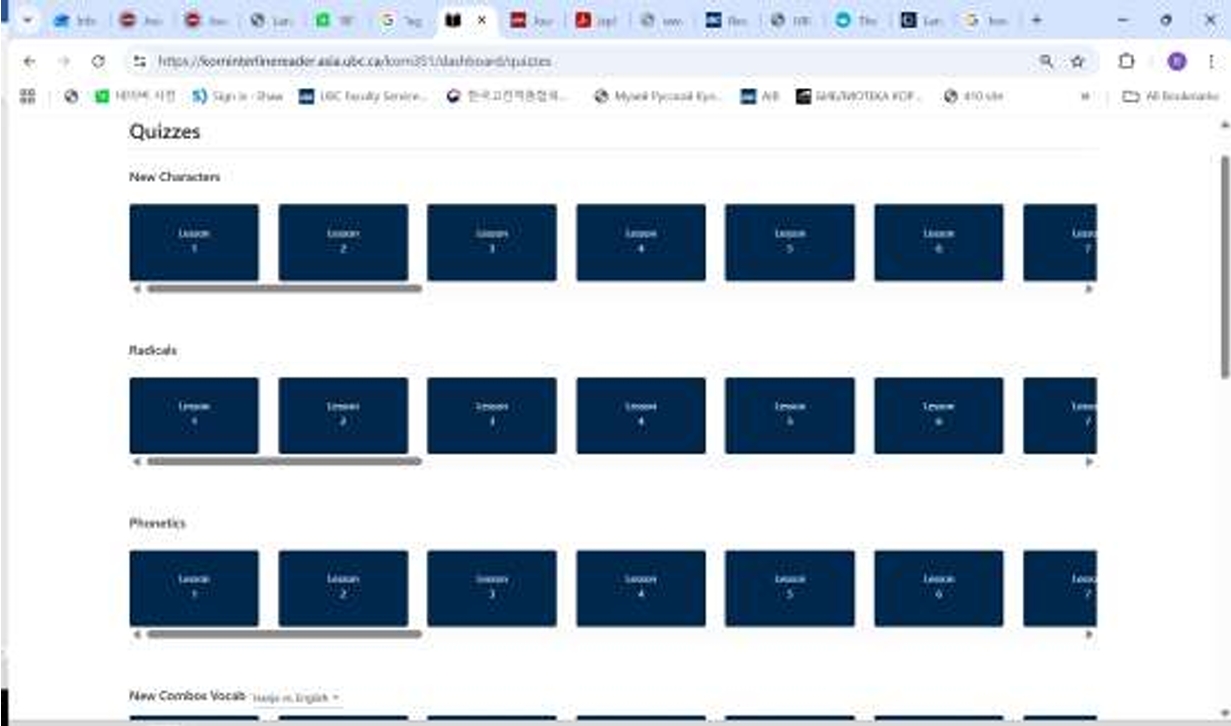
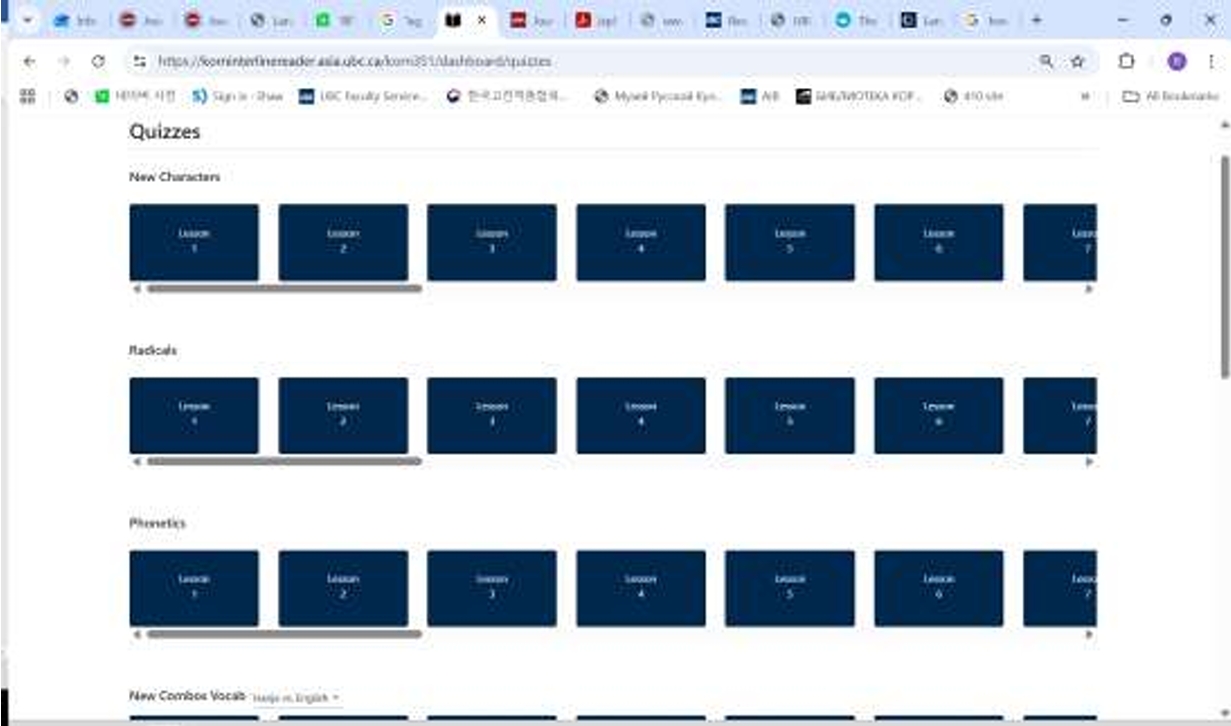
The “Quizzes” section of the lesson supplements and reinforces all of the above with flashcard-type quizzes for every aspect of the sinograph learning process: New Characters, Radicals, Phonetics, New Combos Vocabulary, All Combos Vocabulary, Practice Sentences, 부수 Mechanics, and 한자 Mechanics.
24
At UBC, with its 14-week terms, we cover seven lessons per semester, for a total of fourteen lessons (out of 20 so far) and approximately 400 characters. The long-term goal is to build out the materials as a mobile app that includes all of the characters covered in the South Korean sinographic proficiency exams.
How Are the UBC Interline Reader Materials Different from Others?
The ideographic myth
For starters, we differ from traditional accounts in eschewing any reference to sinographs as ‘pictograms’ or ‘ideograms’. As Boltz points out,
25 sinographs with pictographic origins comprise only a tiny fraction of the total number, and we see little utility in perpetuating what many scholars have come to designate as the ‘ideogram’ myth: as DeFrancis
26 and Unger,
27 among others, have shown, ‘ideogram’ is a concept dreamed up by Westerners and taken over from them in the last century or so by the Chinese, Japanese, and Koreans. Erbaugh
28 is unequivocal on this point: “Invoking the ideographic myth should by now be as embarrassing as the flat earth hypothesis.” More recently, the title of Yang-Drocourt (2022) says it all:
L’Écriture Chinoise: Au-delà du mythe idéographique (Chinese writing: Beyond the ideographic myth).
29
Our materials also differ from traditional approaches in their attitude toward the typological classification of sinographs. Most
hancha textbooks start by teaching about the
yuksŏ 六書—the Six Categories or ‘six [forms of] script’—a typology of sinographs that dates back to the last decades of the first century BC. While there is no harm in knowing about this as cultural history, it has little pedagogical value today. Here they are:
30
指事 (chisa): ‘indicating the matter’
象形 (sanghyŏng): ‘representing the form’
形聲 (hyŏngsŏng): ‘formulating the sound’
會意 (hoeŭi): ‘conjoining the sense’
轉注 (chŏnju): ‘revolved and re-directed [graphs]’
假借 (kach’a): ‘loaned and borrowed [graphs]’
As Erbaugh notes,
31 two of these six traditional categories reinforce the ideographic myth: (1) characters categorized under the
chisa 指事 ‘indicating the matter’ category such as sang 上 up; on and
ha 下 down; under, and (2) the so-called
sanghyŏng 象形 (pictograph) characters like
il 日 (sun) and
wŏl 月 (moon). Of these Six Categories, the 形聲
hyŏngsŏng or ‘formulating the sound’ category designates the phonetic-semantic compounds that account for the vast majority of characters, which is precisely why our materials focus on teaching the phonetic components of sinographs in their Sino-Korean readings.
Thus, rather than reinforce an ideographic myth that mystifies and Orientalizes sinographs with little or no pedagogical payoff, we stick to an analytic approach. Of course, any ‘tricks’, visuals, or mnemonic devices that can aid a learner in remembering the characters are fair game; but they are just that—tricks—and not an inherent feature of Chinese writing.
Lists vs. ‘readers’
Our materials differ somewhat in format from the other Sino-Korean textbooks currently on the market. Lukoff (1982/1989),
32 Francis Park (1984),
33 and Cho et al. (2002) are all in traditional ‘reader’ format with numerous short ‘canned’ (inauthentic) texts carrying the sinographs to be learned, followed by various short exercises. Our materials also include lessons in a textbook that start with a ‘canned’ text, but the Main Texts are previously studied texts from a ‘parallel universe’. Our lessons also feature numerous lists structured so as to maximize vocabulary learning—all backed up by rich example sentences on the Interline Reader website (taken from a range of online sources: the
Yŏnse Hyŏndae Han’gugŏ Sajŏn; the Naver dictionary; the
Kungnip Kugŏwŏn’s P’yojun Kugŏ Taesajŏn; the Koryŏ Taehakkyo Minjok Munhwa Yŏn’guwŏn’s impressive
Koryŏdae Han’gugŏ sajŏn34; and the National Institute of Korean Language’s online
Korean-English Learners’ Dictionary) along with a rich array of self-quizzing functions. In principle, the Interline Reader materials could work fine independently of the Main Texts from
Advanced Korean, thanks to the robust array of Example Sentences.
The point of our course’s detailed vocabulary lists is this: the focus is not so much on learning individual hancha as it is on acquiring intuitions about the webs of interconnected vocabulary that hancha help create. These networks of vocabulary items are more important than the individual characters, and in Korean, especially, they are more important than being able to write the individual characters. In other words, it is more important to have an appreciation of the different words that include 나라 국 國 (nation, country) in them—and be able to reproduce them in just han’gŭl— than it is to be able to reproduce the sinograph 國 itself. To put it another way, “knowing how a character is written has very little value in the modern Korean society” (Kim 2001: ii), but all learners of Korean, inside Korea or out, nonetheless benefit from learning the written form of the sinographs as part of the vocabulary-building process.
Questions of authenticity and target audience
‘Authenticity’ has been a key concept in language education for some decades now. The more ‘authentic’ teaching materials are, the better, and the more advanced learners become, the more desirable it is to base pedagogy on authentic teaching materials. But what does it mean to use ‘authentic’ materials for a beginning course in Sino-Korean? And who are the learners wanting to learn sinographs in their Korean readings? In earlier days, when sinographs had greater visibility in South Korean print culture, the answer to the authenticity question was easy: use newspaper articles and editorials and/or academic materials. But current events articles, editorials, and academic materials quickly grow outdated, and in any case, nowadays fewer and fewer newspapers use sinographs; even academic materials tend to use them much less, or else employ parallel 한글(漢字) or 漢字(한글) formats.
As for the target audience question, Anglophone Korean language students today are different from the tiny handful of students in the 1980s who were the intended consumers of books like Lukoff (1982/1989) and Francis Park (1984). Lukoff’s book, with its daunting 1,200 hancha, was academically focused and targeted at rather specialized, typically non-heritage, Korean Studies students who, if they weren’t already graduate students, were likely considering graduate school and/or otherwise needed training in academic Korean with a heavy Sino-Korean focus. And Park’s book, with an even more staggering 1,554 different hancha, was designed originally for intensive in-country training courses for Maryknoll missionaries. But nowadays both the numbers and diversity of Anglophone Korean language learners have increased dramatically, making it more difficult to pinpoint with any accuracy appropriately ‘authentic’ materials for learning hancha.
The upshot of all this, we would claim, is that it makes no sense to worry about the ‘authenticity’ of one’s reading texts in a course like this. Any ad hoc piece of scaffolding will suffice, as long as it helps the student learn hancha and build vocabulary. But in one respect the Sino-Korean Companion materials nevertheless incorporate a significant volume of ‘authentic’ materials: the thousands of example sentences on the Interline Reader website. The bulk of these are taken from the online materials and apps mentioned above, all authored by and (with the exception of the Korean-English Learners’ Dictionary) for Koreans. What sets the example sentences on the Interline Reader apart from their source websites and apps is that we have provided them in multiple toggle-able versions: a) han’gŭl-only; b) with sinographs the learners know; c) with sinographs for all sinographically derived words; and d) an English translation.
Given then, that ‘authenticity’ is a pie in the sky for a beginning hancha textbook, we have adopted one more very unauthentic convention in the Main Texts and example sentences for each lesson. Because the Interline Reader is a beginning course with a closed and (relatively) manageable set of hancha, it is easy to track which hancha are known (and which are not) with the vocabulary items in each Main Text. Sometimes, then, it can happen that a binom (e.g., sŏnjo 선조 ancestor(s) and saenghwal 생활 life in Lesson Six) contains one character either previously learned or targeted for learning in the current lesson, and another which has not been studied yet. In cases like this, we apply a ‘mix-and-match’ format: sŏnjo 先조 and saenghwal 生활. By Lesson Six, the students have already learned mŏnjŏ 먼저 先 (sŏn 선) and nal 날 生 (saeng 생), so why not write at least these characters that they know, and allow for some review and reinforcement? The point is to constantly analyze out the hancha building blocks of the Korean lexicon. That such an ad hoc orthographic practice might jar the traditionally educated Korean native speaker’s eye is of little consequence.
Writing the characters
On the other hand, it is authentic, in a Korean cultural context, to de-emphasize the ability to write from memory every character one has ever learned. Highly educated Koreans with significant Sino-Korean reading abilities and able to recognize hundreds or even a few thousand sinographs rarely, if ever, show the apparent anguish or shame evinced so often by educated speakers of Chinese or Japanese when they either slip up on or outright forget how to write a sinograph. “Horrors!” they say, and much hand-wringing ensues. But the Korean’s reaction is a shrug of the shoulder and a dismissive “Whatever—we’ve got 한글, the world’s greatest writing system ever!”
Nonetheless, it is important to learn both the correct strokes and the proper stroke orders and to practice writing the characters, and provisions are made for this in our course.
Additional resources for learners and teachers
Obviously, one textbook and its accompanying website, however well-conceived and executed, can only be the beginning of a long journey toward mastery of sinographs and sinographic vocabulary in Korean. Some of the resources we recommend to UBC students and interested colleagues are as follows:
Books
Books are increasingly obsolete for the study of sinographs, but a generation ago every serious student of Korean probably owned a copy of Bruce Grant’s
Guide to Korean Characters as well as a handy pocket
okp’yŏn 玉篇 (sinograph dictionary for Koreans—our UBC course includes explicit instruction in how to use one); one of my favorites is the
Tonga sinhwaryong okp’yŏn 東亞 新活用玉篇.
35 Lukoff (1982/1989) and Park (1984; 2000)—if they were still readily available—would make good follow-ons to the
Sino-Korean Companion, and Whitlock and Suh (2001) contains occasional useful mnemonic devices for memorizing characters, but is too pricey and bulky to be of genuine use to most students. Kim (2001) is another useful resource that shares with us the conviction that knowledge of
hancha is empowering in numerous ways, but is a bibliographic rarity. The reality now is that all of these books are decades out of print, and nobody uses books anymore to learn
hancha.
Needless to say, the best resources for hancha now are all electronic and are too many to list here. They also come and go. A quick Google search in han’gŭl for “한자” will yield numerous sites in South Korea; some are pay sites, some are free. I particularly appreciate the following sites:
However, the single most useful resource I have found in preparing the UBC course materials recently has been the
Sokttŭt Sajŏn 속뜻사전 app developed by Chŏn Kwangjin, Professor emeritus of Chinese from Sungkyunkwan University.
36 The app can be found in the app store or at 속뜻사전.com, and includes four different works (all targeted at different users) also available in print form:
Urimal hanchaŏ sokttŭt sajŏn
Kyogwasŏ hanchaŏ sokttŭt sajŏn
Sokttŭt p’uri ch’odŭng kugŏ sajŏn
Sŏnsaengnim hanchach’aek (E. title: Hanja Bible for Teachers)
The app itself is more expensive than most, but is worth every penny, and the Hanja Bible for Teachers is a truly useful resource.
In lieu of a Conclusion
Ultimately, what we have tried to create with our UBC
Sino-Korean Companion textbook and Interline Reader website is the sort of materials for learning sinographs and sinographic vocabulary that I wish I had had when I first undertook the study of Korean more than forty years ago. So far, they seem to work surprisingly well for our UBC students, and I am cautiously optimistic that others might find them useful too. Unfortunately, few other KLE colleagues in North America seem concerned with sinograph education. By contrast, some Korean Studies programs in Europe (e.g., Paris Diderot, Leiden, Copehagen, and Ruhr-Universität Bochum) seem to be much more enlightened when it comes to including training in sinographs and sinographic vocabulary, but North American and European students alike are disappointed when they enroll in
ŏhaktang 語學堂 (language institute) courses at South Korean universities and find little or nothing on offer in the way of systematic instruction in sinographs. And what they do find on offer in Korean
ŏhaktang courses is usually dreadful.
37
In the case of North America, it has always been the case that four years of undergraduate study in Chinese, Japanese, or Korean was insufficient to prepare students for graduate studies in Chinese, Japanese, or Korean Studies. The investment of time and effort required for ‘CJK’ on the part of SAE learners is four or five times greater than it is for SAE languages, and in the case of Chinese and Japanese, partial solutions were put in place early on in North America: intensive double-credit courses in the first two years of university and the establishment in the early 1960s already of well-funded Interuniversity Centers (‘IUCs’) for year-long advanced intensive courses in academic Chinese and Japanese in Taipei (later Beijing) and Yokohama. As a result, most Anglophone North American colleagues (researchers) in Chinese and Japanese Studies who have learned these languages the proverbial ‘hard way’ are capable of giving fluent oral presentations on their research projects in Chinese and Japanese in front of their colleagues in China and Japan (among other benefits of their advanced academic proficiency).
But KLE and Korean Studies in North America lag far behind. I am not aware of a single university that has ever offered two years of intensive Korean language instruction, and the IUC at SKKU for Advanced Academic Korean, founded belatedly in 2017 (more than half a century after the Chinese and Japanese IUCs), limps along with only a handful of students, barely five dues-paying member institutions, and three or four fellowships from the Korea Foundation that are barely half what students at the Yokohama IUC receive for similar training in Japanese. When one adds to this the virtual absence of sinograph education in North American KLE programs and the absence of the same in most South Korean university
ŏhaktang programs
38, the result is a recipe for an existential crisis of sorts for Korean Studies: our North American students (and by extension a great many other SAE-speaking students from other countries) are denied the KLE infrastructure essential to acquiring sufficiently high proficiency in academic Korean to be competitive at the highest levels of post-secondary study and research, and the sorts of research they undertake will be increasingly confined to superficial presentist/contemporary topics divorced from Korean-language textual sources prior to the 1980s.
Notes
Figure 1.Dashboard for Interline Reader KORN 351-352 course materials
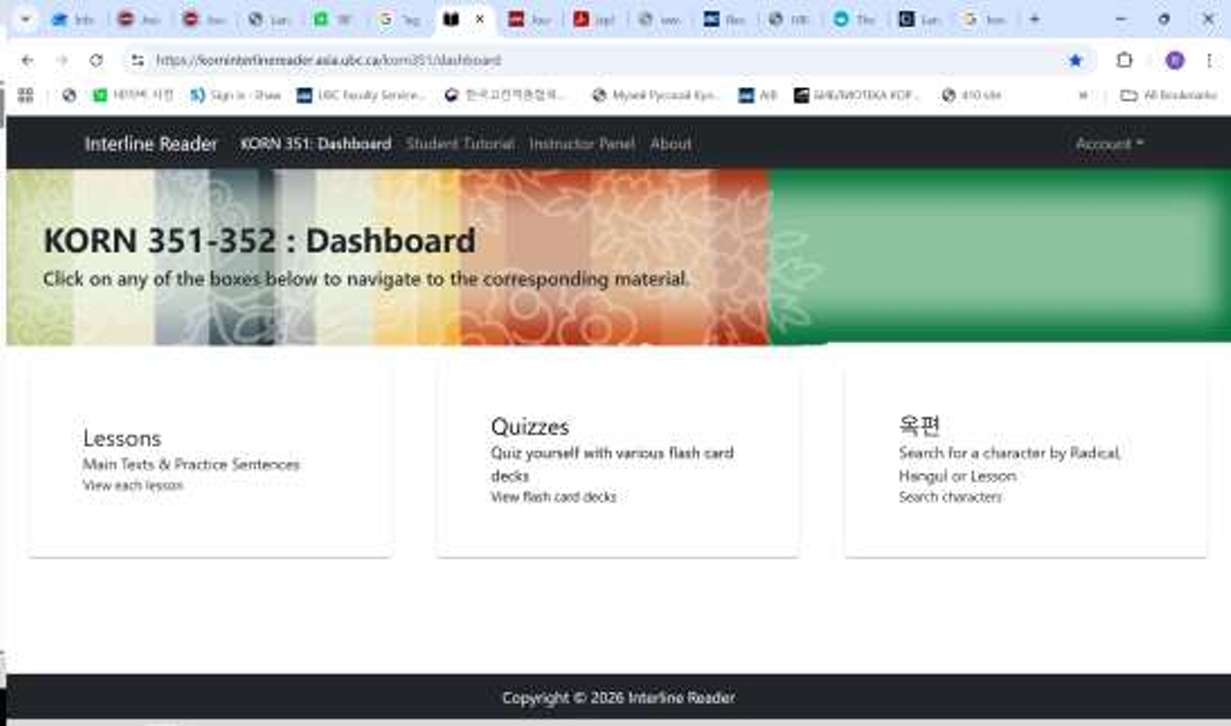
Figure 2.본문 (Main Text) page and navigation tools
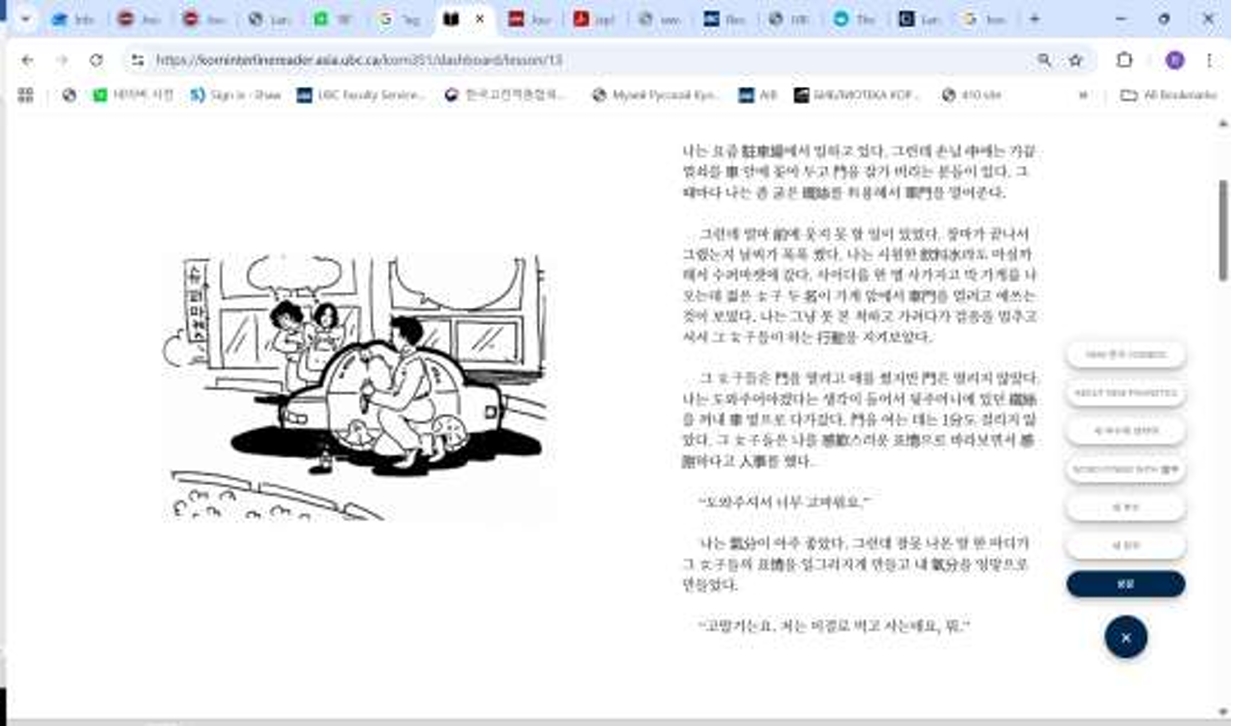
Figure 3.Stroke animations page for Lesson 13 “새 漢字”
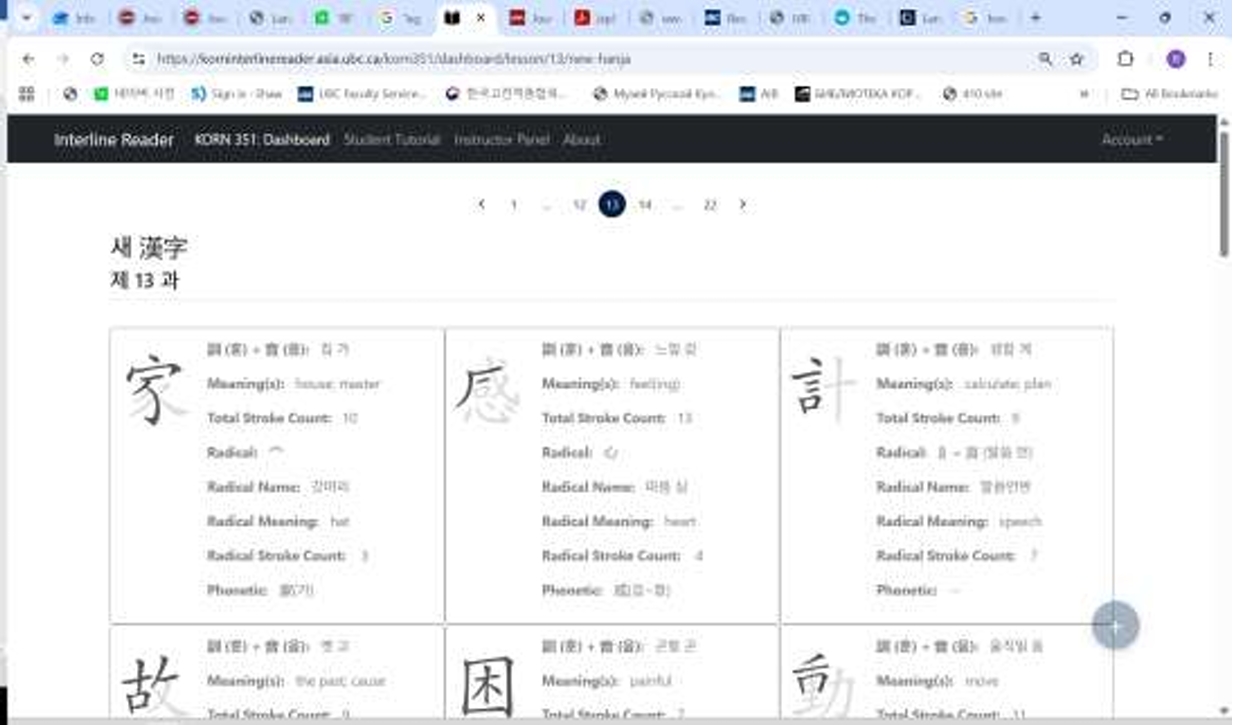
Figure 4.“Building Word Power with 漢字” page for 느낄 感(감)
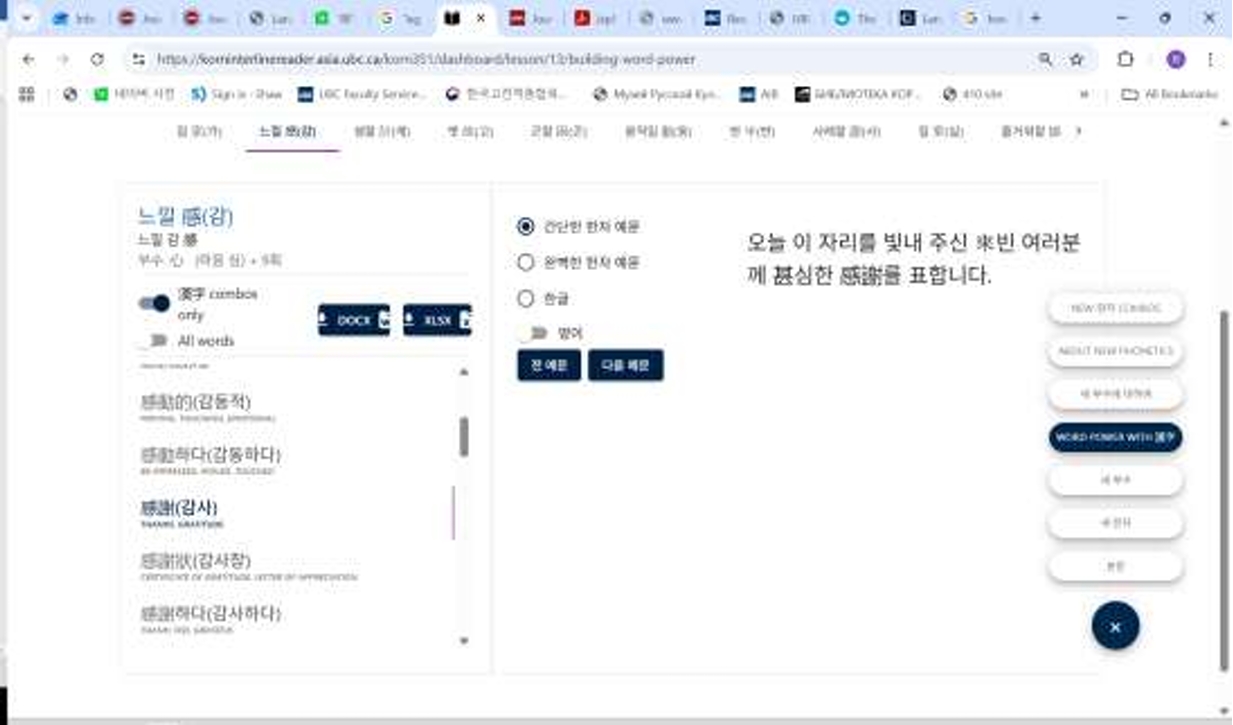
Figure 5.Screenshot of “Quizzes” page
Reference List
- Allanic, Bernard. “Le débat sur la place attribuée aux caractères dans l’enseignement du chinois langue étrangère et l’émergence d’une école française de la disjonction oral/écrit” [The debate over the place of characters in the teaching of Chinese as a foreign language and the emergence of a French school that separates the oral and the written]. In B. Bouvier-Laffitte and Y. Loiseau, eds. Polyphonies franco-chinoises. Paris: L’Harmattan, 2015.
- Allen, Joseph. “Why Learning to Write Chinese is a Waste of Time: A Modest Proposal.” Foreign Language Annals 41, no.2 (2008): 237-251.
- Bellasen, Joël. “Is Chinese Eurocompatible? Is the Common Framework Common? The Common European Framework of Reference for Languages Facing Distant Languages.” In N. Tomimori, M. Furihata, K. Haida, N. Kurosawa, and M. Negishi, eds. International Symposium Report 2011: New Prospects for Foreign Language Teaching in Higher Education - Exploring the Possibilities of Application of CERF. Tokyo: World Language and Society Education Centre (WoLSEC), Tokyo University of Foreign Studies, 2012.
- Boltz, William. The Origin and Early Development of the Chinese Writing System. American Oriental Series 78. New Haven, CT: American Oriental Society, 2003.
- Bruneton, Yannick. “Han’gukhak chŏn’gong P’ŭrangsŭ taehaksaeng ŭl wihan hancha kyoyuk pangbŏmnon” 韓國學專攻 프랑스 大學生을 위한 漢字敎育 方法論 [Educational methodology for sinograph education for French university students specializing in Korean Studies].” Kugŏ kyoyuk yŏn’gu 18 (2006): 145-165.
- Byon, Andrew Sangpil and Danielle Ooyung Pyun, eds. The Routledge Handbook of Korean as a Second Language. London: Routledge, 2022.
- Chin, Chaegyo. “Pukhan ŭi hanmun kyogwasŏ yŏn’gu: Kim Chŏngŭn sidae ŭi hyŏnhaeng kyogwasŏ rŭl chungsim ŭro” [A study of North Korean hanmun textbooks: With a focus on current textbooks of the Kim Jong Un era].” Taedong hanmunhak 55 (2018): 197-240.
- Cho, Choon-Hak, Yeon-Ja Sohn, and Heisoon Yang. Korean Reader for Chinese Characters. KLEAR Textbooks in Korean Language. Honolulu: University of Hawai'i Press, 2002.
- DeFrancis, John. “The Ideographic Myth.” In Mary S. Erbaugh, ed. Difficult Characters: Interdisciplinary Studies of Chinese and Japanese Writing. Columbus, OH: National East Asian Language Resource Center, Ohio State University, 2002.
- Erbaugh, Mary S. “How the Ideographic Myth Alienates Asian Studies from Psychology and Linguistics.” In Mary S. Erbaugh, ed. Difficult Characters: Interdisciplinary Studies of Chinese and Japanese Writing. Columbus, OH: National East Asian Language Resource Center, Ohio State University, 2002.
- Grant, Bruce K. A Guide to Korean Characters: Reading and Writing hangŭl and hancha. 2nd rev. ed. Elizabeth, NJ: Hollym, 1979/1982.
- Haspelmath, Martin. “How Young is Standard Average European?.” Language Sciences 20, no.3 (1998): 271-187.
- ———. “The European Linguistic Area: Standard Average European.” In Martin Haspelmath, ed. Language Typology and Language Universals (Handbücher zur Sprach- und Kommunikationswissenschaft). Berlin: de Gruyter, 2001.
- Hat’ori Reikko. “Pukhan ŭi hancha kyoyuksa” [History of Chinese character education in North Korea]. In Kim Minsu, ed. Pukhan ŭi chosŏnŏ yŏn’gusa, vol. 2. Seoul: Nokchin, 1991.
- Jorden, Eleanor. “Teaching Johnny to Read Japanese: Some Thoughts on Chinese Characters.” In Mary S. Erbaugh, ed. Difficult Characters: Interdisciplinary Studies of Chinese and Japanese Writing. Columbus, OH: National East Asian Language Resource Center, Ohio State University, 2002.
- Jung, Min·Yu-Cho, Young-mee. “Chinese character education in teaching Korean as a foreign language: A new paradigm of cognitive expansion” (K. title: “Oegugŏ rosŏ Han’gugŏ kyoyuk esŏ hancha kyoyuk ŭi munjechŏm kwa kaesŏn panghyang”).” The Korean Language in America 11 (2006): 64-83.
- Kim Kye-Chong. ShipBai SaJun I [Tenfold dictionary I]. New York: Han Sung Group, 2001.
- King, Ross. “Introductory-level Korean language Textbooks for the Anglophone Adult Learner: A Survey of Three Recent Publications.” Journal of Korean Studies 10, no.1 (2005): 145-190.
- King, Ross. “Ditching ‘Diglossia’: Describing Ecologies of the Spoken and Inscribed in Pre-modern Korea.” Sungkyun Journal of East Asian Studies 15, no.1 (2015): 1-19. McDonald, Edward. “The Challenge of a “Lacking” Language. The Historical Development of Chinese Grammatics.” Chinese Language and Discourse 8, no.2 (2017): 244-265.
- King, Ross, Jaehoon Yeon, Chungsook Kim, and Don Baker. Advanced Korean. Tokyo; Rutland, Vermont; Singapore: Tuttle Publishing, 2015.
- Kornicki, Peter. Languages, Scripts, and Chinese Texts in East Asia. Oxford, OX: Oxford University Press, 2018.
- Lukoff, Fred. A First Reader in Korean Writing in Mixed Script. Seoul: Yonsei University Press, 1982/1989.
- Park, Francis Y. T. Speaking Korean, book III: A Guide to Chinese Characters. Elizabeth, NJ: Hollym International, 1984.
- ———. Speaking Korean, book IV: A Guide to Newspaper Editorials. Elizabeth, NJ: Hollym International, 2000.
- Rogers, Michael C., Clare You, and Kyungnyun K. Richards. College Korean [Taehak Han’gugŏ]. Berkeley: University of California Press, 1992.
- Sŏul Taehakkyo Ŏnŏgyoyugwŏn. Ch’ogŭp, chunggŭp hancha (Han’gugŏ kwajŏng 2) [Novice- and Intermediate-level sinographs (Korean Level 2)]. Seoul: Sŏul Taehakkyo Ŏnŏgyoyugwŏn, 2002.
- Son Yŏnja. Oegugin ŭl wihan saenghwal hancha [Daily life sinographs for foreigners]. Seoul: Yŏnse Taehakkyo Han’gugŏhaktang, 1992.
- Sun, Kyung-hwa, Stephanie Bates, and Emily Przylucki. Your First hanja Guide: Learn Essential Chinese Characters Used in the Korean Language. Park Ridge, IL: KONG & PARK USA, Inc., 2018.
- Tusan Tonga Sasŏ P’yŏnjipkuk. Tonga sin hwaryong okp’yŏn. [Tonga new practical okp’yŏn]. 2nd edition. Seoul: Tusan Tonga, 1975/2003.
- Unger, J. Marshall. “The Very Idea: The Notion of Ideogram in China and Japan.” Monumenta Nipponica 45, no.4 (1990): 391-411.
- ———. “Memorizing kanji: Lessons from a Pro.” In Victor Mair, ed. Schriftfestschrift: Essays on Writing and Language in Honor of John DeFrancis. Philadelphia: Department of Oriental Studies, University of Pennsylvania, 1991.
- ———. Ideogram: Chinese Characters and the Myth of Disembodied Meaning. Honolulu: University of Hawai’i Press, 2004.
- Wang, Ruojiang. “You Faguo ‘zi ben wei’ hanyu jiaocai yinfa de sikao” [Reflections on the organization of Chinese textbooks from the French ‘primacy of sinographs’].” Shijie hanyu jiaoxue 3 (2000): 89-98.
- Whitlock, James C., and Kyung Ho Suh. Chinese Characters in Korean: A ‘Radical’ Approach—Learn 2,300 Chinese Characters through their 214 Radicals. Seoul: Ilchokak, 2001.
- Yang-Drocourt, Zhitang. L’Écriture Chinoise: Au-delà du mythe idéographique [Chinese writing: Beyond the ideographic myth]. Paris: Armand Colin, 2022.
- Yŏnse Taehakkyo Han’gugŏhaktang (ed.) Hancha wa hamkke paeunŭn Hangugŏ [Learning Korean with Sinographs]. Seoul: Yŏnse Taehakkyo Ch’ulp’anbu, 2006.

 News
News