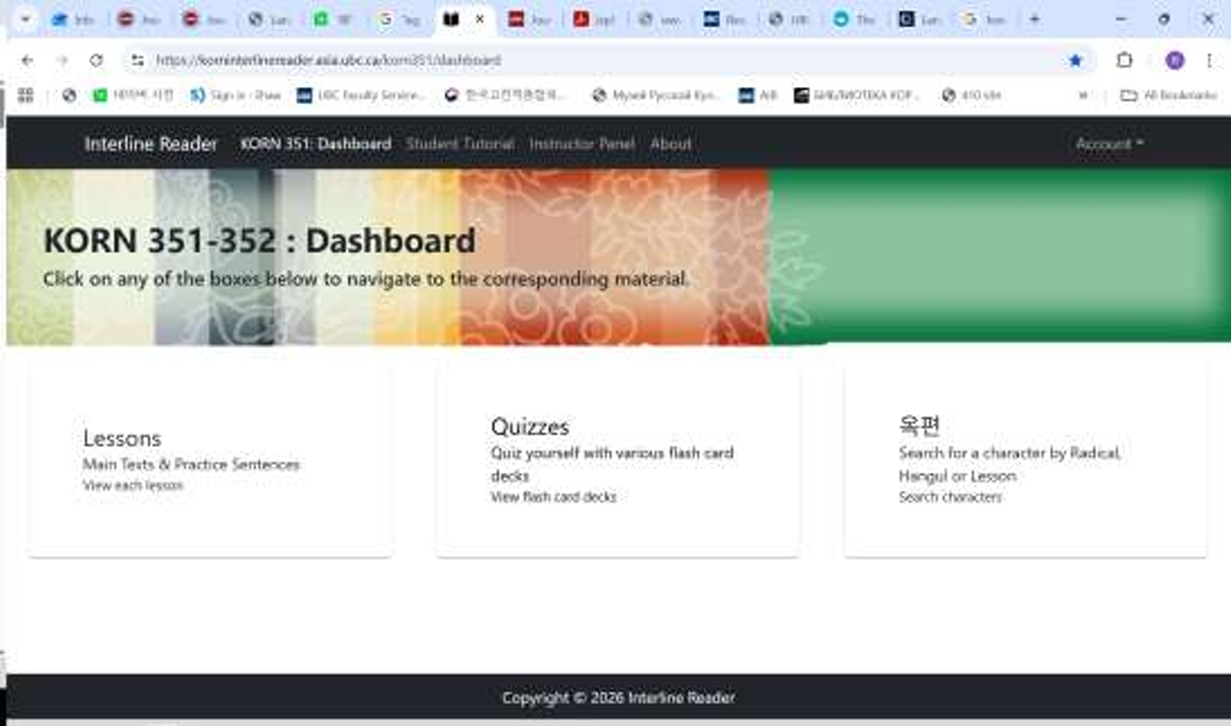
In the context of a special issue on education outside Korea, this paper surveys the current status of sinograph education in Korean Language Education (KLE) for foreigners, and finds that there is a dearth of both research on and teaching materials for hancha kyoyuk. Hence the “First Things First” in the title: we can hardly expect to make progress in hanmun education when so little exists in the way of resources for and courses in sinograph education—the single most basic prerequisite for teaching hanmun. After suggesting a number of reasons for the current lamentable neglect of hancha education, the paper draws some illustrative comparisons with sinograph education in Japanese Language Education and Chinese Language Education before rehearsing a number of compelling justifications for including a robust hancha education component in KLE (whether for Koreans or foreign learners of Korean). The remainder of the paper introduces the pedagogical ideology and methodology behind the Advanced Korean: Sino-Korean Companion textbook and its companion online resource, the UBC Interline Reader.
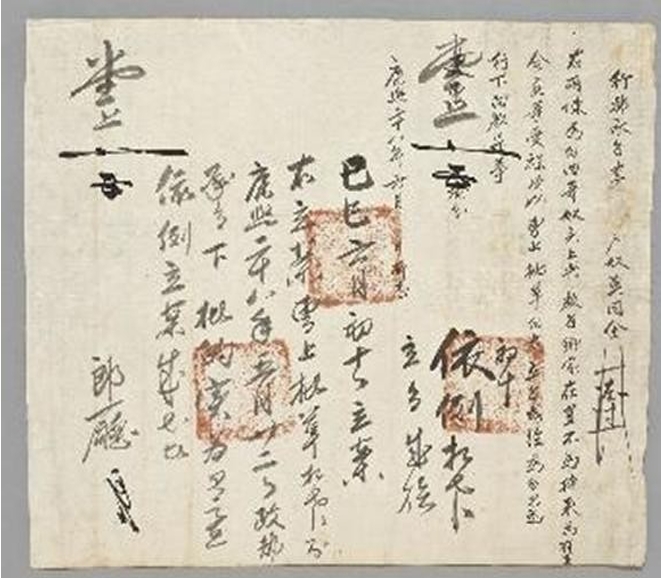
A Sino-Korean literature textbook for English-speaking college students, currently under development, should aim to highlight the unique characteristics of the history of Sino-Korean literature, offering distinct value compared to previous textbooks that primarily focus on Chinese classics. This paper outlines the design of a curriculum for teaching ‘Korean-style’ Sinographic literature in a single chapter of the new textbook, which was developed to address the mismatches between literary Chinese and vernacular Korean. The proposed curriculum is divided into two parts, each with three sections, and is designed to systematically convey the history, scope, and grammatical features of ‘Korean-style’ Sinographic literature. Part I addresses the historical context of Korean literature and examines how to define and delineate the boundaries of ‘Korean-style’ Sinographic literature. This part includes: Section 1, an explanation of the linguistic reasons behind the invention of ‘Korean-style’ Sinographic literature; Section 2, an overview of the historical development of ‘Korean-style’ Sinographic literature; Section 3, a justification for selecting Idu as a representative style among other Korean Sinographic writing systems. Part II focuses on approaches for teaching the grammatical elements of Idu and incorporating textual examples that demonstrate its practical usage. This part includes: Section 4, an introduction to the basic elements of Idu; Section 5, an analysis of the grammatical structure of Idu; Section 6, textual examples illustrating the use of Idu in historical contexts.
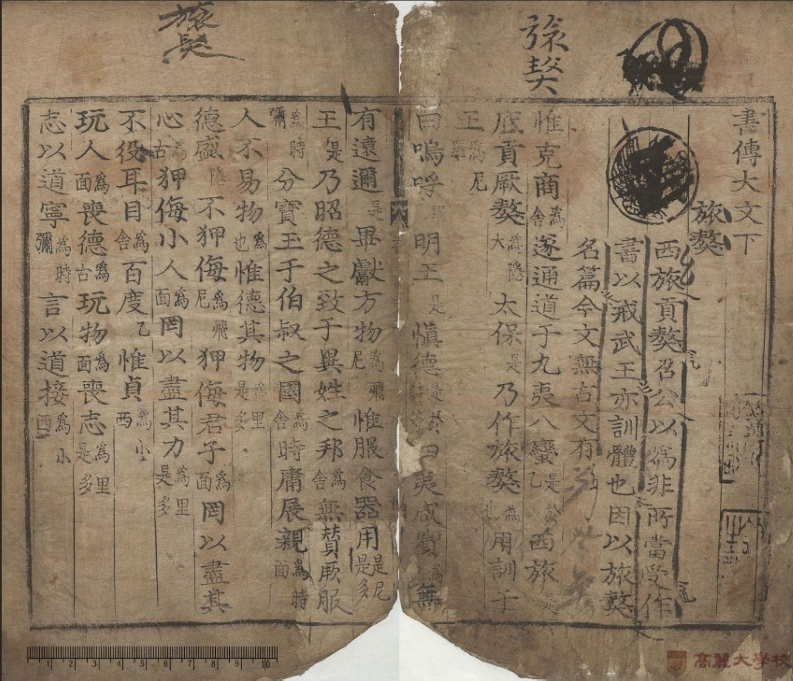
This study examines the development of royal-led publishing culture and the formation of reading practices in early Chosŏn. The Chosŏn court institutionally defined the content and method of canonical reading through the importation and reprinting of the Yongle emperor's imperially commissioned Sishu wujing daquan and Xingli daquan, the compilation of comprehensive annotated editions such as the Sajŏngjŏn hunŭi on the Zizhi tongjian, and the kugyŏl projects of the Sejo reign and the vernacular translation projects of the Sŏnjo reign. Through analysis of the Ŭrhaetype editions of the Nonŏ taemun kugyŏl and the Sŏjŏn taemun preserved in the Hwasan Collection at Korea University Library, this study identifies at least two distinct kugyŏl traditions existing between the Sejo-period kugyŏl project and the Sŏnjo-period vernacular translation project. It further demonstrates that Yi Hwang’s Kyŏngsŏ sŏgŭi reveals the persistence of a flexible scholarly environment in which multiple interpretations coexisted despite the state’s efforts to establish a single authoritative standard. Through analysis of Yi Sik's “Si ason tŭng,” this study additionally shows that the reading practices of Chosŏn literati unfolded within a dual structure shaped by the tension between state-sanctioned canonical reading and the pragmatic goal of examination success. This tension between what the state sought to teach and what literati actually sought to learn is understood as an enduring issue that resonates with contemporary Korean educational culture.
This paper takes as its point of departure the persistent difficulty in reading Hanmun (Korean Literary Sinitic) texts despite prior knowledge of grammatical rules, and reexamines this problem from cognitive and pedagogical perspectives. It argues that reading failure in Hanmun texts lacking punctuation should not be attributed to an insufficient understanding of individual grammatical items, but rather to a lack of syntactic unit recognition and reading stability. From this perspective, the article focuses on toksong 讀誦, a core practice in premodern Hanmun education, and interprets it not merely as recitation or memorization but as a mode of reading through which syntactic structures are embodied via rhythm and repetition.
Drawing on theories of embodied cognition and skill acquisition, the article demonstrates that toksong functioned as a cognitive mechanism that fostered syntactic familiarity and stabilized grammatical segmentation prior to semantic interpretation. It further examines the place of toksong in modern Hanmun pedagogy and repositions it not as a substitute for grammatical analysis, but as a preparatory reading practice that enables such analysis. By reconceptualizing the reading of Hanmun as a structural experience that precedes meaning-centered interpretation, this study offers pedagogical and theoretical implications for contemporary Hanmun education and research on classical literacy.
Developed in the context of university teaching in Korean studies for beginners in Classical Chinese hanmun, the puzzle method is used to approach unknown texts with a focus on efficiency, as in an exam where time is limited and the use of electronic devices is prohibited. It synthesizes common practices among readers of Classical Chinese, centered around the concept of a “puzzle.” The metaphor works on multiple levels: the text is the puzzle to be reconstructed, its main lines are the ‘big picture’ that the puzzle represents; the pieces are the words, presenting semantic (image) and syntactic (contours) aspects; the pieces are variously loaded with information to suggest the big picture of the puzzle, so that the search primarily targets the most suggestive Sino-Korean characters hancha in order to be effective. The playful aspect of the puzzle, using information provided by characters already known to learners as a starting point to build a search plan that prioritizes the hancha to be searched for, helps develop beginners’ self-confidence. It develops patience, concentration, and reflection in learners, and dispels the belief that the dictionary is a magic tool that immediately provides the correct solution. The method, developed without the use of AI, is environmentally friendly and does not create dependence on specific technological tools, other than knowledge of how to use indexes to search for hancha in paper dictionaries. It was described in detail in a hanmu teaching textbook published in France in 2025.
Although Hanmun formed the backbone of Korean literary culture until the early twentieth century, its position within contemporary Korean Studies in Europe remains precarious. Limited curricular space, funding constraints, and a shortage of trained specialists have often relegated Hanmun to the status of a “luxury” rather than a core component of the field. While existing debates on Hanmun instruction have focused primarily on questions of textual selection, the underlying pedagogy has received comparatively little attention. This article addresses this gap by rethinking Hanmun training through learner-centered, interactive, and multilingual instructional strategies. Drawing on Bloom’s taxonomy as a heuristic framework, the article critiques the teacher-centered transmission model and the monolingual principle that continue to shape language instruction. It examines a corpus of eleven Hanmun textbooks and digital resources published in Korea, North America and Europe, focusing on the extent to which they enable interactivity and multilingual engagement. Building on these analyses, the article develops a set of experimental teaching practices presented in a concluding Hanmun Sandbox. These exercises emphasize chunking, translanguaging, and productive struggle, demonstrating how learners mobilize diverse linguistic and cognitive resources to construct meaning. The article argues that effective Hanmun instruction benefits from treating uncertainty not as an obstacle, but as a productive space for learning and meaning-making.
In the early 20th century, a number of Korean textbooks on Hanmun (Korean Literary Sinitic) were published. These textbooks introduced new ways of understanding and teaching Hanmun grammar. Some of these innovations are highly original and explore experimental ideas.
The hŏsa/silsa paradigm (usually translated as “empty” and “full words” in English) forms the basis of many pre-modern and early modern Literary Sinitic grammars, but these concepts are understood in different ways in each of them. The conventional understanding that hŏsa are ‘function words’ does not sufficiently explain their descriptive usage in early modern Korean grammars. This article investigates how the concept of hŏsa/silsa is understood in Korean Literary Sinitic grammars and textbooks from the Late Chosŏn and Colonial periods, and how it is applied in teaching.
Although these old grammars are clearly outdated in many ways, the grammatical concepts they present still hold some didactic value. Some of these concepts, particularly the hŏsa/silsa concept, are still useful for teaching basic Literary Sinitic courses.




 News
News First
First Prev
Prev