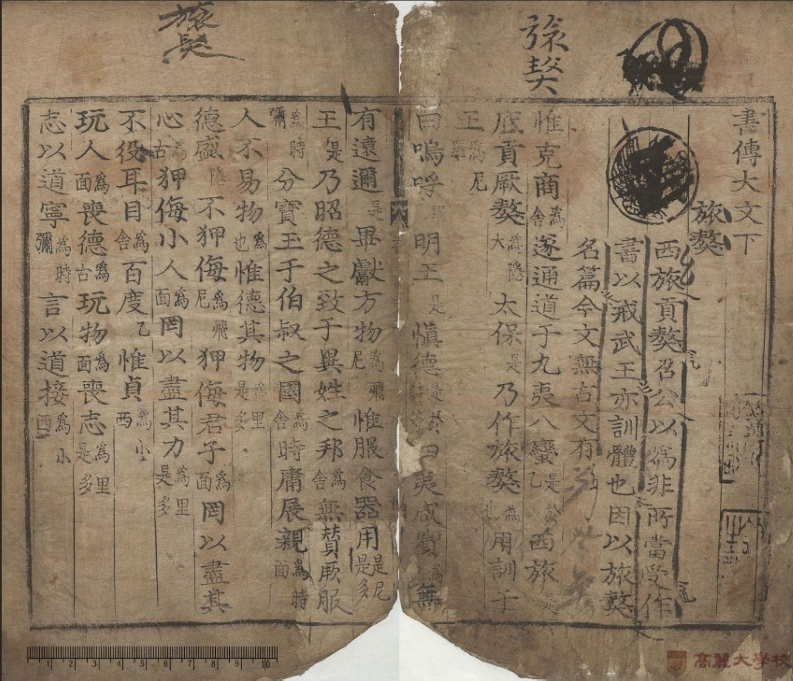
This study examines the development of royal-led publishing culture and the formation of reading practices in early Chosŏn. The Chosŏn court institutionally defined the content and method of canonical reading through the importation and reprinting of the Yongle emperor's imperially commissioned Sishu wujing daquan and Xingli daquan, the compilation of comprehensive annotated editions such as the Sajŏngjŏn hunŭi on the Zizhi tongjian, and the kugyŏl projects of the Sejo reign and the vernacular translation projects of the Sŏnjo reign. Through analysis of the Ŭrhaetype editions of the Nonŏ taemun kugyŏl and the Sŏjŏn taemun preserved in the Hwasan Collection at Korea University Library, this study identifies at least two distinct kugyŏl traditions existing between the Sejo-period kugyŏl project and the Sŏnjo-period vernacular translation project. It further demonstrates that Yi Hwang’s Kyŏngsŏ sŏgŭi reveals the persistence of a flexible scholarly environment in which multiple interpretations coexisted despite the state’s efforts to establish a single authoritative standard. Through analysis of Yi Sik's “Si ason tŭng,” this study additionally shows that the reading practices of Chosŏn literati unfolded within a dual structure shaped by the tension between state-sanctioned canonical reading and the pragmatic goal of examination success. This tension between what the state sought to teach and what literati actually sought to learn is understood as an enduring issue that resonates with contemporary Korean educational culture.
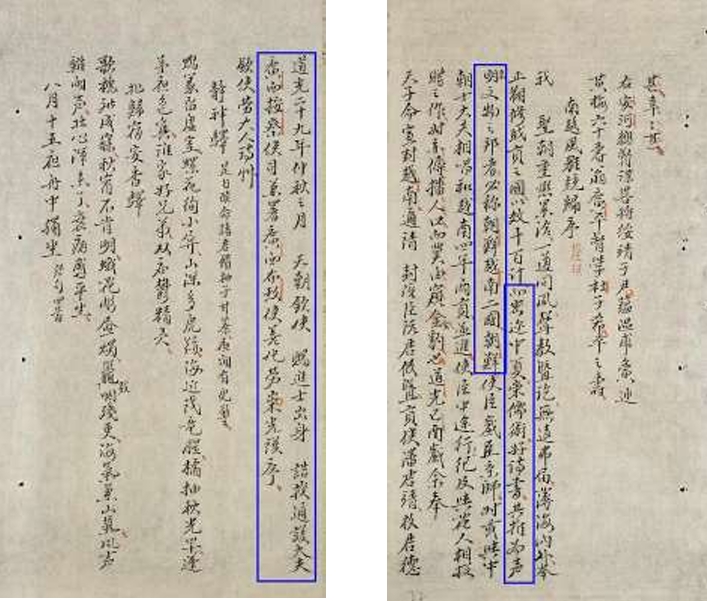
This paper examines the Tonkin Free School (Đông Kinh Nghĩa Thục) as a key site for the transmission and adaptation of East Asian reformist thought in early 20th-century Vietnam. Through an analysis of Văn Minh Tân Học Sách (New Learning Strategies for the Advancement of Civilization), it highlights how Vietnamese intellectuals engaged with and reconfigured ideas from Kang Youwei 康有爲 (1858-1927), Liang Qichao 梁啓超 (1873-1929), Fukuzawa Yukichi 福澤諭吉(1835-1901), and Zheng Guanying 鄭觀應 (1842–1922) within a localized vision of modernization. The study underscores that texts composed in Classical Chinese within the East Asian Sinosphere must be read in their original written language to fully reveal their intertextual references. Translating such texts into a non-Chinese language requires direct engagement with the original rather than reliance on intermediary versions, ensuring the preservation of intertextual richness. Without this process, translations risk distorting a text’s intellectual and cultural dimensions. By reassessing the textual strategies of the Tonkin Free School and subsequent translations of Văn Minh Tân Học Sách, this paper highlights Vietnam’s modernization as an active intellectual negotiation rather than a passive reception of foreign ideas.
Citations
Citations to this article as recorded by
PRECEDENT PHENOMENA IN THE PARADIGM OF RELAYING CULTURAL INFORMATION IN MUSICAL TEXT Bogdan Siuta, Uliana Molchko, Olena Bondarenko, Liubov Gunder ShodhKosh: Journal of Visual and Performing Arts.2026; 7(6s): 20. CrossRef



 News
News First
First Prev
Prev