The second half of the nineteenth century became a time of many dramatic events on the Korean peninsula. With opening the country to trade and diplomacy with Westernized (Japan) or Western (USA, France, Great Britain) countries led to a division within Korean society, since the 1880s Chosŏn (Korea) has entered the age of political and social turmoil. Several fractions, supporting different diplomatic approaches, guided by influential political figures, were formed at the Korean court. It is their constant clashes that can be partly blamed for the inconsistency of Chosŏn’s diplomatic and political course at that time.
In light of the above, it is noticeable that, rather than stressing Kojong’s authority or hinting at the political influence of Hŭngsŏn Taewŏn’gun, the Russian-language part of Korean studies academy is generally paying attention to the Queen, labeling her as the main figure who guided the state policy from the shadow of her husband’s back. In the Russian analytical literature, Queen Min, also being the head of the influential Min-clan, is responsible for seizing power by removing Taewŏn’gun from office; requesting China’s military support to solve the Imo incident of 1882; being involved in appealing to China in 1894 for suppressing the peasant uprising that had brought up the Sino-Japanese War (1894-1895); and generally guiding Chosŏn’s diplomacy throughout 1880s and 1890s, ensuring the country’s rapport with China, the United States, and, later, with Russia. Finally, by Russian-speaking scholars, it was Queen Min’s firm resistance to Japan’s involvement in Korean state affairs in the mid-1890s that ultimately brought her assassination in October 1895.
This paints a vivid picture of Queen Min as one of the most influential politicians of her time, which stays unchallenged and largely unexplained in the Russian-language part of Korean studies academia. This paper is an attempt to shed some light on the roots of this analytical concept. The authors will attempt to outline Queen Min’s assessments present in Russian academia and trace their original source. A critical analysis of these evaluations will also be performed with the aim of revealing the true historical role that Queen Min played in Chosŏn politics and diplomacy in the late nineteenth century.
To achieve these goals, the authors will carry out an analysis of narratives regarding Queen Min and her political role, present in publications of Russian-language scholars (such Tatiana Simbirtseva, Oleg Kurbanov, Vladimir Tikhonov), comparing them to available primary sources (for instance, Kojong Sillok, Queen Min’s diary of 1882, Yun Chi Ho’s diary, memoirs of Lilias Horton Underwood and other) and narratives, present in relevant publications of scholars from English-speaking part of an academia.
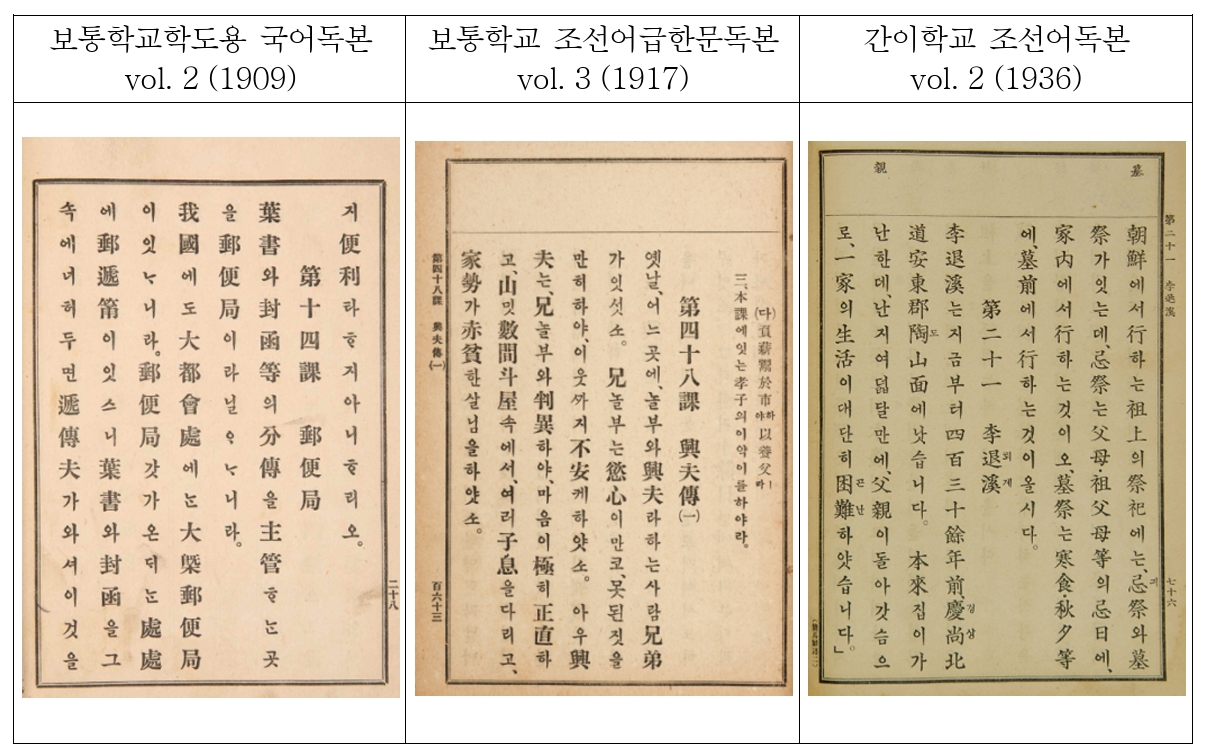
This study examines how Hanja education policy in Korea has changed in relation to shifts in language and script policy since the twentieth century. It takes as its starting point the 1894 Royal Edict of King Kojong 高宗(r. 1863–1907), which marked the transition of Korea’s official writing system from Hanja-centered writing to Han’gŭl-centered writing. To this end, the study divides Korean language and script policy into the periods before and after 1945 and analyzes how the policies of each period affected Hanja education policy in Korea.
The findings are as follows. First, the major policies that influenced Hanja education policy in Korea since the twentieth century include the 1894 Royal Edict of King Kojong, the Act on the Exclusive Use of Han’gŭl of 1948, and the Framework Act on the National Language of 2005. Second, in the process of implementing these policies, various issues related to Hanja education were discussed or put into practice, including arguments for the abolition of Hanja, Hanja education in elementary and secondary schools, Hanja education within the Korean language curriculum, the parallel notation of Hanja, the establishment of commonly used Hanja, and the designation of basic Hanja for Literary Sinitic education. Third, future Hanja education policy should be based on an investigation of Hanja vocabulary actually needed in daily life and official documents. It should also organize educational content around practical use and develop learner-customized methods that make effective use of science and technology.
This study confirms that changes in language and script policy in Korea since the twentieth century have shaped the character and direction of Hanja education policy. It is expected to provide basic material for establishing Hanja education policies suited to the linguistic life ofKorean society in the future.


 News
News First
First Prev
Prev