This study examines how the social status of Hanja 漢字 “Sino-Korean characters” and Hanmun 漢文 “Literary Sinitic” has changed within the history of knowledge formation in Korea, focusing on three interrelated layers: shifts in episteme, the reconfiguration of knowledge baselines, and transformations in curriculum discourse. Hanja and Hanmun were marginalized in the context of modern nation-state language policy and the establishment of disciplinary academic systems, but this did not immediately entail the disappearance of their educational value. Rather, Hanja education came to be assigned new goals, such as deepening vocabulary and literacy, facilitating access to historical texts, and cultivating an understanding of the shared written culture of East Asia. At the same time, the ways in which each country and region evaluated and authorized “valuable” knowledge became a key factor in reshaping the respective status of Hanja and Hanmun. The current state of Japanese Chinese Character 漢字 (kanji) and Classical Chinese 漢文 (kanbun) culture and the surrounding school education, serves as a valuable filter and reference to reflect on Korean linguistic practices and to explore the future direction of Korean Classical Chinese漢文 (hanmun) education. In 2010, for the first time in 29 years, Japan established the “Shin Jōyō Kanji” 新常用漢字 (new regular-use kanji) and revised large-scale educational reforms alongside the Course of Study reforms, bringing significant changes to linguistic practices and written life, as well as Classical Chinese education. This paper follows the author’s work from 2011 that examined the achievements and trends of Classical Chinese education research in Japan from 1945 to 2010. This paper examines the direction of Classical Chinese education and the current state of Chinese Character education research over roughly ten years since 2010.
The framework of this research conducted in this paper is as follows. ① The social, cultural, and educational background of the implementation of the “Shin Jōyō Kanji” which has not been covered or sufficiently addressed in previous research, and the content of the 2017-2018 revised Course of Study are analyzed. ② Focusing on high school Classical Chinese, the direction, purpose, and characteristics of Classical Chinese education under the new curriculum are examined, and the trends, content, and questions of recent university admission Classical Chinse examinations are also examined. ③ The achievements related to Classical Chinese education published in the leading specialized journal on Classical Chinese education Atarashii Kanji Kanbun Kyōiku 新しい漢字漢文教育 (Journal of New Kanji and Kanbun Education) are organized by area and topic, and the current status and characteristics of recent research and teaching examples in Japanese Classical Chinese education are reviewed.
The world of Classical Chinese in East Asia is not homogeneous. It is important to keep this in mind and apply this point in Classical Chinese education and its research. The differences from Korea allow for a clearer understanding of the diversity of the East Asian world of Classical Chinese, as well as Korea's unique characteristics and position. Meanwhile the similarities or shared aspects with Korea can serve as direct reference for reflecting on and improving Korean policies and practices. The author intends to continue reporting the status of Japanese Classical Chinese education and its research to the academic community roughly every ten years, while further examining the specific topics section described in this paper as necessary.
In 1596, Chosŏn ambassadors Hwang Shin 黃愼 (1560-1617) and Pak Hongjang 朴弘長 (1558-1598) joined the ill-fated mission to Japan to invest Hideyoshi as King of Japan and restore peace to the region. Hwang Shin’s diary is an important historical source for the breakdown of the peace negotiations, which resulted in the devastating invasion of 1597. The ambassadors’ diaries also give detailed accounts of the alien country and the people who had visited such destruction on their homeland and yet were so little understood by people in Korea. Hwang’s diary particularly compares cultural norms and values in China, Korea, and Japan, revealing in the process what he thought about these countries and their places in the world.
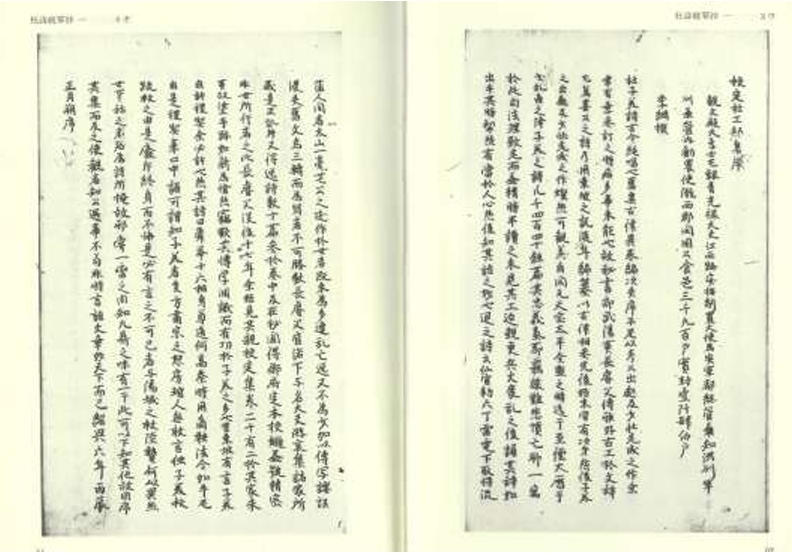
Kaifūsō 懷風藻 from the Nara period is the oldest surviving collection of Japanese kanshi 漢詩. Its poems were in a formative stage, imitating the poetry of the Six Dynasties and early Tang periods. However, after the middle and later Heian period, distinctly Japanese forms of kanshi such as the seven-character regulated verse and kudaishi句題詩 began to emerge amidst the popularity of Bai Juyi’s poetry. During the Kamakura period, the practitioners of kanshi starkly shifted from aristocrats to Zen monks, marking the beginning of what is called gozan bungaku 五山文學, which continued into the Muromachi period. During this time, the literature of the Song and Yuan dynasties—especially Su Shi and Huang Tingjian’s poetry from the Northern Song—was held in high regard, as well as the poetry of Du Fu, who greatly influenced them. Influenced by these three figures, Zen monks of the Muromachi period not only composed kanshi, but also gave lectures on their poetry and preserved their teachings in shōmono. These shōmono hold unique significance in the history of Japanese kanshi studies as the first interpretive works. This paper outlines the reception of Du Fu’s poetry up until the early era of Gozan Bungaku and then introduces four shōmono on Du Fu’s poetry from the middle period and beyond.


 News
News First
First Prev
Prev