Abstract
-
This study examines how the social status of Hanja 漢字 and Hanmun 漢文 has changed within the history of knowledge formation in Korea, focusing on three interrelated layers: shifts in episteme, the reconfiguration of knowledge baselines, and transformations in curriculum discourse. Hanja and Hanmun were marginalized in the context of modern nation-state language policy and the establishment of disciplinary academic systems, but this did not immediately entail the disappearance of their educational value. Rather, Hanja education came to be assigned new goals, such as deepening vocabulary and literacy, facilitating access to historical texts, and cultivating an understanding of the shared written culture of East Asia. At the same time, the ways in which each country and region evaluated and authorized “valuable” knowledge became a key factor in reshaping the respective status of Hanja and Hanmun.
This study examines the shifting social status of “Hanja 漢字 (Sino-Korean characters system)” and “Hanmun 漢文 (Korean Literary Sinitic)” within the history of knowledge formation in Korea. Drawing on Michel Foucault’s concepts of episteme, power-knowledge, and regimes of truth, it argues that the changing position of these scripts cannot be reduced to a simple shift in script policy. Rather, it represents an epistemic transformation in which the modern state redefined legitimate knowledge, redistributed educational value, and reconfigured the subjectivities it sought to cultivate.
To clarify this process, the study distinguishes among three analytical units: Sinographic systems, Sino-vocabulary, and Literary Sinitic. Sinographic systems refer to the regional character-based scripts that developed across China, Korea, Japan, and Vietnam; Sino-vocabulary denotes lexical items integrated into each language through character-based borrowing and adaptation; and Literary Sinitic refers to the transregional classical written language that served as a medium for knowledge production and canon formation in the premodern Sinosphere.
Consequently, Hanja and Hanmun in Korea are treated not as a monolithic category, but as historically specific forms of script, vocabulary, and classical writing. The article first traces the transformation of the Sinosphere and the decline of its classical written order under modern script reforms in East Asia. It then analyzes Korea’s modern reclassification of Hanja and Hanmun as traditional, lexical, or specialized knowledge rather than central educational resources. Next, it explores competing visions of Hanja education in contemporary Korea, focusing on arguments related to literacy, traditional culture, international exchange, and educational equity. Finally, the study proposes repositioning Hanja and Hanmun Subject education within Korean vocabulary learning, Hanmun is one of classical education, East Asian literacy, and global humanities education.
The primary contribution of this study is to demonstrate that Hanja and Hanmun are neither obsolete remnants nor timeless universal requirements. Their contemporary significance lies in how they can be selectively re-legitimized through clearly defined educational purposes, pedagogical methods, and research designs.
-
Keywords: Hanja, Hanmun, Sinographic systems, Sino-vocabulary, Literary Sinitic, Sinosphere, episteme, power-knowledge
Introduction
This study examines how the social status of Hanja and Hanmun has evolved within the history of knowledge formation in Korea. Rather than treating this shift as a mere matter of script policy, it approaches it as an epistemic transformation shaped by changing definitions of legitimate knowledge, evolving knowledge organization, and the reassignment of educational value. Thus, this article asks not only why Hanja and Hanmun declined in modern Korea, but also how they were reclassified and repositioned within a new educational order.
Knowledge accumulated throughout human history is never uniformly valued. Within any given historical period, certain forms of knowledge are authorized as useful, while others are marginalized, redefined, or displaced. From this perspective, knowledge is not merely accumulated; it is selected, hierarchized, and institutionalized. Michel Foucault’s concepts of episteme and power-knowledge are instrumental in explaining this process. An episteme constitutes the historical condition that renders certain forms of knowledge thinkable and authoritative, while power-knowledge describes the mutual constitution of knowledge and power. Consequently, changes in knowledge represent not just advances in accuracy, but reorganizations of the relations through which knowledge is recognized as truth.
This perspective clarifies why the displacement of Hanja and Hanmun from the center of Korean knowledge cannot be explained solely as a technical shift in writing. It also reflects changes in the regime of truth—the institutional mechanisms that authorize certain kinds of knowledge while marginalizing others. The contemporary status of Hanja and Hanmun must therefore be understood in relation to broader struggles over educational legitimacy, cultural authority, and subject formation in modern Korean society. Furthermore, this framework is not limited to Korea; it also illuminates how language and script reforms in China, Japan, Vietnam, Singapore, and Malaysia reshaped the balance between a shared Sinographic heritage and nationally specific educational regimes.
The next section clarifies the analytical units employed in this study: Sinographic systems, Sino-vocabulary, Literary Sinitic, and what is Hanjia, Hanmun. These categories are often treated as overlapping or interchangeable in public discourse, yet they refer to distinct historical and linguistic phenomena. Distinguishing among them is essential for explaining how Hanja and Hanmun were reclassified in modern Korea and why debates over Hanja education have repeatedly resulted in conceptual confusion.
The purpose of this study is not to defend Hanja education from a purely nor to present a neutral chronology of script policy. Rather, it seeks to demonstrate how changes in knowledge baselines and curricular discourse altered the conditions under which Hanja and Hanmun could be recognized as legitimate educational resources. On this basis, the article argues for repositioning Hanja and Hanmun education within multiple overlapping contexts: Korean vocabulary education, Hanmun classical education, East Asian Sinosphere literacy, and global humanities education. This approach moves beyond a simplistic pro-or-con debate over Hanja education to ask what educational functions Sinographic and Literary Sinitic can realistically serve in the contemporary environment.
Analytical Units: Sinographic, Sino-Vocabulary, Literary Sinitic and Hanja, Hanmun
The concepts used to describe character-based writing in East Asia are often treated as self-evident, yet they refer to different historical layers and analytical objects. This study distinguishes three units as far as possible: Sinographic systems, Sino-vocabulary, and Literary Sinitic written language system. Maintaining this separation is not merely a terminological exercise; it is essential for understanding how character-based writing, character-based vocabulary, and classical written language have each been reclassified in modern East Asia.
The term Sinographic refers to the broader family of character-based writing systems that originated in China and later developed into regionally distinct forms. In this sense, Hanzi in China, Hanja in Korea, Kanji in Japan, and Chữ Nôm in Vietnam are not identical systems, but historically specific realizations of a shared this character system. The shared element is not a single uniform script, but a family of related character systems adapted to different languages and political contexts. Therefore, this study uses Sinographic as an unify term, while reserving Hanzi, Hanja, Kanji, and Chữ Nôm for regional usage.
This distinction is crucial because character use in East Asia was never simply a matter of copying a single Chinese model. Each region developed its own conventions, reading practices, and functional divisions between script and language. Hanja in Korea, for example, did not remain a passive import; it became deeply embedded in Korean textual culture, education, and vocabulary formation. The same is true, in different ways, for Kanji in Japan and Chữ Nôm in Vietnam. A comparative framework must therefore recognize both the shared origin and the local transformations.
The second unit, Sino-vocabulary, refers to lexical items formed through character-based vocabulary systems and integrated into the spoken and written language of each society. An important caveat is necessary here: not all Chinese words automatically qualify as Sino-vocabulary in the sense used in this study. Likewise, not every foreign word that can be written in characters belongs to this category. Some items are imported through semantic borrowing, others through phonetic transcription, and still others through mixed or hybrid processes. Furthermore, vocabulary may combine native words with Sinographic elements, making classification more complex than a simple “Chinese” versus “non-Chinese” binary.
For this reason, the category of Sino-vocabulary should be treated as a languageinternal lexical system rather than a mere collection of Chinese-origin words. In Korean, for instance, many common terms belong to a Sino-Korean vocabulary layer, while others are hybrid expressions combining native and Sinographic elements. Similar complexities arise in Japanese and Vietnamese. The issue is not merely a word's origin, but how it functions within the present-day lexical system and whether its meaning can be transparently inferred from its Sinographic elementsc.
The third unit, Literary Sinitic, refers to the transregional classical written language that functioned as a medium of canonical writing, knowledge production, and textual circulation across the premodern Sinosphere. It was not simply in a narrow national sense, nor was it identical to spoken language. Rather, it was a supralocal written medium through which elites in different regions could read, compose, comment on, and transmit texts. Thus, Literary Sinitic is best understood as the common classical written language of premodern East Asia.
Hanmun is the Korean realization of this classical written medium; in other words, Hanmun may be described as Korean Literary Sinitic. Through Hanmun, Korean scholars, officials, and writers participated in a shared textual order while operating within a distinct Korean historical setting. This distinction is vital because Hanmun should not be collapsed into modern Korean, Chinese, or generic “Classical Chinese.” It represents a historically specific Korean mode of engaging with the broader Literary Sinitic world.
These distinctions also explain why the same surface script can carry different social meanings. A character may function as part of a Sinographic writing system, as a component of a Sino-vocabulary item, or as part of a Literary Sinitic sentence. The unit of analysis shifts depending on whether the focus is script, vocabulary, or classical prose. Confusion often arises when these levels are treated as interchangeable. For example, a policy statement regarding Hanja education may actually refer to Sino-vocabulary learning, while a discussion of reading Hanmun texts may remain at the level of character recognition without achieving actual classical reading competence.
In this study, these three categories are kept distinct to clarify the historical argument. Sinographic systems refer to the broad family of character-based scripts; Sino-vocabulary refers to the lexical layer formed through character-based borrowing and adaptation; and Literary Sinitic refers to the classical written medium of premodern East Asia, with Hanmun as its Korean realization. Only by distinguishing these units can we observe how Hanja and Hanmun were each reclassified in modern Korea: as script, as a vocabulary resource, and as a historical writing system.
Transformations of the Sinosphere and Modern Knowledge Conflicts
As Korea, China, Japan, and other East Asian countries emerged as major axes of the global economy in the twentieth century, various concepts were proposed to characterize the region. Alongside the widely used term “Confucian cultural sphere,” the notion of a “Sinosphere (漢字文化圈)” has attracted particular attention. Although the historical community of Sino-character users developed gradually from antiquity, it was only in the modern era that it became an explicit object of scholarly naming and conceptualization. The term “Sinosphere” was established when the Japanese linguist Kamei Takashi translated the German expression Chinesischer Kulturkreis to denote the ancient East Asian regions that shared the use of Sinographic.
Other labels—such as “East Asian cultural sphere,” “East Asian civilization sphere,” “Confucian cultural sphere,” and “Buddhist cultural sphere”—have also been proposed, yet each has limitations. “Buddhist cultural sphere” is overly broad, while “Confucian cultural sphere” tends to foreground political and philosophical foundations at the expense of other religious and intellectual traditions. “Literary Sinitic sphere” similarly struggles to account for the national written standards and transformed forms developed in each country. By comparison, “Sinosphere” is a more flexible term because it highlights writing as a fundamental tool of communication and shared meaning.
Writing is not merely a medium for transmitting information; it also functions as an infrastructure of civilization by recording and disseminating religion, philosophy, and literature. As a logographic script, the Sinographic character system enabled communities speaking mutually unintelligible languages to read the same written forms with different pronunciations and sounds while still sharing common semantic content. This allowed East Asian polities to communicate through written exchanges such as brush conversation (like a pildam 筆談), even when their spoken languages differed. A well-known historical example is the use of brush conversation between Korean and Japanese envoys, or between Chinese and Korean scholars, where written characters served as a bridge when oral communication was limited. The expression “Sinosphere” therefore refers not only to the historical fact that characters were used as a shared script, but also to the broader process through which culture was transplanted, diffused, and reconfigured through this system.
In this sense, the Sinosphere can be understood as a set of agrarian and feudal polities that historically used Sinographic and Literary Sinitic (i.e., Chinese Character system and Classical Chinese written language as employed outside China) as written languages, either wholly or in part. By contrast, nomadic groups within East Asia did not use these characters and therefore fell outside this sphere. Crucially, the formation of this sphere cannot be reduced simply to “Sinicization.” While Chinese military strength, the investiture system, and direct interventions certainly facilitated the spread of Traditional Chinese characters, each polity also actively appropriated them as resources for consolidating its own political order. In Korea, Hanja and Hanmun provided new platforms for governance, while classics and histories offered normative frameworks that justified ruling authority.
To cultivate personnel suited to Confucian knowledge, governments established state-sponsored study abroad programs and civil service examinations, and they organized law, ritual, and historical records through Hanja and Hanmun. These developments occurred not only on the Korean peninsula but also in Japan and Vietnam, suggesting that the adoption of Traditional Chinese characters was driven largely by internal state-building needs. Through these processes, Traditional Chinese characters became more than a medium of information transfer; they also functioned as symbols of power and as criteria for social differentiation. Literacy in Hanja marked the boundary between elites and the broader population, while the script's difficulty and cultural prestige strengthened its symbolic force. At the same time, it is more accurate to say that knowledge produced through Traditional Chinese characters became power-laden than to identify the script itself with power. A concrete example is the civil examination system in premodern Korea, where mastery of Chinese-character texts served as a gatekeeping mechanism for official careers.
Traditional Chinese characters also formed a symbolic system with strong iconicity and logographic expressiveness. They visually condensed older conceptions of the world and social structure, including patriarchy, hierarchical views of Heaven and humanity, class order, and metaphysical ideas such as ritual, law, and the Way. Although these symbolic dimensions have weakened over time, Traditional Chinese characters still function as visual forms that evoke culture, identity, and authority. In South Korea, Hanja still appear on identity cards, and various advertisements and posters using Hanja are still in use today. In premodern times, at least within the shared cultural arena of Korea, China, Japan, and Vietnam, Traditional Chinese characters constituted the most fully recognized writing system, and Literary Sinitic Sentence was functioned as the canonical language of knowledge reception and production. Brush conversation and shared reading made it possible for speakers of different vernaculars to communicate across borders.
From the late nineteenth century onward, as we know, Western expansion and imperialist incursions triggered crises of state survival across East Asia and provoked reassessments of traditional knowledge systems and writing regimes. Reformers in several countries identified conservative knowledge structures as a major cause of national weakness and argued for the adoption of Western science and academic systems. In this context, script and language reforms became central tasks of modernization. Japan undertook an especially comprehensive transformation, limiting the number of characters in use, simplifying graphic forms, and promoting mixed-script writing with kana. China later followed with its own reforms, including simplified characters and vernacular writing. Taiwan, Hong Kong, and Macau retained traditional character forms while adopting vernacular prose, thereby creating a modern written order distinct from the classical model.
Also, In Korea, the proclamation of the Korean Empire was followed by policies advocating Hangul-only writing. During the colonial period and after liberation, Hangul came to symbolize national identity in nationalist discourse. Hanja was restricted, but its graphic forms were not fundamentally altered, and Hanmun gradually lost its function as a written language of knowledge production. Orthographic policy came to center on Hangul-only official and standard Character system, while the Sino-Korean vocabulary system remained largely intact. Sino-Korean vocabulary can write use traditional Sinographic, also, only write vocabulary sounds use by Hangul. In Vietnam, the Latin-based script Chữ Quốc Ngữ, devised by the missionary Alexandre de Rhodes in the seventeenth century, was fully disseminated in the twentieth century, leading to the near-total disappearance of Traditional Sinographic and Literary Sinitic education from education system and everyday linguistic practice. In this way, each country reconfigured its use of script and written language, and the traditional form of the Sinosphere was dismantled as a dominant framework of knowledge.
From a Foucauldian perspective, these changes are not linear progressions toward a more accurate truth, but reorganizations of power that determine which forms of knowledge are approved as truth and which are excluded. Modern East Asian reforms of script and language can therefore be understood as shifts in episteme. The traditional knowledge system embodied in Hanja and Hanmun in Korea, no longer matched the profile of human capital desired by modern states, and political and intellectual elites increasingly adopted Western-style scholarship and nation-language-centered policies as the new baseline of knowledge-power. In this process, Hanja became objects of controversy and compromise, while Hanmun was transformed from a language of knowledge production into a classical written language with limited contemporary function.
Another important development was the rise of new Sino-Japanese and Sino-Chinese terms created in the translation of Western knowledge. Japan and China generated large numbers of neologisms in Sinographic to accommodate modern academic concepts, and these terms were later reimported into Korea and Vietnam. This produced a modern network of shared vocabulary that differed from the premodern practice of brush conversation but still preserved a common conceptual layer across the region. At the level of script and literary style, the Sinosphere appears fragmented, yet at the level of technical vocabulary, it remains connected in transformed ways. For example, modern terms for “society社會,” “economy 經濟,” “philosophy哲學” and “science 科學” circulated across East Asia through character compounds and entered local languages through translation, textbook writing, and journalism.
Since the 1990s, East Asia has drawn renewed global attention through its economic rise. Japan, the Chinese-speaking region and Korea have formed a major economic bloc in the world, and interest in the region’s culture and languages has expanded accordingly. In this context, the Sinosphere is being reconfigured from a regionally bounded cultural formation into a global cultural phenomenon in which Traditional Chinese characters and Sino-character vocabulary function as shared resources. This does not restore the premodern order, but it demonstrates that the region’s written heritage continues to shape language learning, cultural exchange, and knowledge formation in new forms.
Thus, Traditional Chinese characters in the East Asian
Sinosphere have functioned not only as symbols for transmitting information, but also as markers of power, symbolic systems, carriers of locality, and aesthetic devices. They have served as criteria of educational capital, as the script of canonical knowledge, and as locally adapted writing systems combined with vernacular forms such as
Hanmun,
hyangchal 鄕札,
idu 吏讀 in Korea, and Chữ Nôm. In Vietnamese. The historical significance of the
Sinosphere therefore lies not in a single fixed definition, but in the changing ways its shared script and shared vocabulary have been used, revalued, and contested. More broadly, because of their iconic and logographic qualities, Sinographic characters have long been used not only to record language but also as visual images in calligraphy, character paintings, advertising, design, and tattoos, where they continue to evoke traditionality, mystery, and authority as aesthetic resources.
Korea’s Modern Choices and the Reclassification of Hanja and Hanmun
During the Korean Empire, the colonial period, and the decades following liberation, Korean society adopted Western modern academic systems, a nation-state school system, and a language order centered on standard Korean as core instruments of governance. In this process, Hanja and Hanmun were no longer treated as central knowledge for state administration but were reclassified as the writing system of traditional texts, as a technical tool for reading historical sources, or as a form of cultural capital in the sphere of cultivated learning. Whereas in premodern times Hanja and Hanmun had functioned as the language of universal knowledge spanning literature, history, and philosophy, in the modern era they increasingly appeared as traces of the past scattered across separate subjects such as Korean, history, ethics, philosophy, and literature. A useful example is the modern school textbook, where a passage from the Samguksagi or a poem from an anthology of classical verse is no longer read as living scholastic language, but as heritage content placed inside a particular subject.
In premodern Korea, Hanja and Hanmun were far more than a script and a written language; they constituted the very form of knowledge that sustained the system of rule and social order, mediating canonical learning across politics, institutions, ethics, and literature. Mastery of Hanja and the ability to read and compose in Hanmun were basic qualifications of the intellectual elite, and the civil service examination and bureaucratic system directly linked these abilities to state power. In this sense, Hanja and Hanmun in premodern Korea were not merely vehicles for expressing knowledge; they formed the baseline for determining what counted as legitimate knowledge and the material foundation of the episteme that governed the production, selection, and authorization of knowledge. In the late nineteenth century, however, Western expansion, imperialist aggression, “enlightenment” policies, the Kabo Kaehyŏk 甲午改革 “Gabo Reform” and the proclamation of the Education Edict fundamentally shook this knowledge order. As discussed in the Introduction, from a Foucauldian perspective changes in knowledge do not constitute a gradual advance toward more accurate truths, but a reorganization of power relations that decides which forms of knowledge are recognized as “truth” and which are excluded. From this viewpoint, the most significant change in modern Korea was not simply the decline of Hanja and Hanmun, but a shift in the state’s criteria for legitimate knowledge and desirable human capital—from an integrated Confucian scholasticism centered on the classics to a regime based on Western-style disciplinary knowledge and vernacular Korean writing. Hanja and Hanmun ceased to be the sole canonical language and began to be relativized as one among several forms of knowledge that had to be repositioned within a new system. During the Korean Empire, the colonial period, and the decades following liberation, Korean society adopted Western modern academic systems, a nation-state school system, and a language order centered on standard Korean as core instruments of governance. In this process, Hanja and Hanmun were no longer treated as central knowledge for state administration but were reclassified as the writing system of traditional texts, as a technical tool for reading historical sources, or as a form of cultural capital in the sphere of cultivated learning. Whereas in premodern times Hanja and Hanmun had functioned as the language of “universal knowledge” spanning literature, history, and philosophy, in the modern era they increasingly appeared merely as traces of the past scattered across separate subjects such as Korean, history, ethics, philosophy, and literature. Mid-twentieth-century developments across East Asia—the dismantling of the Sinosphere and the adoption of phonetic scripts and nation-language-centered policies—show that Korea’s reclassification of Hanja and Hanmun was not unique but part of a broader regional trend. Modern Korea’s choice was therefore not to abolish Hanja and Hanmun outright, but to reorder the priorities and placements of knowledge according to the needs of state and society. As a result, Hanja and Hanmun withdrew from the front lines of governing power and were relocated as knowledge forms that operate only in restricted domains of education, culture, and high-level literacy. The changing status of Hanja and Hanmun unfolded amid tensions between Hangul-only policy and the practice of mixed-script writing. Following King Kojong (高宗)’s decree promoting the convergence of spoken and written language, Hangul emerged as a new format for official written Korean. Yet Hanja and Hanmun did not immediately disappear from society. Well into the early and mid-twentieth century, mixed Sino-Korean script remained common in newspapers, textbooks, official documents, scholarly writings, and private notes, while all-Hangul style spread only gradually and within limited media and social groups. In governmental offices, the press, and academic circles, Hanja continued to function as a script symbolizing authority, whereas Hangul expanded its sphere in an overlapping and competitive configuration. This pattern was not simply the inertial effect of existing practices of knowledge use. For intellectuals accustomed to Hanja and Hanmun, Traditional Chinese characters were not just a matter of writing habits, but a semiotic system that enabled fine-grained semantic distinctions, the expression of abstract concepts, and a link to traditional knowledge. Sino-Korean compounds differentiated meanings under the same phonetic cover and condensed accumulated semantic layers from classics, legal codes, and academic discourses into single- or double-character units. From this standpoint, Hangul-only policy functioned as a script reform that simultaneously weakened the cultural and symbolic capital of the existing educated elite. Conversely, proponents of Hangul-only writing viewed the establishment of a language order centered on the national script as essential for equalizing education, eradicating illiteracy, and securing national identity. The simplification of writing practices and the unification of orthography were regarded as necessary for building mass literacy in a modern nation-state, and Hangul-only writing seemed the most effective tool for that purpose. Conflicts between Hangul-only and mixed script, therefore, were not merely disputes over orthographic technique, but struggles over which knowledge and culture should be acknowledged as the shared assets of the “modern Korean.” Hangul-only policy advanced the construction of standardized literacy appropriate to the modern nation-state, while mixed Sino-Korean script was associated with arguments for maintaining continuity with traditional culture, elite learning, and a Sino-character-based vocabulary system. In other words, Hangul-only and mixed-script practices corresponded to different epistemes—different regimes of truth and modes of subject formation. Across twentieth-century East Asia, the dismantling of the Sinosphere and the construction of new script and language regimes did not simply change techniques of writing; they redrew the civilizational and epistemic boundaries of knowledge. From this angle, modern Korea’s script policies can be seen as a process of reconfiguring the knowledge order and the relationship between power and knowledge. The Korean debates over Hanja education foregrounded in this article must be situated within this larger context of repeated contestation from the immediate post-liberation period to the present. In practice, arguments for Hanja education have largely emphasized the domain of vocabulary and lexical notation rather than the broader use of Hanmun. Hence, many voices advocated abolishing or reducing Hanmun instruction as such, while consistently supporting the teaching of Hanja as part of Korean vocabulary learning. The persistent calls to strengthen Hanja education reflect a recognition that contemporary language use in Korea cannot be detached from Sino-Korean vocabulary. The fact that many commentators of the time argued not for “Hanmun education” in the narrow sense but for “Hanja education” aimed at supporting Korean vocabulary learning and usage shows that there were consistently positive views of Hanja education distinct from the issue of Hanmun. Of course, even then, support and opposition to Hanja education coexisted. Script policy was extremely unstable: between Hangul-only and mixed-script textbooks, official policy shifted toward exclusive Hangul ten times and toward mixed script seven times, an oscillation that reflects deep controversy and anxiety over complete Hangul-only writing. Over time, however, the Hangul-only movement steadily gained ground; the use of Hanja in newspapers and magazines diminished, and after the publication of The Hankyoreh Newspaper on 15 May 1988, Hanja remained visible only in the headlines of a few newspapers. The “Act on Exclusive Use of Hangul” enacted in 1948 required that official documents be written in Hangul and thereby codified Hangul-only writing as state policy. Linked to the political imperatives of decolonization and nation-state building, this law marked an institutional starting point for gradually displacing Hanja from the center of official script usage. Decolonization here had a dual meaning: it involved the expression of complex national sentiments toward Traditional Chinese characters as the script of China and toward the Japanese use of Traditional Chinese characters, and it also provided political actors with an opportunity to mobilize these sentiments to secure the legitimacy and symbolic capital of new regimes and to consolidate state power. For political elites, Hangul-only policy served as a highly effective instrument that fused the rhetoric of cleansing colonial remnants with the symbolism of nationalism. In actual social practice, however, mixed Sino-Korean script continued to be widely used, and the perceived need for Hanja and Hanmun education did not easily disappear. Thus, even as Hangul-only writing advanced at the level of law and political symbolism, everyday practices of knowledge for a long time continued to involve the habitual use of Hanja and traditional scripts. The 1960s and 1970s were decades in which debates over Hanja education became heavily politicized. Faced with a large group of established intellectuals who insisted on the necessity of Hanja and with widespread mixed-script practices, the political authorities opted for compromise. The Second National Curriculum (1963) restored an official basis for Hanja education, and from 1964 commonly used Hanja were reintroduced into primary, middle, and high schools. This measure aimed not at a complete break with Traditional Chinese characters, but at preserving a minimum level of instruction that would maintain a link between traditional knowledge and modern schooling. Yet in 1968 the Park Chung-hee government announced a “Five-Year Plan for Exclusive Use of Hangul” and “Seven Measures to Promote Hangul Only,” forcefully promoting the Hangulization of public documents, the deletion of Hanja from textbooks, and the abolition of basic educational Hanja. These policies accelerated the practical implementation of Hangul-only textbooks in the early 1970s and became a decisive turning point in removing Hanja and Hanmun from the center of everyday school knowledge. In effect, the state declared its intent no longer to approve Hanja and Hanmun as the “standard” of national education. These sweeping Hangul-only measures, however, quickly provoked strong backlash. Proponents of Hanja education emphasized the importance of transmitting traditional culture, understanding East Asian classics, enhancing vocabulary and literacy, and grasping the precise meanings of Sino-Korean terms. For them, Hanja was not merely a convenient writing system; it was a reservoir of knowledge and a repository of cultural capital accumulated over a long period. Excluding Hanja, they argued, meant voluntarily relinquishing access to traditional knowledge and cultural resources. Advocates of Hangul-only policy, by contrast, contended that Hanja education increased learning burdens and expanded private tutoring, undermining both equality in public education and a language order centered on Hangul. From their point of view, Hanja instruction represented an unnecessary additional load on a standard literacy system already established by the modern nation-state. The conflict thus went beyond the question of “whether to teach Traditional Chinese characters” and raised broader issues about what should be considered basic literacy in contemporary Korea and how traditional culture ought to be transmitted. From the 1980s onward, as generations educated under a stable Hangul-only regime came to occupy the center of society, the social base for Hanja education gradually weakened. In everyday written communication, Hangul established overwhelming dominance, while Hanja persisted only in restricted domains such as newspaper headlines, personal and place names, legal and academic terminology, and certain traditional cultural contexts. Hanja and Hanmun were increasingly pushed to the status of “scripts of specialized domains,” and in the school curriculum they came to be treated as peripheral subjects. Yet the debates surrounding Hanja education did not disappear. Once Hangul-only writing had achieved a measure of stability, concerns about “declining literacy due to ignorance of Traditional Chinese characters” and calls for renewed Hanja education resurfaced repeatedly. In other words, only after Hangul-only policy had largely succeeded did its perceived side effects—such as problems in mastering vocabulary and abstract terms and diminished access to traditional text paradoxically revive arguments for strengthening Hanja education. Comparative studies of East Asian countries have noted similar patterns, observing that, after some time following script and language reforms, renewed calls emerge in places like Vietnam, Japan, and China to reintroduce traditional scripts and vocabulary into education. Since the 2000s, debates have focused especially on Hanja instruction in elementary schools and the question of printing Hanja alongside Hangul in textbooks. In 2002, a joint proposal by thirteen former Ministers of Education calling for the introduction of Hanja education in elementary schools served as a symbolic catalyst for renewed discussion of early Hanja classes. In 2014–2015, the Ministry of Education’s plan to include Hanja mixed with Hangul in textbooks from the third grade upward triggered another wave of controversy. Supporters argued that such measures would improve contextual understanding and vocabulary and facilitate the natural learning of Sino-Korean words, while opponents warned that they would increase learning burdens, expand private tutoring, and create confusion in literacy education centered on Hangul. After examining classroom feasibility and gathering public opinion, policymakers ultimately abandoned the plan to print Hanja in elementary textbooks. This episode demonstrates that whenever the state attempts to strengthen Hanja education, social conflicts over educational equity, burdens, and identity erupt almost immediately. In the 2020s, the debate has once again intensified. As students’ declining reading comprehension has become a major social concern, calls to enhance Hanja education have re-emerged. Various surveys pointing to reduced reading and vocabulary skills have led some media outlets and educators to link this trend to the reduction of Hanja instruction and to demand the reintroduction or reinforcement of Hanja education at the primary and secondary levels. As of 2026, the possibility of reintroducing or strengthening Hanja education is under renewed discussion among educational authorities and in the public sphere, indicating that this issue is not a mere residue of the past but remains a live and pressing controversy. The modern Korean debate over Hanja education thus reveals a cyclical pattern of “abolition → reintroduction → reduction → renewed calls for reinforcement,” and each turn in this cycle brings to the surface underlying social conflicts over the value of knowledge and the aims of education. By contrast, the institutional responses of the political system have tended to converge not on broad disputes over script use or a full-scale expansion of Hanja education, but on the creation and maintenance of Hanmun as a school subject. Since the First National Curriculum in 1954, the Korean national curriculum has undergone repeated revisions—the Second (1963), Third (1973), Fourth (1982), Fifth (1987), Sixth (1992), Seventh (1997), the 2007–2009 revised curricula, the 2015 revision, and the 2022 revision. The status of Hanmun as a subject within these reforms provides a telling index of how its position within school knowledge has changed. The language of traditional knowledge, once integral to learning across literature, history, and philosophy, has gradually been separated and reduced to a single subject among many elective courses. In the first and second curriculum periods, Hanja and Hanmun were treated more as auxiliary knowledge within Korean and other subjects than as independent disciplines. In 1972, however, the government promulgated a list of 1,800 basic educational Hanja for middle and high schools, and on this basis Hanmun education acquired a certain degree of autonomy. From this period onward, Hanmun ceased to be the basic written medium of state administration and instead took shape as a school subject responsible for understanding Sino-Korean vocabulary, acquiring traditional cultural knowledge, and providing basic reading skills in classical texts. Under the Fifth and Sixth National Curricula, Hanmun was retained as part of the common curriculum at the middle-school level, although in practice class hours were extremely limited, and in high schools it was treated as an elective subject whose offering depended on the choices of individual schools and students. This meant that, while Hanmun continued to exist in the curriculum documents, it functioned as a peripheral subject in actual school settings. The Seventh Curriculum further intensified this marginalization by emphasizing a student-choice-centered structure, and many high schools either drastically reduced their Hanmun offerings or maintained them only nominally. By contrast, the 2007–2009 revised curricula began to redefine Hanmun not simply as a subject for reading classical texts, but as one that contributes simultaneously to vocabulary development, literacy, and cultural competence. The 2015 revised curriculum made this tendency even clearer, structuring middle school Hanmun education around 900 basic educational Hanja and aiming to develop students’ ability to use Sino-Korean vocabulary and to acquire foundational skills in reading classical texts. It characterized the subject as fostering “understanding of the language and culture of the Sinosphere, the inheritance of traditional culture, and the enhancement of vocabulary and literacy,” thereby positioning Hanmun not merely as a medium for learning classical prose but as a subject that bridges modern Korean language use and cultural understanding. The 2022 revised curriculum further systematized this reconfiguration. In accordance with Ministry of Education Notification No. 2022-33, it was designed to realize the core competencies of the general curriculum within the Hanmun subject and simplified middle school content around two areas: “characters and vocabulary” and “sentences.” At the high school level, it introduced the general elective “Hanmun,” the career elective “Reading Hanmun Classics,” and the convergence elective “Language Life and Hanja,” thereby diversifying Hanmun education into tracks focused on classical reading, language use, and culture/competency. These developments indicate that Hanmun is no longer a subject that simply reproduces past models of classical education; instead, it is actively reconfiguring its functions and aims in order to survive within the contemporary curriculum. In terms of instructional time as well, Hanmun has consistently occupied a marginal position. Middle schools typically allocate only one or two hours per week, and at the high school level the elective structure generates large differences between schools in the actual provision of Hanmun classes. In other words, although Hanmun persists in the official curriculum, it does not occupy the central core of school knowledge. This gap between the institutional survival of Hanmun and the social demand for Hanja and Hanmun education reveals a structural tension: from the standpoint of state-sanctioned “official school knowledge,” Hanmun is a peripheral subject, yet societal demands for instruction in Hanja and Hanmun cannot be easily dismissed as marginal. Despite reductions in the use of Hanja and Hanmun, in the number of hours allocated to Hanmun, and in the institutional status of the subject, the voluntary demand for Hanja and Hanmun learning in Korean society has remained steady. Hanja proficiency tests, commercial Hanja workbooks, study materials on idioms and Sino-Korean vocabulary, specialized courses in traditional culture, and popular lectures on East Asian classics have long maintained stable audiences. Learners in these contexts do not study Hanja and Hanmun as compulsory conditions for social advancement, as in the past, but rather choose to do so on the basis of their own needs and interests. For them, Hanmun is not merely a school subject tied to examinations; it is a pathway to understanding traditional culture, reflecting on life, cultivating aesthetic taste, and seeking new forms of intellectual stimulation. This voluntary demand is closely related to broader calls for linguistic and cultural diversity in contemporary Korea. At the national level, standardization centered on Hangul has proven highly effective in terms of integration and efficiency, yet at the individual level there remains a persistent curiosity about, and need for, diverse modes of expression, traditional culture, East Asian classics, and the Sino-character-based vocabulary world. In addition, demographic aging, increased leisure time, and the rise of public interest in the humanities are moving Hanmun learning from the realm of professional necessity to that of quality of life and self-reflection. An increasing number of people choose to fill their post-retirement years with classical reading, calligraphy, and Hanmun study, a trend that repositions Hanmun education as a form of lifelong humanistic practice rather than a narrowly defined school subject. As this chapter has shown, modern Korea did not simply abandon Hanja and Hanmun. Rather, it reclassified and reorganized their status and functions according to the types of knowledge and human capital deemed necessary by the state and society. Hanja and Hanmun, which had once stood at the center of canonical knowledge, were replaced by vernacular Korean writing, Western disciplinary knowledge, and the education system of the modern nation-state. In this process, public debates and discourses over Hanja education repeatedly flared up, reflecting the fact that Hanja and Hanmun are not merely residues of the past or simple writing systems, but remain intertwined with the hierarchy of knowledge, the standards of literacy, the modes of transmitting tradition, and questions of educational equity in contemporary Korea. Ultimately, controversies over Hanja education are struggles over which forms of knowledge should occupy the center of school education and which forms of reading and interpretation should be recognized as socially valuable. To understand modern Korean conditions properly, therefore, it is not enough to narrate the rise and fall of Hanja and Hanmun. One must instead read the changing value and reorganization of knowledge, the shifts in episteme, and the operations of educational power. From this perspective, the conflicts and adjustments surrounding Hanja and Hanmun, and around the Hanmun subject and its instruction, offer a crucial case for understanding how the knowledge order of Korean society has been restructured. The question of whether Hanja remains necessary in Korea and whether Hanja education should be strengthened is thus not a narrow academic issue, but a comprehensive reflection of how members of Korean society choose to inherit their past and shape the future order of literacy and knowledge.
The Korean debates over Hanja education foregrounded in this article must be situated within this larger context of repeated contestation from the immediate post-liberation period to the present. In practice, arguments for Hanja education have largely emphasized the domain of vocabulary and lexical notation rather than the broader use of Hanmun. Hence, many voices advocated abolishing or reducing Hanmun instruction as such, while consistently supporting the teaching of Hanja as part of Korean vocabulary learning. The persistent calls to strengthen Hanja education reflect a recognition that contemporary language use in Korea cannot be detached from Sino-Korean vocabulary. The fact that many commentators argued not for Hanmun education in the narrow sense but for Hanja education aimed at supporting Korean vocabulary learning and usage shows that there were consistently positive views of Hanja education distinct from the issue of Hanmun.
Divergent Dreams: Conflicting Visions of Hanja Education
In Korea, Hanja education, in the literal sense, is the teaching and learning of Hanja characters. As with education in general, however, it does not merely involve the transmission of discrete bits of knowledge but presupposes particular goals for individuals and for society as a whole. In some cases, personal aims and social aims may resonate with one another; in others, the social environment and the goals prescribed by policy do not align with the needs and expectations of individual learners. Public debates and discourses over Hanja and Hanmun education in Korea fall largely into this latter category. Since the establishment of the Republic of Korea in 1945, the continuous implementation of Hangul-only policy has eliminated most Hanja from everyday written communication, and it has become increasingly difficult to identify compelling, purely practical reasons to learn Traditional Chinese characters. In a social environment where everyday life can be conducted without Hanja, it is not easy to persuade the public of the necessity of Hanja education, and the situation is even less favorable for Hanmun, which has become a near “dead language” in everyday use. Under these conditions, discussions of Hanja education reveal divergent orientations and interests depending on the aims they foreground. The controversy over Hanja education cannot be reduced to a difference in teaching methods; it encapsulates value conflicts concerning the hierarchy of knowledge, the standards of literacy, the transmission of traditional culture, and the demands of educational justice in contemporary Korea. The repeated cycles of reduction, abolition, reintroduction, and calls for reinforcement that have accompanied Hanja education since the advent of Hangul-only policy show that this is not a transient issue, but a symptom of a deeper reconfiguration of the modern knowledge order. Support for Hanja education typically rests on four main lines of argument. The first is grounded in the structure of Korean vocabulary, in which Sino-Korean words occupy a very large proportion. From this perspective, a certain level of Hanja knowledge is believed to contribute to vocabulary growth and improved reading comprehension. Because abstract academic terms and learning-related vocabulary in textbooks and exam questions are predominantly Sino-Korean, it is argued that knowledge of Hanja helps learners to grasp the semantic relations among words and to distinguish homophones. In a context where declining reading proficiency among students has become a major social concern, proponents maintain that weakened knowledge of Hanja in the era of Hangul-only writing has contributed to vocabulary deficits and that basic Hanja instruction is needed to shore up the foundations of literacy. For teachers and students alike, however, the key problem is that there is still insufficient empirical evidence to show how far and in what ways Hanja education actually contributes to improvements in literacy. The theoretical claim that knowledge of Hanja facilitates understanding of vocabulary structure has intuitive appeal, but systematic research delineating which level of Hanja instruction correlates with which type of reading ability remains limited. Moreover, even in cohorts that learned Hanja, substantial gaps in literacy and academic achievement persisted, and many analyses attribute current literacy problems more to changes in the digital environment, the decline of reading culture, and educational and class stratification than to the reduction of Hanja education. From this angle, casting Hanja education as the main remedy for literacy problems appears to be an overprescription. The fundamental question is whether there is scientifically and objectively verifiable evidence linking Hanja education to gains in literacy. Some studies cite the high proportion of Sino-Korean vocabulary in Korean as supporting evidence, but this alone is insufficient to demonstrate a causal relationship between Hanja instruction and literacy. The degree of Hanja acquisition has not yet been convincingly shown to correlate in a direct, linear way with vocabulary size or reading ability, and much of the argument remains at the level of conjecture rather than rigorous empirical demonstration. These limitations are related to the complex composition of Korean vocabulary. The Korean lexicon is often divided into native Korean words, Sino-Korean words, loanwords, and hybrid forms. Among Sino-Korean and hybrid words that can be written in Hanja, there are many whose meanings and pronunciations cannot be straightforwardly explained solely on the basis of the characters’ semantic components and readings. Some Sino-Korean expressions involve mixtures of phonetic transcription and semantic translation. Because phonetic loans are created according to the readings of characters in the borrowing language, it can be difficult for speakers of other languages to infer their origin. For example, the expression 的士 is pronounced jeoksa in Korean, and even for speakers of standard Mandarin (who would read it as di-shi) or Japanese (teki-shi), it is not obvious that this term refers to “taxi”; only in Cantonese, where it is pronounced roughly “diksi,” does the phonetic connection become clear. Other examples include Yŏngguk 英國 “England,” which transcribes “Eng” from “England” as 英 and combines it with kuk 國 “country”, and Sŏpsi 攝氏, which abbreviates the phonetic transcription of “Celsius” (in Chinese translate to 攝爾修斯) and adds 氏 (“person, surname”). In such cases, learning the Hanja themselves does not readily reveal the meanings of the words. In addition, Korean contains redundant synonym compounds in which Hanja and native Korean elements are repeated or layered, such as dam-jang (담墻), morae-sajang (모래沙場), yang-ojip (洋屋집), and sok-naeui (속內衣). There are also many hybrid forms that combine native and Sino-Korean elements, such as doenjang (된醬), bapsang (밥床), gongbu-hada (工夫하다), heot-sugo (헛手苦), daedaero (代代로), yang-damba (洋담배), sin-Yeurop (新유럽), and pul-jang (풀場). Even these hybrids still make use of Hanja, but their current meanings are not always transparent from the characters alone. Furthermore, many Sino-character-based words have undergone semantic shifts over time: for instance, heihan(稀罕) originally meant “rare” but is increasingly used in the sense of “strange,” and yangmal (洋襪), which once designated Western-style socks contrasted with traditional beoseon, has now become the unmarked term for “socks,” while beoseon is perceived as a more specialized item. Given these realities, the question of how Hanja education relates to vocabulary instruction and, more broadly, to literacy naturally arises. It is not enough to point out that Sino-Korean words account for a large share of the lexicon; one must also distinguish between words whose meanings can be clarified through Hanja and those that cannot and then analyze their respective contributions to vocabulary learning. Comparative studies between groups with little or no knowledge of Hanja and groups with higher levels of Hanja competence are needed to assess differences in reading ability in a more rigorous manner. This discussion echoes the longstanding controversy over the relative merits of logographic and phonetic scripts, where competing hypotheses and refutations have proliferated without reaching definitive conclusions. The second line of argument emphasizes cultural and humanistic grounds, asserting that Hanja and Hanmun are indispensable media for understanding traditional culture and the classics. Given that a substantial portion of Korea’s literary, philosophical, and historical heritage is preserved in Hanmun, it is argued that translations alone cannot fully convey the semantic nuances and modes of thought embedded in the originals, and that at least a minimal capacity to read Hanmun is necessary for direct engagement with traditional texts. From the standpoint of a shared East Asian heritage, education in Hanja and Hanmun is also said to form the basis for understanding the genealogy of Korean humanities and the regional knowledge order that surrounds Korea. Yet, taken to its logical conclusion, this argument resembles the claim that one must read Western classics in the original Latin, Greek, German, or French to truly understand them. It presupposes that “reading the original text” is the only path to genuine understanding and thereby tends structurally toward the same logic used to justify the expansion of foreign language education. This raises the question of whether the ability to read Hanmun in the original makes such a substantial difference in understanding traditional culture and classics when compared to reading high-quality translations, and whether that difference can be objectively measured. Considering the time and effort required to master Hanja and Hanmun as a script and language, it is not unreasonable to argue that, for many learners, reading a greater number of translations may be a more effective way to engage with traditional culture and classics. A third argument interprets Hanja education in terms of practical utility within East Asian and international exchange. Proponents contend that the ability to understand Traditional Chinese characters will confer a long-term comparative advantage in economic, academic, and cultural interactions with other Sinosphere countries such as China and Japan. They also point to the growing numbers of examinees worldwide for Japanese Language Proficiency Tests (JLPT), Chinese proficiency tests (HSK), and Korean language proficiency tests, arguing that this reflects an expanding global demand for education in character-based vocabularies. From this perspective, Hanja education is not about preserving remnants of premodern knowledge but about accumulating competitively valuable language capital within a newly emerging “Sinosphere.” On closer inspection, however, this argument has limitations. Each of the major East Asian languages—Japanese, Chinese, and Korean—adopts different policies with respect to character forms (simplified, traditional, new character forms), and the commonalities and differences in their vocabularies are intricately entangled. Even within the Chinese-speaking world, the use of characters and the meanings of terms vary by region and historical period. Thus, even if Hanja education is strengthened, it does not automatically guarantee transfer effects to foreign language proficiency, and such transfer is subject to significant constraints. In actual communication and academic work, vocabulary always operates within the phonological and grammatical systems of languages; a shared base of characters does not by itself ensure mutual intelligibility. The misconception among some Chinese observers that Hanja education in Korea is essentially equivalent to Chinese language education reflects a failure to appreciate the complex relationship between Hanja and individual languages. A fourth argument draws attention to the sizable private tutoring market for Hanja and claims that public education must assume responsibility for providing a basic level of Hanja instruction in the name of equality and fairness. If Hanja is left entirely to private education, differences in economic resources may produce gaps in Hanja knowledge, which in turn could lead to disparities in vocabulary and reading ability. From this viewpoint, the inclusion of basic educational Hanja and instruction in Sino-Korean vocabulary within public schooling is a means of mitigating inequalities generated by private tutoring and divergent cultural capital. Yet this line of reasoning rests on an implicit assumption that the primary purpose of private Hanja tutoring is to enhance vocabulary and literacy. In practice, however, the main driver of private education in Korea is preparation for university entrance examinations, and the extent and intensity of tutoring depend heavily on whether Hanja proficiency certificates are directly linked to university admission and whether Hanmun is a required subject in entrance exams. Some members of the public may believe that Hanja remains indispensable knowledge, while others regard it as entirely unnecessary. In such a polarized environment, it is not convincing to argue that the mere existence of private Hanja tutoring obliges public education to follow suit. Private education is fundamentally a means of acquiring power through educational opportunities and cultural capital; it cannot serve, in itself, as a normative basis for educational policy. To argue that public education must incorporate any content for which there is a private market is to risk legitimizing a structure in which public schooling simply tracks the demands of the private education sector. Many of these logical leaps and implicit assumptions reappear, in mirror form, in arguments opposing or reducing Hanja education. From a perspective that clearly distinguishes between language and script, some argue that Korean, equipped with its own phonetic writing system in Hangul, is fully capable of expressing and transmitting advanced scholarly and abstract concepts without recourse to Hanja, and that separate Hanja education therefore constitutes a redundant burden. On this view, the key factors in improving literacy are the quantity and quality of reading experience and language use, not the additional learning of a second writing system. Proponents also point out that most modern academic and administrative texts are already produced in Hangul-only format, which they take as evidence that Hanja is no longer necessary for contemporary communication. They further worry that continued reliance on Hanja may delay the consolidation of a Hangul-centered linguistic ecology and the formation of a robust national language identity. Here again, however, the question arises whether these claims rest on scientifically and objectively verifiable grounds. Korean society has never conducted controlled experiments to test how the presence or absence of Hanja affects literacy or identity formation. Moreover, the concept of “national language identity” and its relationship to nationalism, and the extent to which the use of Sino-Korean vocabulary differentiates or dilutes the national language, have rarely been argued in a rigorous manner. While Traditional Chinese characters clearly originated in China, the Sino-Korean words that make up a large portion of Korean vocabulary have been accumulated and integrated over a long period into Korean and thus form an integral part of the Korean national language. Nevertheless, the equation of Hanja use with “servile Sino centrism” remains powerful in public discourse, and the tendency to situate Sino-Korean vocabulary outside the national language serves to ideologize discussions over Hanja education. A second recurring objection centers on concerns about learning burdens and the expansion of private tutoring. Especially at the elementary level, opponents argue that including Hanja in the regular curriculum or printing Hanja in textbooks will worsen what is already perceived as an excessive academic load and, as a result, further enlarge the private education market. During the debates over printing Hanja in elementary textbooks, civic groups, teachers’ unions, and parent organizations cited increased burdens and rising private education costs as major reasons for opposition, indicating that discussions of Hanja policy are closely intertwined with broader mistrust of educational policy. Although learning inevitably entails some degree of effort and “burden,” the mere existence of burden cannot by itself form a sufficient basis for educational decisions. The crucial question is which subjects and contents are deemed valuable enough to warrant inclusion in the curriculum. Knowledge that society regards as valuable will be included in education despite the burdens it imposes, while knowledge judged to lack value will be excluded regardless of the burden involved. Discussion of Hanja education must therefore begin with an examination of what intellectual, cultural, and educational value Hanja instruction holds for present and future Korean society, rather than from administrative or logistical considerations alone. In practice, however, policy discussions often prioritize administrative adjustments and short-term public opinion over more substantive public discourse on the value of Hanja education. Because the arguments for and against Hanja education start from different assumptions and goals, they can invoke the same indicators—literacy, heritage transmission, educational equity—yet arrive at opposing conclusions. Supporters emphasize the Sino-character-based structure of Korean vocabulary and the historical and cultural context of the Sinosphere, treating Hanja as fundamental infrastructure for understanding knowledge systems and transmitting culture. Opponents emphasize the Hangul-centered linguistic ecology, learning burdens, and equality, treating Hanja as an additional script whose expansion should be approached with caution. Accordingly, discussions over Hanja education cannot be adequately described as a simple binary choice of “to teach or not to teach.” What is needed is an analytical dissection of the underlying assumptions in each line of argument: how each side conceptualizes literacy, how it envisions the transmission of traditional culture, and what criteria it uses to define educational justice. Such work moves beyond the narrow issue of Hanja education and raises more fundamental questions about which forms of knowledge and language are to be recognized as legitimate school knowledge, and what kinds of subjects the education system is intended to produce. At a deeper level, the difficulties facing Hanja and Hanmun education do not stem from intrinsic defects in these scripts and languages; rather, they are a consequence of the relocation of knowledge-power in the modern era. In premodern times, Hanja and Hanmun were directly linked to the knowledge-power of the ruling elite, but in the modern curriculum and academic system they have been displaced from the position of state-sanctioned core knowledge and scattered across peripheral school subjects, private tutoring, and voluntary learning. Without a clear awareness of this relocation of knowledge-power, treating Hanja education either as a panacea for literacy or as something to be swept away in the name of nationalism risks addressing only the symptoms while leaving the underlying structure of the current knowledge order unexamined. From the standpoint of Korean vocabulary education, the first priority is to discuss which Sino-Korean words should be taught and how, and then to consider the role of Hanja notation and character teaching within that framework. Likewise, the goals of Hanmun education must be clearly defined, the level of reading and vocabulary competence required to achieve those goals must be specified, and Hanja education must be designed accordingly. Only by setting the aims of Korean vocabulary education and Hanmun instruction first, and then situating Hanja education within those aims, can discussions over Hanja move beyond abstract necessity claims toward a more coherent and realistic educational model.
Tasks for Repositioning Hanja and Hanmun Education
Hanja education, in the literal sense, is the teaching and learning of Hanja characters. As with education in general, however, it does not merely involve the transmission of discrete bits of knowledge but presupposes goals for individuals and for society as a whole. In some cases, personal aims and social aims may resonate with one another; in others, the social environment and the goals prescribed by policy do not align with the needs and expectations of individual learners. Public debates and discourses over Hanja and Hanmun education in Korea fall largely into this latter category. Since the establishment of the Republic of Korea in 1945, the continuous implementation of Hangul-only policy has eliminated most Hanja from everyday written communication, and it has become increasingly difficult to identify compelling, purely practical reasons to learn Chinese characters. In a social environment where everyday life can be conducted without Hanja, it is not easy to persuade the public of the necessity of Hanja education, and the situation is even less favorable for Hanmun, which has become a near dead language in everyday use.
Under these conditions, discussions of Hanja education reveal divergent orientations and interests depending on the aims they foreground. The controversy over Hanja education cannot be reduced to a difference in teaching methods; it encapsulates value conflicts concerning the hierarchy of knowledge, the standards of literacy, the transmission of traditional culture, and the demands of educational justice in contemporary Korea. The repeated cycles of reduction, abolition, reintroduction, and calls for reinforcement that have accompanied Hanja education since the advent of Hangul-only policy show that this is not a transient issue, but a symptom of a deeper reconfiguration of the modern knowledge order. Support for Hanja education typically rests on four main lines of argument.
The first is grounded in the structure of Korean vocabulary, in which Sino-Korean words occupy a very large proportion. From this perspective, a certain level of Hanja knowledge is believed to contribute to vocabulary growth and improved reading comprehension. Because abstract academic terms and learning-related vocabulary in textbooks and exam questions are predominantly Sino-Korean, it is argued that knowledge of Hanja helps learners to grasp semantic relations among words and distinguish homophones. A practical example is the word pairs like jeonja 전자 and jeonja 電子, where character knowledge may help learners notice the shared morpheme and its semantic field. In a context where declining reading proficiency among students has become a major social concern, proponents maintain that weakened knowledge of Hanja in the era of Hangul-only writing has contributed to vocabulary deficits and that basic Hanja instruction is needed to strengthen the foundations of literacy.
The key problem, however, is that there is still insufficient empirical evidence to show how far and in what ways Hanja education contributes to literacy. The theoretical claim that knowledge of Hanja facilitates understanding of vocabulary structure has intuitive appeal, but systematic research identifying which level of Hanja instruction correlates with which type of reading ability remains limited. Moreover, even among cohorts that learned Hanja, substantial gaps in literacy and academic achievement persisted, and many analysts attribute current literacy problems more to changes in the digital environment, the decline of reading culture, and educational and class stratification than to the reduction of Hanja education. From this angle, casting Hanja education as the main remedy for literacy problems appears too strong. The central question is whether there is scientifically verifiable evidence linking Hanja education to gains in literacy.
These limitations are related to the complex composition of Korean vocabulary. The Korean lexicon is often divided into native Korean words, Sino-Korean words, loanwords, and hybrid forms. Among Sino-Korean and hybrid words that can be written in Hanja, there are many whose meanings and pronunciations cannot be explained straightforwardly solely based on the characters' semantic components and readings. Some expressions involve mixtures of phonetic transcription and semantic translation. In such cases, learning the Hanja themselves does not readily reveal the meanings of the words. For example, the term 英國(England) uses a character compound that does not transparently convey the full phonetic form of the English word, and some borrowed forms in East Asian languages only become clear when viewed in their original borrowing context. In addition, Korean contains redundant synonym compounds in which Hanja and native Korean elements are repeated or layered, as well as hybrid forms that combine native and Sino-Korean elements. Many Sinographic character-based words have also undergone semantic shifts over time. Given these realities, the question of how Hanja education relates to vocabulary instruction and, more broadly, to literacy naturally arises. It is not enough to point out that Sino-Korean words account for a large share of the lexicon; one must also distinguish between words whose meanings can be clarified through Hanja and those that cannot and then analyze their respective contributions to vocabulary learning.
The second line of argument emphasizes cultural and humanistic grounds, asserting that Hanja and Hanmun are indispensable media for understanding traditional culture and the classics. Given that a substantial portion of Korea's literary, philosophical, and historical heritage is preserved in Hanmun, it is argued that translations alone cannot fully convey the semantic nuances and modes of thought embedded in the originals, and that at least a minimal capacity to read Hanmun is necessary for direct engagement with traditional texts. A concrete example is the way a poem from the Joseon period can be read in translation, but the texture of its allusions, parallelisms, and classical register becomes clearer only when the Hanmun original is examined. From the standpoint of a shared East Asian heritage, education in Hanja and Hanmun is also said to form the basis for understanding the genealogy of Korean humanities and the regional knowledge order that surrounds Korea.
Yet, taken to its logical conclusion, this argument resembles the claim that one must read Western classics in the original Latin, Greek, German, or French to truly understand them. It presupposes that reading the original text is the only path to genuine understanding and thereby tends toward the same logic used to justify the expansion of foreign language education. This raises the question of whether the ability to read Literary Sinitic in the original makes such a substantial difference in understanding traditional culture and classics when compared to reading high-quality translations, and whether that difference can be measured objectively. Considering the time and effort required to master Sinograhic and Literary Sinitic as a script and classical language, it is not unreasonable to argue that, for many learners, reading a greater number of translations may be a more effective way to engage with traditional culture and classics.
A third argument interprets Hanja education in terms of practical utility within East Asian and international exchange. Proponents contend that the ability to understand Chinese characters will confer a long-term comparative advantage in economic, academic, and cultural interactions with other Sinosphere countries such as China and Japan. They also point to the growing numbers of examinees worldwide for Japanese Language Proficiency Tests, Chinese proficiency tests, and Korean language proficiency tests, arguing that this reflects an expanding global demand for education in character-based vocabularies. From this perspective, Hanja education is not about preserving remnants of premodern knowledge but about accumulating competitively valuable language capital within a newly emerging global Sinosphere. On closer inspection, however, this argument has limitations. Each of the major East Asian languages has its own phonology, grammar, and orthographic conventions, and even when they share a substantial quantity of Sino-character compounds, that does not automatically produce symmetrical language competence. Practical language use in international exchange usually depends on broader proficiency in each target language rather than on isolated character knowledge alone.
The fourth argument is cultural-symbolic. Hanja and Hanmun are often defended as visible signs of historical depth, textual continuity, and civilizational memory. From this viewpoint, even if they are no longer indispensable for daily communication, they still carry aesthetic and symbolic value as markers of tradition and learned culture. Yet this argument also raises a difficult question: if their main value is symbolic or heritage-based, should they be taught as a compulsory part of literacy education, or should they instead be preserved through selective, elective, or specialist instruction? The answer depends on whether one treats Hanja and Hanmun primarily as tools for communication, as keys to historical texts, or as cultural resources whose transmission should be more carefully targeted.
Taken together, these different positions show that the controversy over Hanja education is not simply a dispute over the number of Chinese characters taught in school. It is a condensed site where literacy, vocabulary, tradition, educational justice, cultural memory, and international utility are all being re-evaluated at once. Supporters and critics alike are often responding to real concerns, but they are not working from the same definition of educational purpose. For that reason, the debate can be made more productive only if Hanja education is no longer treated as an isolated subject but is instead reconsidered within the broader framework of vocabulary learning and literacy development.
Thus, most promising direction is not to ask whether Hanja education should be expanded or abolished in the abstract, but to ask how Hanja can be repositioned within Korean vocabulary education as one linguistic resource among others. This means that character knowledge should be connected to semantic analysis, word-family recognition, and the historical layering of Sino-Korean compounds, rather than treated as an end. A pedagogical model centering on vocabulary education would therefore preserve the useful aspects of Hanja while avoiding the assumption that character memorization alone automatically produces literacy gains. In the contemporary Korean context, this approach may offer a more realistic and more defensible answer than framing the issue as a simple choice.
Conclusion
In premodern East Asia, Sinograhic and Literary Sinitic, in Korea Hanja and Hanmun functioned as dominant languages of knowledge that permeated governance, scholarship, and elite culture. In the modern era, however, under the influence of Western-style disciplinary systems, nation-state education, and the consolidation of vernacular writing in national languages, they were displaced from the center of knowledge-power and reassigned to more limited domains such as specific school subjects, tools for understanding traditional culture, and objects of specialized research.
Within this process, Korean debates over Hanja education have mobilized a wide range of arguments, including literacy, the transmission of traditional culture, international exchange, educational equity, and national language identity. Yet these debates have often tended either to restore the past authority of Hanja and Hanmun or to absolutize the present regime centered on vernacular Korean, without sufficiently reflecting on the fact that these scripts and languages have already moved away from the center of knowledge-power.
The structural analogy between Hanja and Hanmun on the one hand and Latin and Ancient Greek on the other is useful in this regard, though it should not be taken too literally. Latin and Ancient Greek are no longer everyday languages, yet they continue to function as gateways to the intellectual and cultural foundations of Western civilization and as instruments of humanistic literacy. In a similar way, Sinographic and Literary Sinitic education should not be understood merely as the preservation of Korean tradition or as a practical device for contemporary communication. Rather, it can be reimagined as a form of transnational humanities education that transcends the boundaries of individual nations and languages.
The practical implication of this study is therefore not simply that Sinographic and Literary Sinitic should be preserved in Korea, but that they should be repositioned as part of a broader educational project for global humanistic literacy. Their value lies in how they can be taught as classical resources for vocabulary learning, historical reading, and cultural literacy, while also serving as gateways to a wider East Asian and comparative humanistic tradition. At the same time, any such repositioning must be supported by concrete educational models and empirical research rather than by abstract affirmation alone. In this sense, the present study offers a framework not only for understanding Hanja and Hanmun in Korea, but for asking under what conditions, for what purposes, and through what educational forms Sinographic and Literary Education can continue to matter in the world.
Example 1.
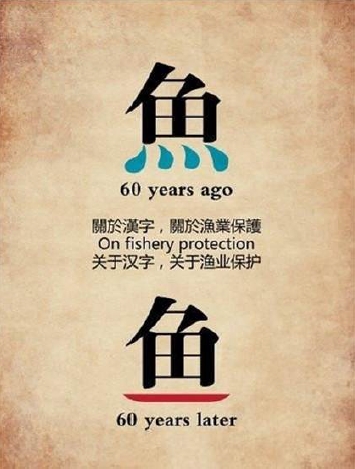
Example 2.
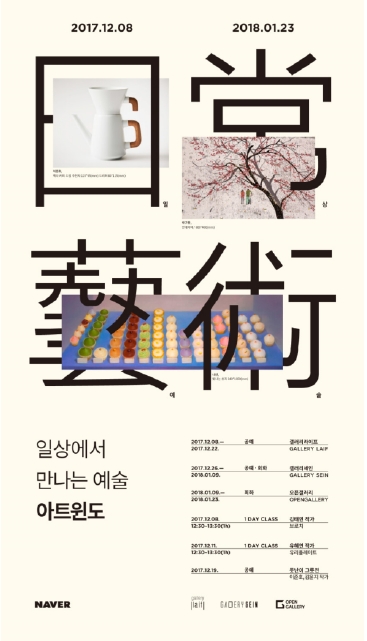
Example 3.
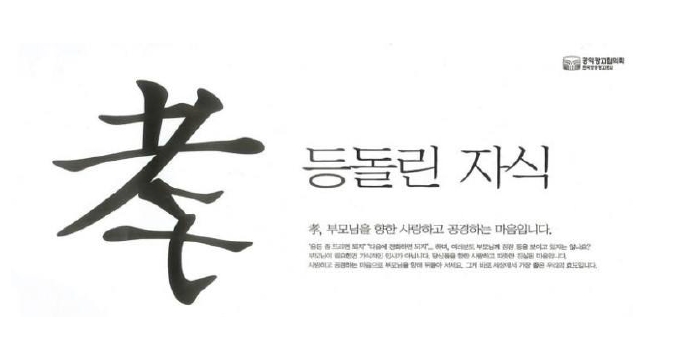
References List
- Bernstein, B. “On the Classification and Framing of Educational Knowledge.” In Class, Codes and Control, 3:47-65. London: Routledge & Kegan Paul, 1971.
- Choi, Myung-Sun. “Reconsideration of ‘School Knowledge and Power’: The Case of Deleuze and Guattari’s ‘Rhizomatics.’.” Korean Journal of Sociology of Education 15, no.1 (2005): 213-235.
- Choi, Woo-Won. “A Study of the Knowledgeology on the Structural Association of Education Policy.” Daedong Philosophy 13 (2001): 137-58.
- Foucault, Michel. Discipline and Punish: The Birth of the Prison. Translated by Alan Sheridan. New York: Random House, 1979.
- ———. Power/Knowledge: Selected Interviews and Other Writings, 1972-1977. Edited by Colin Gordon. New York: Pantheon Books, 1980.
- Heo, Chul. “A View on the Future of 『HANMUN (漢文)』 Subject Research in Look at Character, Goals.” Hanmun Gyoyuk Ronjip 59 (2022): 93-124.
- Heo, Chul. “Changes of Sinosphere and Scoping the New Way of Education of ‘Han-charcter and Literary Sinitic’.” Hanja Hanmun Gyoyuk 26 (2011): 77-121.
- Heo, Chul. “Hanmun (漢文) Education Studies’s Definition and Arrange.” Dongbang Hanmunhak 32 (2007): 367-99.
- Heo, Chul. “Investigating Chinese Character’s Word-Formation Power and Vocabulary Constitution Analysis through Headwords in Korean Dictionary.” Dongbang Hanmunhak 37 (2008): 285-327.
- Heo, Chul. “Knowledge Choice in Society: Focus on Written Classics Subject in the School Education System.” Journal of Educational Theory and Practice 9, no.1 (2018): 33-48.
- Heo, Chul. “Research Trends and Issues in the Field of ‘Han Character Education’ in Korea.” Hanmun Gyoyuk Yeongu 37 (2011): 121-52.
- Jung, Joon-Young. “Colonial Legacy of Keijo Imperial University: Japan’s Colonial Education System and the Aftermath.” Ilbon Yeongu Nonchong 34 (2011): 161-86.
- Kim, Bong-Seok. “Modernity of Curriculum Knowledge in Contemporary Curriculum Discourse.” The Journal of Curriculum Studies 18, no.2 (2000): 269-96.
- Lee, Yong-hwan. “Knowledge as Power/Contract and Curriculum.” The Journal of Curriculum Studies 25, no.1 (2007): 1-23.


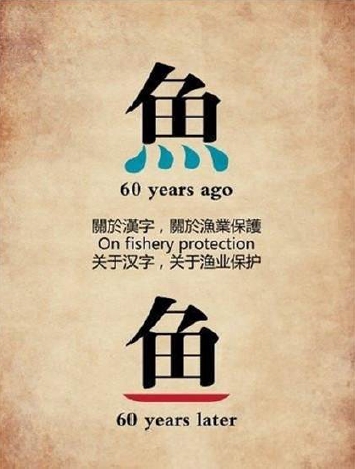
 News
News