This paper aims to examine various methods of Chinese character education practiced in China and to identify their characteristics and implications. As a country that has used Chinese characters as the writing system of its native language, China has accumulated extensive research and practical experience in Chinese character education over a long period of time. Based on this background, China has established the scope and hierarchy of characters to be learned at the level of the national curriculum and has developed and applied diverse instructional methods according to learners’ developmental stages and educational objectives. An analysis of these methods can provide useful insights not only for Chinese character education in Korea but also for the development of instructional methods for learners outside Chinese-speaking contexts.
This paper first examines the Basic Character List for Literacy and Writing Instruction (識字寫字敎學基本字表) and the Commonly Used Character List for the Chinese Language Curriculum in Compulsory Education (義務敎育語文課程常用字表), both of which were presented by the Chinese Ministry of Education. These lists institutionalize, at the national level, the range and sequence of Chinese characters to be learned during compulsory education and serve as important standards for textbook compilation and the organization of teaching and learning content. In particular, the Commonly Used Character List presents 3,500 characters to be mastered during compulsory education, while the Basic Character List selects 300 characters that should be taught first at the initial stage of learning. This indicates that Chinese character education in China is not dependent solely on individual teachers’ experience or textbook compilers’ judgment, but is systematically organized according to national standards.
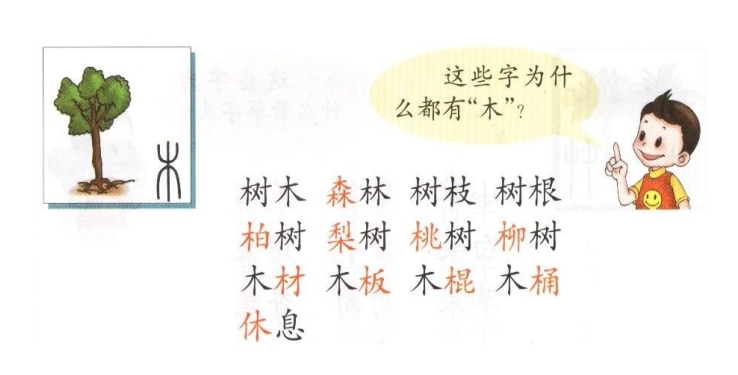
The paper then discusses the content and characteristics of representative methods of Chinese character education used in China, including the Concentrated Character Recognition Method (集中識字法), Distributed Character Recognition Method (分散識字法), Phonetic-Notation-Based Character Recognition Method (注音識字法), Component-Based Character Recognition Method (部件識字法), Character-Principle-Based Character Recognition Method (字理識字法), and Root-Character-Based Character Recognition Method (字根識字法). The Concentrated Character Recognition Method emphasizes intensive learning of characters before moving on to reading instruction, whereas the Distributed Character Recognition Method enables learners to acquire characters naturally through the process of reading textbook passages. The Phonetic-Notation-Based Method connects early reading ability with character recognition by using pronunciation guides. The Component-Based and Root-Character-Based Methods make use of the structural analysis of Chinese characters, while the Character-Principle-Based Method helps learners understand the relationship among character form, sound, and meaning on the basis of the principles of character formation. Although each method has its own strengths and limitations, together they demonstrate that Chinese character education can be designed in various ways by taking into account both the structural features of Chinese characters and the learners’ level.
This paper also examines cases in which digital technologies are applied to Chinese character education in China. Electronic dictionaries, digital textbooks, educational software, learning games, and video materials are widely used, contributing to greater accessibility and to the expansion of learning methods and environments. Such digital resources and platforms may also offer meaningful references for developing new teaching and learning methods in Korean Chinese character education.
However, Chinese character education in China differs from that in Korea in several respects, since it presupposes an environment in which Chinese characters are used as the native writing system, employs simplified characters, and aims primarily at developing reading and writing abilities. Therefore, when applying Chinese research findings and instructional methods to Korea, it is necessary to critically reconsider them in light of the aims and conditions of Korean Chinese character education, such as the understanding of Korean vocabulary, the learning of Sino-Korean words, and education in traditional culture. Nevertheless, China’s systematic use of character lists, development of diverse character recognition methods, and active adoption of digital technologies provide significant implications for improving and expanding Chinese character education in Korea and other regions outside China.
This article serves as a preliminary study for a larger project on developing Literary Sinitic textbooks for Anglophone learners. It examines major Literary Sinitic textbooks published for use in Korean universities since the twentieth century, focusing on three aspects: the definition and scope of Literary Sinitic, pedagogical approaches, and the selection of texts. The study shows that Korean university textbooks generally present Literary Sinitic as both an integral part of Korean literary tradition and a shared classical language of the Sinosphere. They also place considerable emphasis on systematic grammatical instruction while recognizing the limitations of grammar-centered pedagogy. In addition, some textbooks employ pedagogical strategies such as diagramming methods and practice exercises to promote active learner engagement. With regard to text selection, they seek to balance representative works with broader educational objectives, although further diversification remains desirable. Based on these findings, this article argues that future textbooks for Anglophone learners should provide a clear explanation of the concept and scope of Literary Sinitic, adopt a balanced approach to grammatical instruction, and diversify their selection of texts in light of recent scholarship and the needs of Korean Studies. It is hoped that these observations will contribute to the development of more effective Korean Literary Sinitic teaching materials for Anglophone learners.
In the early 20th century, a number of Korean textbooks on Hanmun (Korean Literary Sinitic) were published. These textbooks introduced new ways of understanding and teaching Hanmun grammar. Some of these innovations are highly original and explore experimental ideas.
The hŏsa/silsa paradigm (usually translated as “empty” and “full words” in English) forms the basis of many pre-modern and early modern Literary Sinitic grammars, but these concepts are understood in different ways in each of them. The conventional understanding that hŏsa are ‘function words’ does not sufficiently explain their descriptive usage in early modern Korean grammars. This article investigates how the concept of hŏsa/silsa is understood in Korean Literary Sinitic grammars and textbooks from the Late Chosŏn and Colonial periods, and how it is applied in teaching.
Although these old grammars are clearly outdated in many ways, the grammatical concepts they present still hold some didactic value. Some of these concepts, particularly the hŏsa/silsa concept, are still useful for teaching basic Literary Sinitic courses.
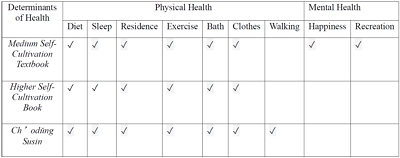
The early 20th century was a time of rapid change in Confucianism. As East Asian intellectuals actively learned from the West in the process of modernization, Confucian classical education lost its dominant position. Western learning changed the education system in East Asia, and textbooks on self-cultivation replaced traditional Confucian literature such as the Four Books and Five Classics, the children’s textbooks and the family rules, and became the textbooks for the moral education curriculum in the new academic system. Although these textbooks are still referred to as books for self-cultivation, the knowledge has been reconstructed in the Western educational framework, and their contents are not limited to moral education. This article analyzes the transformation of Confucian knowledge in Korea under the influence of Western learning based on the theoretical explanations and the school textbooks in the Korean Enlightenment Textbook Series. It reveals that Korean intellectuals established a curriculum for moral, intellectual, and physical education, as well as a curriculum for health education, which brought the Chinese and Western cultures together from conflict to coexistence at the beginning of the twentieth century.


 News
News First
First Prev
Prev