This study examines how the social status of Hanja 漢字 “Sino-Korean characters” and Hanmun 漢文 “Literary Sinitic” has changed within the history of knowledge formation in Korea, focusing on three interrelated layers: shifts in episteme, the reconfiguration of knowledge baselines, and transformations in curriculum discourse. Hanja and Hanmun were marginalized in the context of modern nation-state language policy and the establishment of disciplinary academic systems, but this did not immediately entail the disappearance of their educational value. Rather, Hanja education came to be assigned new goals, such as deepening vocabulary and literacy, facilitating access to historical texts, and cultivating an understanding of the shared written culture of East Asia. At the same time, the ways in which each country and region evaluated and authorized “valuable” knowledge became a key factor in reshaping the respective status of Hanja and Hanmun. The current state of Japanese Chinese Character 漢字 (kanji) and Classical Chinese 漢文 (kanbun) culture and the surrounding school education, serves as a valuable filter and reference to reflect on Korean linguistic practices and to explore the future direction of Korean Classical Chinese漢文 (hanmun) education. In 2010, for the first time in 29 years, Japan established the “Shin Jōyō Kanji” 新常用漢字 (new regular-use kanji) and revised large-scale educational reforms alongside the Course of Study reforms, bringing significant changes to linguistic practices and written life, as well as Classical Chinese education. This paper follows the author’s work from 2011 that examined the achievements and trends of Classical Chinese education research in Japan from 1945 to 2010. This paper examines the direction of Classical Chinese education and the current state of Chinese Character education research over roughly ten years since 2010.
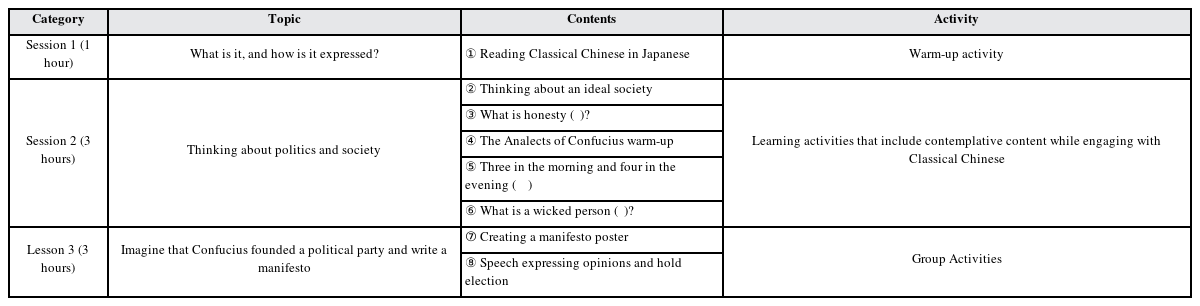
The framework of this research conducted in this paper is as follows. ① The social, cultural, and educational background of the implementation of the “Shin Jōyō Kanji” which has not been covered or sufficiently addressed in previous research, and the content of the 2017-2018 revised Course of Study are analyzed. ② Focusing on high school Classical Chinese, the direction, purpose, and characteristics of Classical Chinese education under the new curriculum are examined, and the trends, content, and questions of recent university admission Classical Chinse examinations are also examined. ③ The achievements related to Classical Chinese education published in the leading specialized journal on Classical Chinese education Atarashii Kanji Kanbun Kyōiku 新しい漢字漢文教育 (Journal of New Kanji and Kanbun Education) are organized by area and topic, and the current status and characteristics of recent research and teaching examples in Japanese Classical Chinese education are reviewed.
The world of Classical Chinese in East Asia is not homogeneous. It is important to keep this in mind and apply this point in Classical Chinese education and its research. The differences from Korea allow for a clearer understanding of the diversity of the East Asian world of Classical Chinese, as well as Korea's unique characteristics and position. Meanwhile the similarities or shared aspects with Korea can serve as direct reference for reflecting on and improving Korean policies and practices. The author intends to continue reporting the status of Japanese Classical Chinese education and its research to the academic community roughly every ten years, while further examining the specific topics section described in this paper as necessary.
This article examines the transregional dissemination and localization of the post-May Fourth linguistic reforms—specifically Vernacular Chinese (baihua) and the National Language (Guoyu)—within the Chinese diaspora of Malaya and Singapore (Nanyang). Moving beyond the traditional "impact-response" paradigm, this study argues that the adoption of the vernacular was not merely a passive cultural importation from mainland China, but an "active fabrication of identity" necessitated by the complex realities of British colonial rule and severe internal dialectal fragmentation. By analyzing early Chinese press materials, such as the Sin Kuo Min Jit Poh, and local educational records, the research traces the tangible trajectory of this linguistic transformation. It first highlights the role of newspapers as media vanguards that transitioned from reprinting mainland literature to cultivating local vernacular expression to discipline oral traditions. Subsequently, it investigates the institutionalization of Guoyu in formal schools and grassroots night schools, which served to educate the laboring classes and dismantle provincial boundaries. Ultimately, the "remolding of the tongue" in Nanyang facilitated the construction of a transregional Zhonghua identity, demonstrating how language standardization functioned as a profound tool for social reorganization and diasporic integration.
This paper aims to examine various methods of Chinese character education practiced in China and to identify their characteristics and implications. As a country that has used Chinese characters as the writing system of its native language, China has accumulated extensive research and practical experience in Chinese character education over a long period of time. Based on this background, China has established the scope and hierarchy of characters to be learned at the level of the national curriculum and has developed and applied diverse instructional methods according to learners’ developmental stages and educational objectives. An analysis of these methods can provide useful insights not only for Chinese character education in Korea but also for the development of instructional methods for learners outside Chinese-speaking contexts.
This paper first examines the Basic Character List for Literacy and Writing Instruction (識字寫字敎學基本字表) and the Commonly Used Character List for the Chinese Language Curriculum in Compulsory Education (義務敎育語文課程常用字表), both of which were presented by the Chinese Ministry of Education. These lists institutionalize, at the national level, the range and sequence of Chinese characters to be learned during compulsory education and serve as important standards for textbook compilation and the organization of teaching and learning content. In particular, the Commonly Used Character List presents 3,500 characters to be mastered during compulsory education, while the Basic Character List selects 300 characters that should be taught first at the initial stage of learning. This indicates that Chinese character education in China is not dependent solely on individual teachers’ experience or textbook compilers’ judgment, but is systematically organized according to national standards.
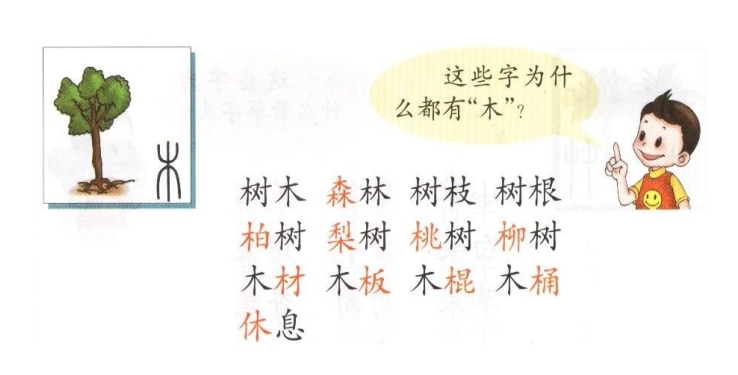
The paper then discusses the content and characteristics of representative methods of Chinese character education used in China, including the Concentrated Character Recognition Method (集中識字法), Distributed Character Recognition Method (分散識字法), Phonetic-Notation-Based Character Recognition Method (注音識字法), Component-Based Character Recognition Method (部件識字法), Character-Principle-Based Character Recognition Method (字理識字法), and Root-Character-Based Character Recognition Method (字根識字法). The Concentrated Character Recognition Method emphasizes intensive learning of characters before moving on to reading instruction, whereas the Distributed Character Recognition Method enables learners to acquire characters naturally through the process of reading textbook passages. The Phonetic-Notation-Based Method connects early reading ability with character recognition by using pronunciation guides. The Component-Based and Root-Character-Based Methods make use of the structural analysis of Chinese characters, while the Character-Principle-Based Method helps learners understand the relationship among character form, sound, and meaning on the basis of the principles of character formation. Although each method has its own strengths and limitations, together they demonstrate that Chinese character education can be designed in various ways by taking into account both the structural features of Chinese characters and the learners’ level.
This paper also examines cases in which digital technologies are applied to Chinese character education in China. Electronic dictionaries, digital textbooks, educational software, learning games, and video materials are widely used, contributing to greater accessibility and to the expansion of learning methods and environments. Such digital resources and platforms may also offer meaningful references for developing new teaching and learning methods in Korean Chinese character education.
However, Chinese character education in China differs from that in Korea in several respects, since it presupposes an environment in which Chinese characters are used as the native writing system, employs simplified characters, and aims primarily at developing reading and writing abilities. Therefore, when applying Chinese research findings and instructional methods to Korea, it is necessary to critically reconsider them in light of the aims and conditions of Korean Chinese character education, such as the understanding of Korean vocabulary, the learning of Sino-Korean words, and education in traditional culture. Nevertheless, China’s systematic use of character lists, development of diverse character recognition methods, and active adoption of digital technologies provide significant implications for improving and expanding Chinese character education in Korea and other regions outside China.
This study examines how Hanja education policy in Korea has changed in relation to shifts in language and script policy since the twentieth century. It takes as its starting point the 1894 Royal Edict of King Kojong 高宗(r. 1863–1907), which marked the transition of Korea’s official writing system from Hanja-centered writing to Han’gŭl-centered writing. To this end, the study divides Korean language and script policy into the periods before and after 1945 and analyzes how the policies of each period affected Hanja education policy in Korea.
The findings are as follows. First, the major policies that influenced Hanja education policy in Korea since the twentieth century include the 1894 Royal Edict of King Kojong, the Act on the Exclusive Use of Han’gŭl of 1948, and the Framework Act on the National Language of 2005. Second, in the process of implementing these policies, various issues related to Hanja education were discussed or put into practice, including arguments for the abolition of Hanja, Hanja education in elementary and secondary schools, Hanja education within the Korean language curriculum, the parallel notation of Hanja, the establishment of commonly used Hanja, and the designation of basic Hanja for Literary Sinitic education. Third, future Hanja education policy should be based on an investigation of Hanja vocabulary actually needed in daily life and official documents. It should also organize educational content around practical use and develop learner-customized methods that make effective use of science and technology.
This study confirms that changes in language and script policy in Korea since the twentieth century have shaped the character and direction of Hanja education policy. It is expected to provide basic material for establishing Hanja education policies suited to the linguistic life ofKorean society in the future.
This paper takes as its point of departure the persistent difficulty in reading Hanmun (Korean Literary Sinitic) texts despite prior knowledge of grammatical rules, and reexamines this problem from cognitive and pedagogical perspectives. It argues that reading failure in Hanmun texts lacking punctuation should not be attributed to an insufficient understanding of individual grammatical items, but rather to a lack of syntactic unit recognition and reading stability. From this perspective, the article focuses on toksong 讀誦, a core practice in premodern Hanmun education, and interprets it not merely as recitation or memorization but as a mode of reading through which syntactic structures are embodied via rhythm and repetition.
Drawing on theories of embodied cognition and skill acquisition, the article demonstrates that toksong functioned as a cognitive mechanism that fostered syntactic familiarity and stabilized grammatical segmentation prior to semantic interpretation. It further examines the place of toksong in modern Hanmun pedagogy and repositions it not as a substitute for grammatical analysis, but as a preparatory reading practice that enables such analysis. By reconceptualizing the reading of Hanmun as a structural experience that precedes meaning-centered interpretation, this study offers pedagogical and theoretical implications for contemporary Hanmun education and research on classical literacy.
In the context of a special issue on education outside Korea, this paper surveys the current status of sinograph education in Korean Language Education (KLE) for foreigners, and finds that there is a dearth of both research on and teaching materials for hancha kyoyuk. Hence the “First Things First” in the title: we can hardly expect to make progress in hanmun education when so little exists in the way of resources for and courses in sinograph education—the single most basic prerequisite for teaching hanmun. After suggesting a number of reasons for the current lamentable neglect of hancha education, the paper draws some illustrative comparisons with sinograph education in Japanese Language Education and Chinese Language Education before rehearsing a number of compelling justifications for including a robust hancha education component in KLE (whether for Koreans or foreign learners of Korean). The remainder of the paper introduces the pedagogical ideology and methodology behind the Advanced Korean: Sino-Korean Companion textbook and its companion online resource, the UBC Interline Reader.
This article investigates the educational philosophy of the 16th-century Korean Neo-Confucian scholar Yi Yulgok (1536-1584), evaluates its contemporary relevance through an analysis of his seminal text, Gyeongmong yogyeol (The Secret to Banishing Ignorance), and concludes with an autoethnographic reflection by the author. This argument is grounded in a methodology that combines textual analysis of Yulgok’s primary writings with biographical-historical contextualization, complemented by autoethnographic reflection on fifteen years of teaching this philosophy to a global student body. The analysis traces this holistic perspective to the foundational influence of Yulgok’s mother, Sin Saimdang, whose progressive pedagogical methods—emphasizing empirical observation and self-directed inquiry—cultivated the pragmatic, interdisciplinary mindset that allowed him to integrate Confucian principles of benevolence (in 仁) and virtue (deok 德) with the practical challenges of statecraft and social ethics. Ultimately, Yulgok's holistic educational model, which inextricably links internal moral cultivation with external public service, offers a potent corrective to the compartmentalization prevalent in modern higher education, advocating for the cultivation of an ethically integrated public intellectual.
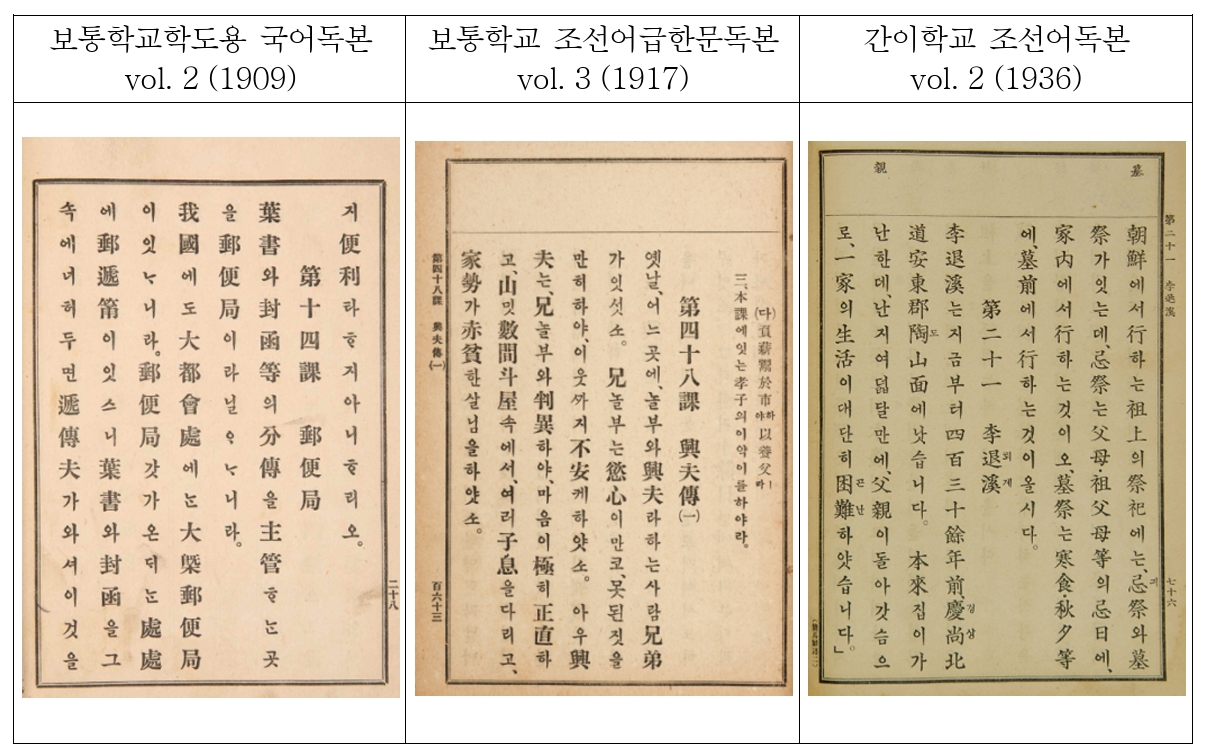
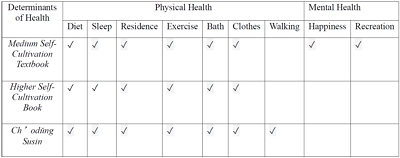
The early 20th century was a time of rapid change in Confucianism. As East Asian intellectuals actively learned from the West in the process of modernization, Confucian classical education lost its dominant position. Western learning changed the education system in East Asia, and textbooks on self-cultivation replaced traditional Confucian literature such as the Four Books and Five Classics, the children’s textbooks and the family rules, and became the textbooks for the moral education curriculum in the new academic system. Although these textbooks are still referred to as books for self-cultivation, the knowledge has been reconstructed in the Western educational framework, and their contents are not limited to moral education. This article analyzes the transformation of Confucian knowledge in Korea under the influence of Western learning based on the theoretical explanations and the school textbooks in the Korean Enlightenment Textbook Series. It reveals that Korean intellectuals established a curriculum for moral, intellectual, and physical education, as well as a curriculum for health education, which brought the Chinese and Western cultures together from conflict to coexistence at the beginning of the twentieth century.

 News
News First
First Prev
Prev